
 Kitchen remodeling
 Bathroom remodeling
 Home additions & ADU
 Roofing
 Windows & doors
 Driveway & pavers
 Fence
Free written scope consultation - allowances, timeline, and change-order rules on paper before a single trade is scheduled
Styles & brands we work with
- Kitchen remodeling
- Bathroom remodeling
- Home additions & ADU
- Roofing
- Windows & doors
- Driveway & pavers
- Fence
See the difference
 Before
 After
 Before
 After
 Before
 After
How Long Does a Roof Last in Miami, FL? The Real Numbers, Adjusted for Salt Air and Subtropical Sun
A roof in Miami lasts about 20-35% less time than the national averages you’ll find on most manufacturer spec sheets. HVHZ-rated architectural shingles typically deliver 25-30 years here instead of 30-50. Concrete tile runs 40-50 years instead of 50+. Modified bitumen flat roofs hit 10-15 years instead of 20. That “50-year metal roof” claim assumes a temperate inland climate; Miami’s salt air, year-round humidity and hurricane-zone wind exposure rewrite the timeline.
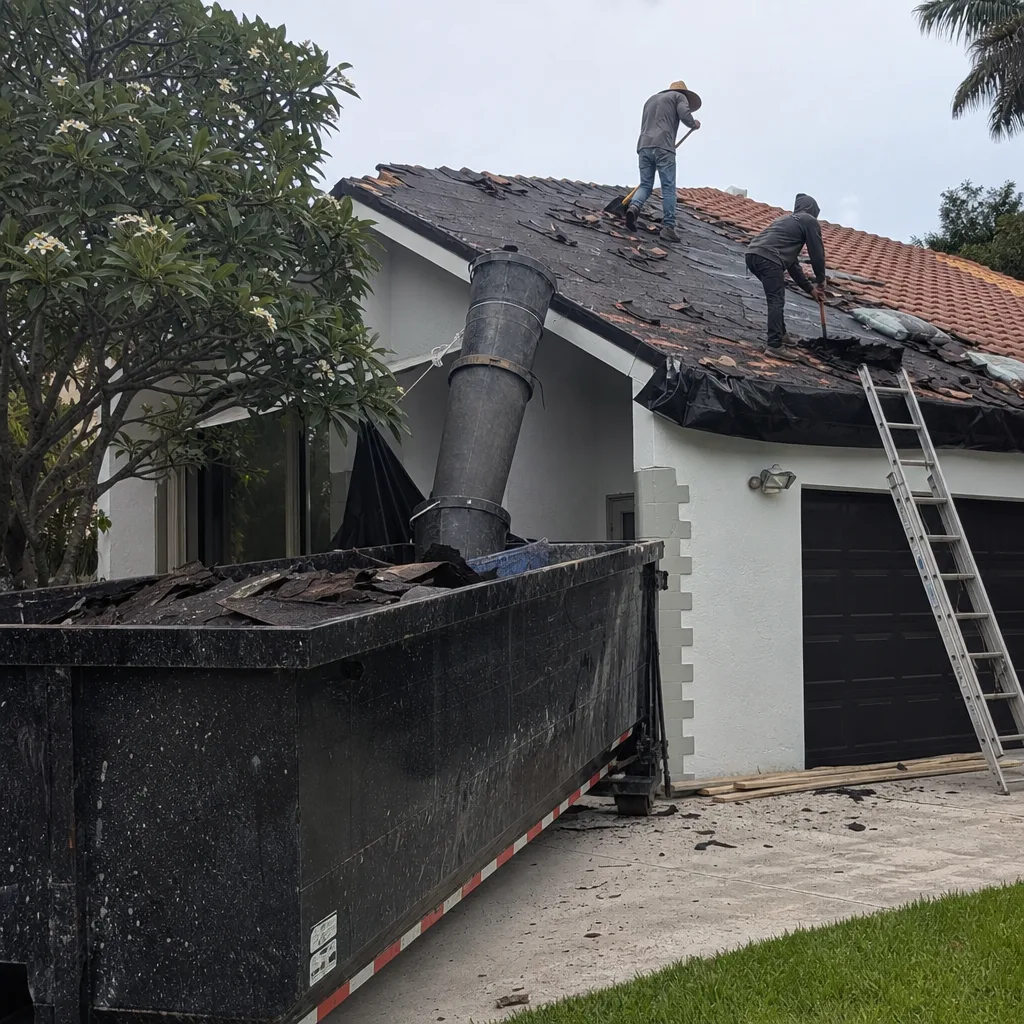
If you’re trying to budget for a roof and want a straight answer on the actual condition of yours, call Groundwork Construction Co. of Miami at (833) 968-1198. A live person picks up, 24/7. Estimates are free and upfront, no surprises.
Here’s what we actually see on roofs across Miami, and how to plan your replacement budget accordingly.
Miami-adjusted roof lifespans by material
Manufacturer literature gives you a national average, and national averages live in temperate, low-humidity, low-salt zones. Miami is none of those. UV intensity year-round, salt-laden coastal air from Biscayne Bay to the beaches, and heavy June-November rain cycles all shorten the effective life of every roofing material. Here’s our field-adjusted table:
| Roofing material | National expectation | Realistic lifespan in Miami |
|---|---|---|
| HVHZ-rated architectural shingles | 30-50 years | 25-30 years |
| Concrete tile | 50+ years | 40-50 years (mortar degrades faster in salt air) |
| Standing seam aluminum | 70 years | 40-50 years with maintenance (steel variants oxidize) |
| Modified bitumen (flat/low-slope) | 20 years | 10-15 years (extreme UV) |
Plan your replacement budget on the Miami column, not the national one. A roof replacement in Miami runs $9,440-$23,600 for standard architectural shingle work; metal roof installation ranges $17,700-$47,200; tile roof repairs land $710-$2,950, and general roof repairs $470-$2,125. Those are the ranges we quote against, and they hold because we specify materials rated for this climate – not just the longest warranty number on a spec sheet.
The underlayment problem: why a perfectly good-looking roof fails from the inside
Miami’s humidity is a roofing problem few homeowners think about, and it’s the one that catches people most often. Even a structurally intact tile or metal roof can fail from underneath. The underlayment – the moisture barrier that sits between your deck and your roofing material – degrades. In Miami’s year-round humidity and heat cycling, we regularly see underlayment give out at 15-20 years. When it does, water intrudes laterally. The tiles above look fine. Then the first heavy June rain comes and the ceiling in the hallway is soaked.
That’s why we treat underlayment age as a bigger predictor of roof failure in Miami than roofing-surface appearance. If your tile roof is 18 years old and passing the eyeball test, that doesn’t mean it’s watertight. It means the underlayment is about due.
Three realities that shorten – or legally cap – your roof’s life here
The 40-Year Recertification deadline sets a hard ceiling
Miami-Dade requires buildings at 40 years (25 years near the coast) to pass a structural and electrical inspection. A marginal roof doesn’t pass. That’s the number that actually matters when you’re planning: if your building hits its recertification window in the next five years, you should replace the roof before that inspection – not on the theoretical end-of-life date on the spec sheet. Building recertification reality into your lifespan plan is worth more than any manufacturer warranty figure.
Humidity and salt air inside the structure
Salt air eats mortar, sealants and flashing faster than inland climates ever will. Coastal concrete tile roofs show mortar degradation and lifted ridge caps well before the tile itself wears out. If your home is within a few miles of the water – Mid-Beach, Surfside, Bal Harbour, Key Biscayne, Coconut Grove – plan on maintenance visits at 10 and 20 years, and don’t assume “tile” means “set it and forget it.”
Termites: the structure under the roof
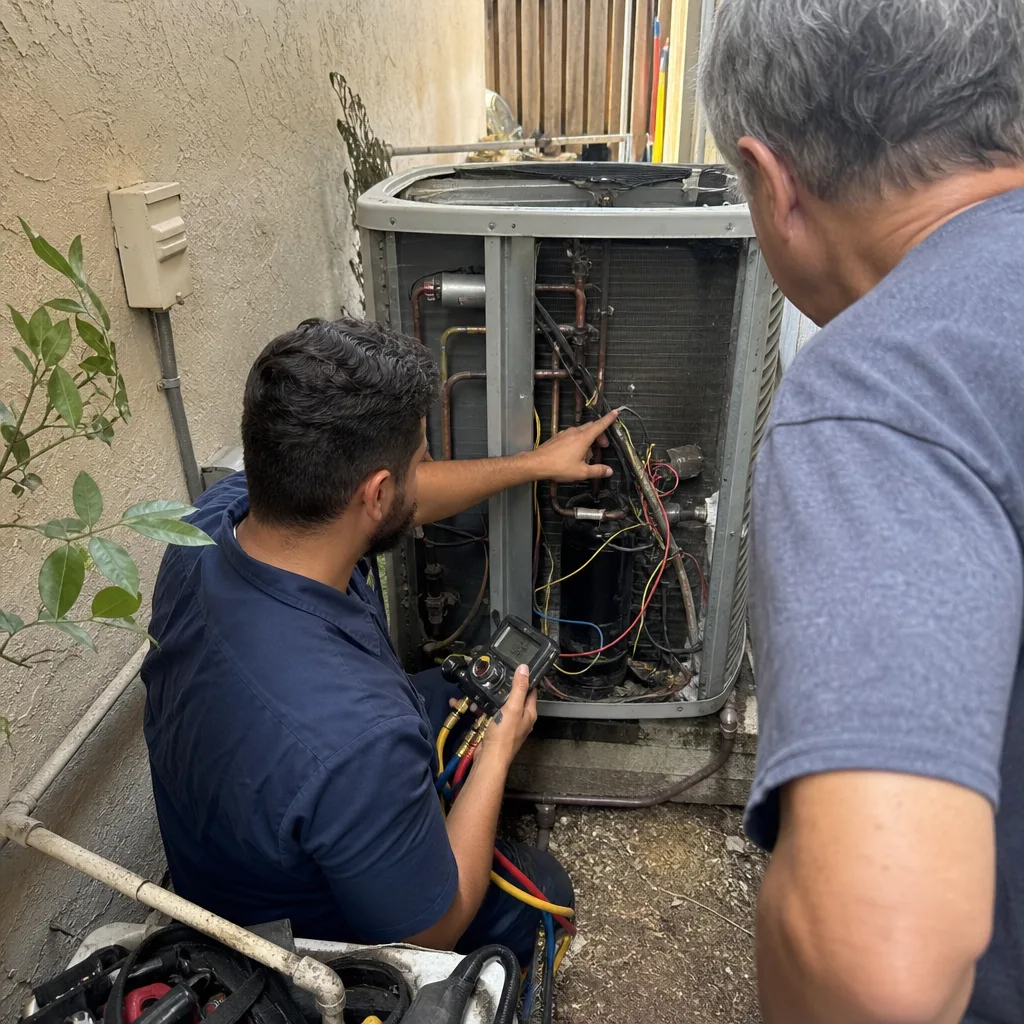
Miami’s Formosan and Asian subterranean termite pressure is severe. On wood-framed roof structures without prior treatment, termites can compromise trusses and rafters before the roofing material fails. A lifespan article that ignores the structure under the roof isn’t complete for Miami – and this is where a lot of “mystery sag” cases come from.
Common local scenarios we see on Miami roofs
- A 22-year-old tile roof in an established neighborhood. Tiles look solid, but underlayment is shot and water is showing up at interior corners after rain. Tear-off-and-replace is usually the honest answer once underlayment fails.
- A mid-century flat roof (CBS home, low-slope). Modified bitumen at 12-14 years, showing ponding and seam failure. A new membrane roof is typically due, and wind-mitigation upgrades get folded in.
- A coastal metal roof installed by a prior owner. Oxidation on a steel variant, not aluminum. The aluminum replacement path lasts 40-50 years with maintenance.
- A pre-1990s wood-truss home with no termite history. Roof surface is worn, but the structure underneath is the bigger question. We check before we quote.
Miami-Dade is also the only place in the U.S. with its own product-approval system – the High Velocity Hurricane Zone. Every roof, window and shutter here needs a Miami-Dade NOA number, not just a Florida or national approval. When we spec materials, our GAF and Owens Corning partnerships mean the products we recommend carry verified HVHZ ratings and warranties calibrated to this climate.
How to tell when your Miami roof is due
A few signals mean “plan for it now” rather than “wait and see”: interior water stains after heavy rain, underlayment age past 15-18 years on tile, dark staining that doesn’t wash off, granule loss on shingles, visible sag or soft spots in the deck, and a recertification deadline within five years. Any of those, and it’s worth getting eyes on the roof.
If you’d rather have it looked at, our licensed-and-insured team covers Roofing across Miami, and every project is backed by our 730-Day Done Right Promise. If it’s not done right, we make it right. You get upfront pricing, background-checked, uniformed technicians, and 0% financing for 18 months if you’re planning a full replacement. Projects over $10,000 also get $1,000 off.
FAQs
A roof in Miami lasts 20-35% less time than national figures: architectural shingles 25-30 years, concrete tile 40-50, standing seam aluminum 40-50 with maintenance, and modified bitumen flat roofs 10-15. Plan replacement on the Miami timeline, not the manufacturer’s average – salt air, humidity and HVHZ wind exposure are the difference. Call (833) 968-1198 for an exact quote on your specific roof; estimates are free.
Because the underlayment under the tile has likely failed. In Miami’s humidity, underlayment commonly degrades at 15-20 years, letting water intrude laterally under intact tiles. The surface looks fine right up until the first heavy rain pushes it through the ceiling. Have a trained roofer inspect the underlayment – don’t diagnose it from the roof’s surface. Call (833) 968-1198 and we’ll take a look.
Yes, it can cap your timeline regardless of the material’s theoretical lifespan. Buildings at 40 years (25 near the coast) must pass structural inspection, and a marginal roof won’t. If your recertification window is within five years, plan the replacement before the inspection, not after. Call (833) 968-1198 to talk through your building’s timeline.
Repair wins if the underlayment and deck are sound and the problem is isolated – typical roof repairs run $470-$2,125. Replace wins once underlayment fails or the roof is past 80% of its Miami lifespan; a full replacement is $9,440-$23,600. Call (833) 968-1198 and we’ll tell you honestly which side of that line your roof is on; the estimate is free.
If you’d rather have it looked at, Groundwork Construction Co. of Miami offers a no-pressure assessment in Miami – call (833) 968-1198. We’ll tell you what your roof actually needs and what it will cost before any work begins.
Written by the team at Groundwork Construction Co. of Miami, serving Miami, FL.