
 Kitchen remodeling
 Bathroom remodeling
 Home additions & ADU
 Roofing
 Windows & doors
 Driveway & pavers
 Fence
Free written scope consultation - allowances, timeline, and change-order rules on paper before a single trade is scheduled
Styles & brands we work with
- Kitchen remodeling
- Bathroom remodeling
- Home additions & ADU
- Roofing
- Windows & doors
- Driveway & pavers
- Fence
See the difference
 Before
 After
 Before
 After
 Before
 After
What Causes Roof Leaks in Miami, FL? The Short Answer
In Miami, the most common cause of a roof leak is a failed penetration, not the field of the roof itself. On flat-roof CBS homes, that usually means the rooftop HVAC curb, where condensate overflow and unit vibration break down flashing and sealant long before the membrane gives up. On pitched roofs, failed eave and drip-edge flashings after wind uplift are the repeat offender. Both are underdiagnosed because they show up as interior water stains that look like membrane failures. If water is moving through a block wall right now, call Groundwork Construction Co. of Miami at (833) 968-1198 and a real person picks up, day or night.
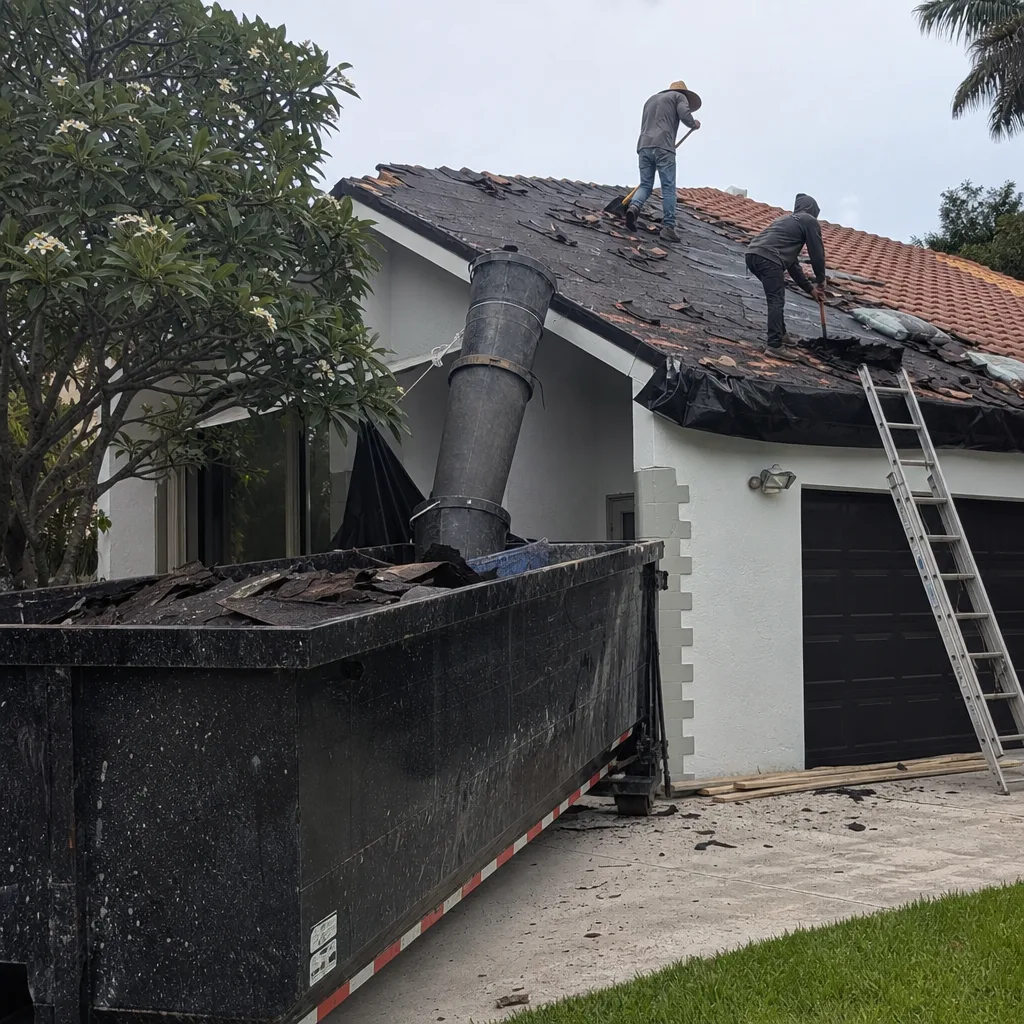
Miami’s building stock makes this city different. Dense rows of pre-1970s concrete-block and CBS homes sit under flat or low-slope roofs, salted coastal air chews through sealants faster than anywhere inland, and the June-to-November hurricane season adds wind-uplift stress that a standard inspection won’t catch. That combination explains why the real leak causes here are not the ones general articles list. Here’s what we actually find when we open up Roofing assemblies across Miami.
Compare the Evidence: How Do You Tell Which Cause You’re Facing?
Before you climb anything, match the symptom to the likely culprit. The chart below is the read we use on site.
| What you see inside | Most likely cause in Miami | Where to look |
|---|---|---|
| Water stain directly under a rooftop AC unit | HVAC curb flashing or condensate overflow | Unit curb, drain line path, sealant joints |
| Stain at the perimeter near a wall, spreading down | Parapet cap or coping seal failure | Top of parapet wall, stucco joint |
| Wet fascia or soffit after a storm, no visible hole | Micro-separation at drip edge from wind uplift | Eave flashings, deck-to-drip-edge gap |
| Random leaks that move around, no pattern | Termite-damaged nailers, fascia, or rafter tails | Wood framing at edges and penetrations |
Why Rooftop HVAC Units Are the Most Underreported Leak Source Here
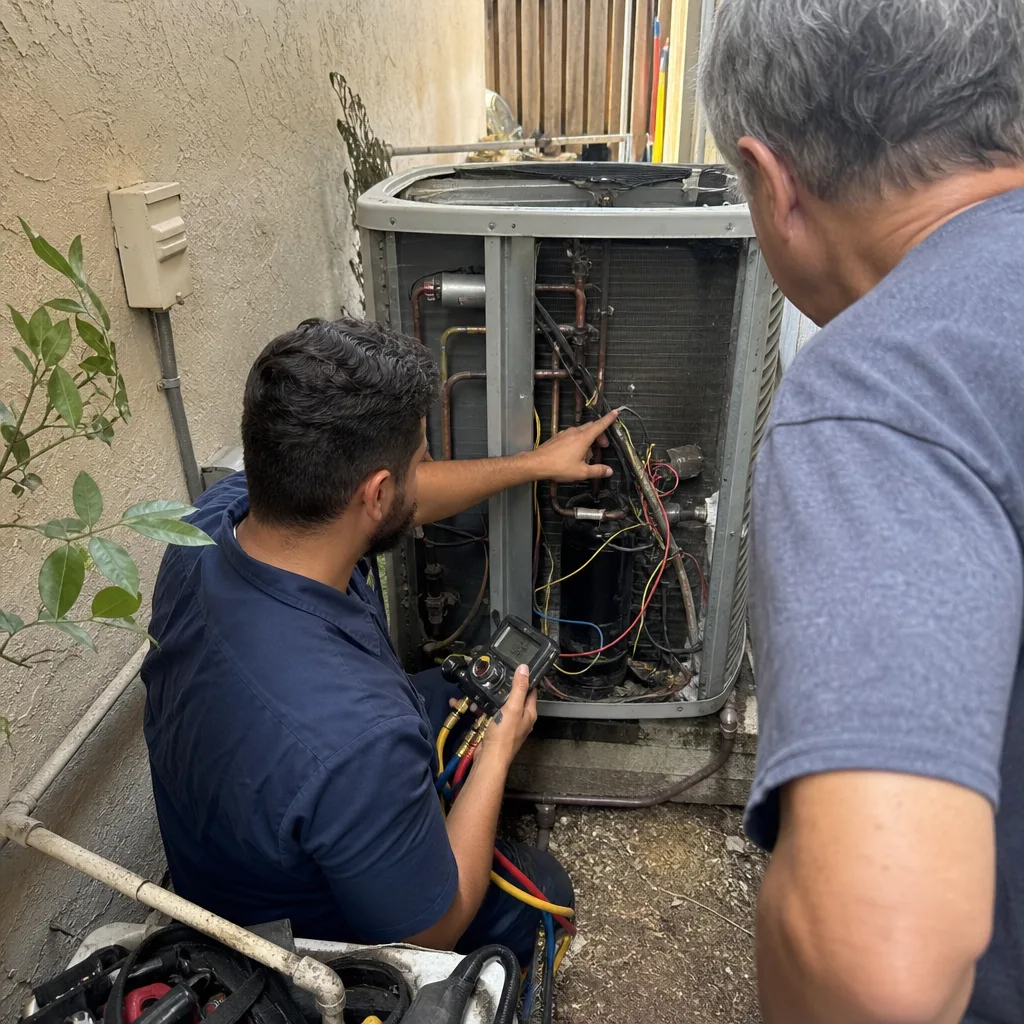
Miami runs its air conditioning 10 to 12 months a year. That single fact changes how a flat roof ages. A rooftop package unit sits on a curb, and everything around that curb takes a beating: the condensate line overflows when the drain clogs, saturating the membrane at the curb base; the unit’s vibration works sealant joints loose every season; and the curb flashing degrades faster than any other penetration on the roof. Homeowners and general inspectors routinely attribute the resulting stain to the membrane itself and miss the penetration entirely. On a flat-roof CBS home, the curb is the first place we inspect, not the last.
And the parapet wall?
Most Miami flat-roof homes end in a parapet capped with a coping. When that cap mortar or coping seal fails, water enters the top of the wall and travels down inside it to where the wall meets the roof deck. What looks like a roof leak from inside is really a wall-top failure. It’s one of the most misdiagnosed patterns in the city and one of the reasons we open wall tops before quoting anything.
What about the morning after a hurricane?
A home can take a storm with no visible damage and still develop leaks weeks later. Wind-uplift forces create micro-separations between the drip edge and the roof deck. You can’t see the gap from the ground or from a standard inspection, but it channels every following rainfall straight into the fascia and soffit. Termites compound the problem: in Miami’s older housing stock, damaged nailers, fascia boards, and rafter tails let framing shift, which opens gaps in flashing and sealant that show up as leaks with no obvious source. All of this is why Miami-Dade’s High Velocity Hurricane Zone rules exist, and why every roof product here must carry a Miami-Dade NOA number, not just a Florida or national approval. Brand partners like GAF and Owens Corning earn their place on a Miami roof because the assembly is documented to hold up under that wind load.
What Does Roof Leak Diagnosis and Repair Cost in Miami?
Diagnosis is a small line item compared with what a missed leak costs in a CBS wall. Here are the ranges we see across Miami:
- Roof repair: $470 to $2,125
- Tile roof repair: $710 to $2,950
- Roof replacement (when the assembly is past saving): $9,440 to $23,600
- Metal roof installation: $17,700 to $47,200
Those are the honest market ranges, and they hold whether we’re doing the work or not. Upfront pricing is our house rule: the number you see is the number you pay, with no surprises after the drywall opens. On larger scopes, 0% financing for 18 months and $1,000 off projects over $10,000 make a full re-roof or structural repair financially workable instead of a panic decision. And the work is covered by our 730-Day Done Right Promise – if it’s not done right, we make it right. That’s one of the longest workmanship guarantees in residential construction, and it applies to the repair, not just the invoice.
When should you stop investigating and call?
The moment water is traveling through a block wall, because a leak left for 48 hours while you wait on a callback becomes a mold and structural problem. Our technicians have up to 12 years of experience, are background-checked, and arrive in uniform, and our phones are answered by a live person 24/7. When you find a leak during a June afternoon storm, you reach someone who can start diagnosis remotely and route the right crew, instead of leaving water to migrate through masonry overnight.
Key takeaways:
- On flat-roof CBS homes, the HVAC curb is the most likely leak source in Miami, not the membrane.
- Parapet cap failures read as roof leaks but start at the wall top.
- Post-storm micro-separations at the drip edge are invisible to a standard inspection.
- Termite-damaged framing creates leaks with no obvious entry point.
- Repairs run $470 to $2,125; replacement runs $9,440 to $23,600.
FAQs
On flat-roof concrete-block homes, the rooftop HVAC curb is the most common cause – condensate overflow and unit vibration break down flashing and sealant before the membrane fails. On pitched roofs, failed drip-edge and eave flashings after wind uplift lead the list. Either way, the leak usually traces to a penetration or an edge, not the middle of the roof.
Yes, and it’s common in Miami. Wind uplift creates micro-separations between the drip edge and the roof deck that a standard inspection can’t see, and those gaps channel rain into the fascia and soffit with each storm. If you notice wet fascia or a new ceiling stain weeks after a storm, it’s worth a professional look rather than waiting for the next one.
Repair wins when the leak is isolated to a penetration, flashing, or wall top, and Miami repair ranges of $470 to $2,125 reflect that. Replacement makes more sense when the membrane is saturated across the field or the assembly is failing in multiple spots, where full replacement runs $9,440 to $23,600. A proper diagnosis tells you which side of that line you’re on before you spend.
Call a roofing professional who can diagnose penetrations and wall tops, not just patch what you can see. Groundwork Construction Co. of Miami answers with a live person 24/7 at (833) 968-1198 and stands behind the repair with our 730-Day Done Right Promise.
If you’d rather have it looked at, Groundwork Construction Co. of Miami offers a no-pressure assessment in Miami – call (833) 968-1198 and we’ll find the real source before you spend a dollar on a patch that won’t hold.
Written by the team at Groundwork Construction Co. of Miami, serving Miami, FL.