
 Kitchen remodeling
 Bathroom remodeling
 Home additions & ADU
 Roofing
 Windows & doors
 Driveway & pavers
 Fence
Free written scope consultation - allowances, timeline, and change-order rules on paper before a single trade is scheduled
Styles & brands we work with
- Kitchen remodeling
- Bathroom remodeling
- Home additions & ADU
- Roofing
- Windows & doors
- Driveway & pavers
- Fence
See the difference
 Before
 After
 Before
 After
 Before
 After
I’ll write this page now, building the whole thing around the structural-load angle and keeping every local reference tied to Miami’s HVHZ reality.
Sliding Door vs French Door in Miami, FL: Which One Survives a Cat 3?
Choose sliding doors for most Miami homes unless you’re restoring a historic façade or your HOA already mandates French doors. The bottom line here isn’t style: in the High Velocity Hurricane Zone, a door’s Miami-Dade NOA-rated design pressure decides whether it stays seated in its frame during a storm, and sliding doors reach that number with far less structural drama than French doors usually do. French doors can absolutely pass in Miami, but they do it through different engineering and often a reinforced header that adds real money to the job. Call (833) 968-1198 and we’ll price both configurations, header work included, before you commit to either.
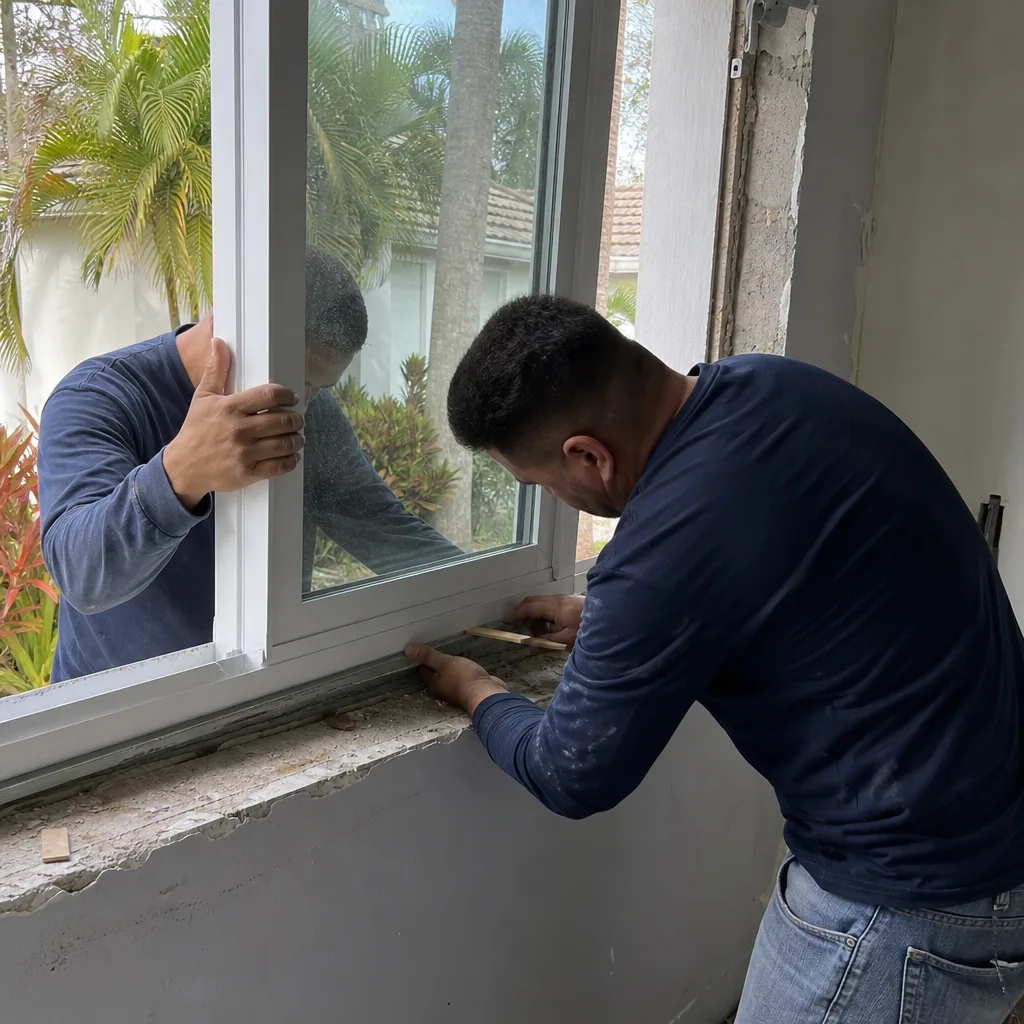
Here’s the part most showroom conversations skip. A French door that opens outward sounds like the intuitive storm choice, until you learn that outswing doors in Miami’s HVHZ must meet a stricter positive-pressure rating than most sliding units. That single engineering difference can swing both your permit approval and your wind-mitigation insurance discount.
Why Miami Turns a Style Question Into a Structural One
Miami construction runs on documented wind resistance. Miami-Dade County is the only place in the US with its own product-approval system, so every door we install carries a Miami-Dade NOA number, not just a Florida or national approval. The 40-Year Recertification law – and the 25-year rule for buildings near the coast – keeps a steady wave of concrete restoration and re-roofing work moving through neighborhoods by building age. Doors ride along with that: when a recertification inspection opens a wall, that’s often when homeowners finally replace a tired slider or a leaking French pair.
Housing stock shapes the decision just as much as code does. Much of Miami is pre-1970s concrete-block and CBS construction with flat or low-slope roofs, plus 1920s Mediterranean Revival and MiMo buildings with narrow or arched openings. Then there’s the post-2000 high-rise corridor along Brickell and Biscayne Boulevard, where HOA documents rather than structure usually dictate the answer. Salt-laden air and year-round humidity finish the picture. Hardware corrodes here faster than almost anywhere, and it’s the number-one failure point on both door types.
Sliding vs. French Doors: What Actually Differs in Miami
Start with how each type earns its rating, because the two paths barely resemble each other.
Sliding doors get their design pressure through multi-point locking systems and laminated glass panels. The lock engages at several points down the jamb, so the panel resists both positive and negative pressure as one assembly. They typically fit existing rough openings, which matters in older Miami homes where the framing is already there and the budget isn’t endless.
French doors rely on reinforced stile construction – thicker, engineered vertical members around the glass – and on outswing geometry that performs better under positive wind pressure. That outswing advantage is real. So is the cost: in narrow or arched openings on Mediterranean Revival and MiMo homes, French doors often need structural header reinforcement, which adds engineering, permitting time, and installation dollars.
Side-by-side comparison
| Factor | Sliding door | French door |
|---|---|---|
| How it holds its NOA rating | Multi-point locking plus laminated glass | Reinforced stiles plus outswing geometry |
| Typical fit in older openings | Often fits the existing rough opening | Frequently needs a reinforced header |
| Permit complexity in Miami | Usually straightforward | Higher when header work is triggered |
| Coastal hardware wear | Corrosion risk on rollers and tracks | Corrosion risk on hinges and locksets |
| Best fit | Patios, condo terraces, CBS homes | Historic façades, arched openings |
Notice what isn’t on that table: curb appeal, resale, and how the door looks from the pool deck. All three matter, but in Miami they come second to whether the assembly is engineered and documented for this wind zone. We’d rather tell you that on day one than after demo.
What to Check Before You Order Either Door
Ask these questions on every quote you collect, and you’ll separate a real Miami door installer from a catalog reader.
- Does the quote list the NOA number and both design pressures? Positive and negative ratings should be printed, not promised verbally.
- Has anyone looked at your header? In pre-1970s CBS homes, the wall above the opening is where surprises live.
- What’s the hardware finish? We source from Andersen and Marvin because their marine-grade hardware finishes are tested for coastal exposure, not just rated for it on paper.
- What do your HOA documents say? Along Biscayne Boulevard, condo and townhome associations often specify door type and frame color, which eliminates one option before aesthetics even enters the conversation. A local installer should surface that before the order goes in.
- Who pulls the permit? In Miami-Dade, the answer should be your contractor, and the NOA packet should be part of the submittal.
For a closer look at how we handle the full category – impact units, frames, hardware, and the documentation that goes with them – our Windows & Doors service page covers it end to end.
How Much Does Each Option Cost in Miami?
Expect a completed impact door installation to run $9,440-$29,500 depending on size, configuration, and whether header work is required. Standard window replacement in the same family lands at $5,310-$17,700. Those are installed figures, and for French doors they assume no structural surprises. A reinforced header in an arched MiMo opening can push a French door past a sliding unit by a meaningful margin, which is exactly why we price both configurations for the same opening.
Nothing about that math is guesswork at Groundwork Construction Co. of Miami. Upfront pricing means the number you see is the number you pay, and 0% financing for 18 months spreads the cost without hidden surprises. Projects over $10,000 also take $1,000 off.
What Salt Air Does to Both Door Types
Corrosion is the great equalizer. On a slatted slider, the rollers and the bottom track pit first; on a French pair, it’s the hinges and the lock mechanism. Out near the water – anything east of Biscayne Boulevard, or out toward Crandon – we see pitted hardware inside five to seven years on builder-grade units. The fix isn’t a different brand of grease. It’s choosing hardware with a marine-grade finish from the start and rinsing the track a few times a season.
Termite pressure matters too. Wood-framed French doors with untreated jambs in older Miami homes get attention from subterranean termites faster than most homeowners expect, another reason frame material and treatment belong in the same conversation as the NOA number.
FAQs
Neither is inherently safer – both have to carry a Miami-Dade NOA with positive and negative design-pressure ratings, and a rated unit of either type will pass. Sliding doors pass more often without structural changes, while outswing French doors handle positive pressure well through geometry but may need header reinforcement. The rating matters more than the style, and we’ll show you both ratings side by side.
Yes. Miami-Dade requires a permit for exterior door replacement, and the submittal has to include the product’s NOA number and design pressures. That rule applies whether you choose sliding or French, and it’s a big part of why we keep the paperwork in our hands rather than yours. Call (833) 968-1198 for a free estimate that includes permit scope.
Sometimes, but it often requires a reinforced header, and that changes both the budget and the permitting timeline. In Mediterranean Revival and MiMo homes with arched or narrow openings, we measure the actual header condition before quoting, because a French door that “should fit” and one that does are two different projects. Our Miami service area page shows the neighborhoods where we see this most.
Most standard door replacements are completed in a single visit, assuming the opening is ready and the permit is in hand. Permit turnaround in Miami-Dade varies by municipality, so the honest answer separates the install day from the approval wait. We’ll give you both dates up front.
Ready to Compare Both Doors for Your Opening?
If you’d rather have it looked at, Groundwork Construction Co. of Miami offers a no-pressure assessment in Miami – call (833) 968-1198. Our technicians have up to 12 years of experience, arrive background-checked and in uniform, and every installation is backed by our 730-Day Done Right Promise. Calls are answered by a live person, 24/7. From foundation to finish line, built to last and backed in writing.
Written by the team at Groundwork Construction Co. of Miami, serving Miami, FL.