
 Windows & doors
 Kitchen remodeling
 Bathroom remodeling
 Home additions & ADU
 Roofing
 Driveway & pavers
 Fence
Free written scope consultation - allowances, timeline, and change-order rules on paper before a single trade is scheduled
Styles & brands we work with
- Kitchen remodeling
- Bathroom remodeling
- Home additions & ADU
- Roofing
- Windows & doors
- Driveway & pavers
- Fence
See the difference
 Before
 After
 Before
 After
 Before
 After
Impact vs Non-Impact Windows in Miami: What’s Actually Legal, and What Actually Holds Up
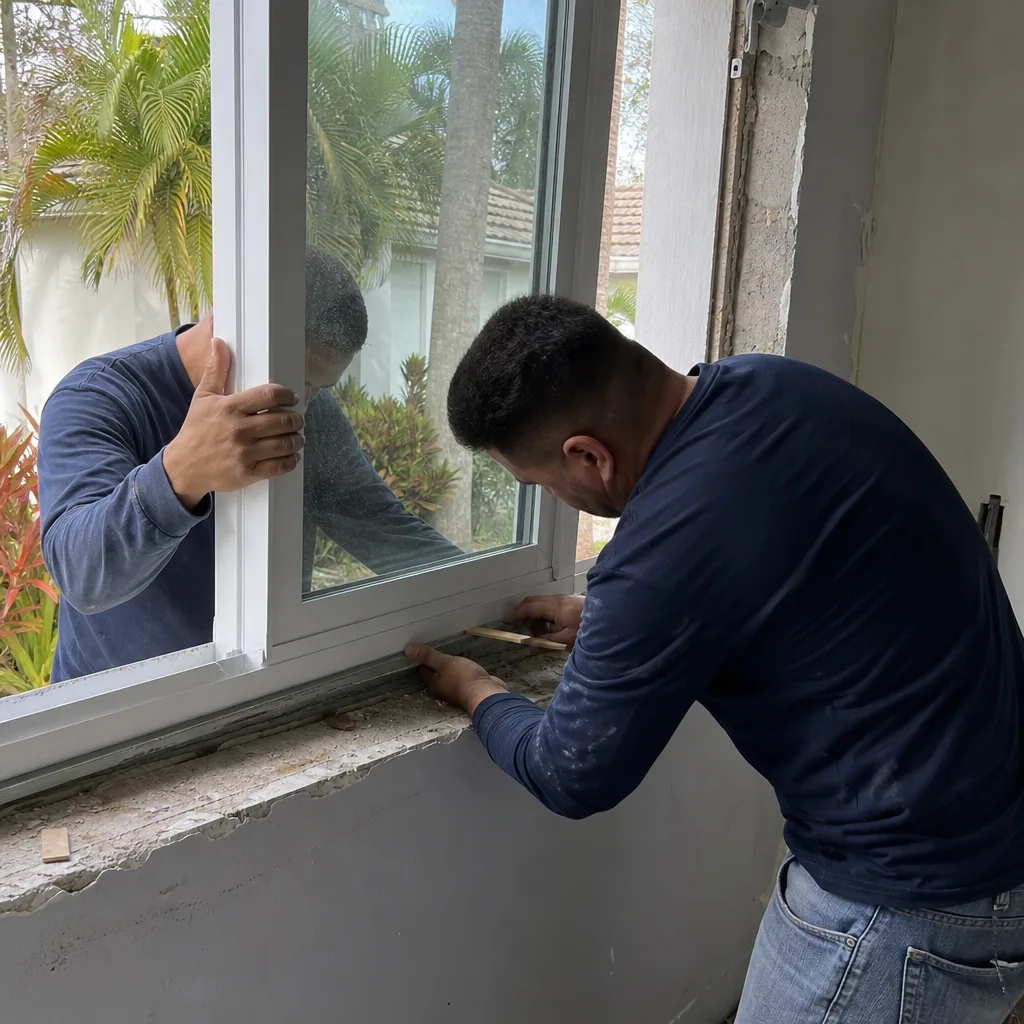
In Miami-Dade County, there is no real choice between impact and non-impact windows for new installation or replacement – non-impact glass is not a legal option inside the High Velocity Hurricane Zone. The comparison that matters is between two categories of impact windows: those carrying a Miami-Dade Notice of Acceptance (NOA) number and those carrying only a statewide Florida product approval. Only the NOA-rated window can be legally installed here, pass inspection, and earn you the wind-mitigation insurance credit. If your installer didn’t hand you an NOA number before the glass went in the wall, call (833) 968-1198 and we’ll help you sort out where you stand.
Key Takeaways
- Non-impact windows cannot be permitted for new installation or replacement in Miami-Dade’s HVHZ.
- “Impact-rated” on a label is not the same as “Miami-Dade NOA approved.” A window can pass Florida statewide testing and still fail the county’s stricter standard.
- Installing a Florida-approved but non-NOA window in Miami means you can’t close the permit, can’t get a wind-mitigation inspection, and can’t collect the insurance credit.
- Groundwork Construction Co. of Miami installs only Andersen and Marvin lines with published Miami-Dade NOA numbers you can verify yourself.
Why “Impact-Rated” Doesn’t Mean Legal in Miami
Florida Building Code allows manufacturers to seek statewide product approval – an FL number – for windows that pass ASTM large-missile impact testing. That approval travels across most of the state. Miami-Dade is different. Because the county sits inside the High Velocity Hurricane Zone, it runs its own product-approval system and requires a Miami-Dade Notice of Acceptance, which layers a higher design-pressure requirement and a county-specific review process on top of the statewide test. Plenty of windows sold as “impact” in Tampa or Orlando carry an FL number and no NOA. They are perfectly legal there. They are not legal here.
That distinction is where homeowners get hurt. A contractor who buys Florida-approved-but-non-NOA glass at a lower price can install it, get paid, and disappear. The window looks like impact glass. It may even be impact glass by the statewide definition. But when the building inspector pulls the NOA and finds none, the permit won’t close. When the wind-mitigation inspector arrives, they can’t issue the form. When your insurance company asks for the mitigation documentation that would lower your premium, you have nothing to send. The window cost was paid. The value was not received.
What Happens When Non-Impact Windows Stay in a Miami Home
For older Miami homes, the risk isn’t only storm safety. Non-impact windows create a 40-Year Recertification liability. Miami-Dade requires buildings at 40 years – 25 years near the coast – to be inspected for structural and electrical safety, and a structural inspector who finds non-compliant windows during recertification will require replacement before issuing the certificate. What a homeowner deferred as a future upgrade becomes an emergency expense with a deadline attached. In neighborhoods full of pre-1970s concrete-block and CBS homes, that recertification wave is predictable, and window compliance is part of it.
Miami’s sun adds a slower problem. Non-impact laminated glass uses an interlayer that degrades under intense UV faster than the PVB and SGP interlayers used in impact-rated assemblies. In this climate, non-impact glass can lose measurable structural integrity within 7 to 10 years, while NOA-rated impact interlayers are tested for long-term UV resistance as part of the approval process itself. Salt-laden coastal air and year-round humidity speed the breakdown of seals and frames on top of that. The window that seemed fine when it was installed is not the same window a decade later.
Impact vs Non-Impact Windows: Side-by-Side for Miami-Dade
| Factor | Non-Impact Windows | NOA-Rated Impact Windows |
|---|---|---|
| Legal for new install/replacement in Miami-Dade HVHZ | No | Yes |
| Approval required | Not applicable (cannot be permitted) | Miami-Dade NOA number |
| Permit close-out | Fails inspection | Passes with NOA on file |
| Wind-mitigation insurance credit | Not available | Available with documentation |
| 40-Year Recertification | Flagged for replacement | Compliant |
| UV/interlayer life in Miami sun | Degrades measurably in 7-10 years | Tested for long-term UV resistance |
| Typical installed cost | Lower sticker price, higher total cost | $9,440-$29,500 for impact window installation |
If you’re weighing the numbers, impact window installation in Miami runs $9,440-$29,500 depending on opening count, frame material, and whether the job includes stucco repair on a CBS wall. A straight window replacement on a non-HVHZ-eligible scope typically lands at $5,310-$17,700. The gap looks like savings until you factor the failed permit, the missing insurance credit, and the eventual forced replacement. On a 40-year-old Miami home, the “cheaper” non-impact route almost always costs more over time.
How to Verify Before You Sign
You don’t have to take any contractor’s word for compliance. Miami-Dade publishes an online product-approval database where you can look up a window’s NOA number by manufacturer and product line. Ask for the NOA number in writing before the contract is signed, then check it yourself. Here’s how we handle it at Groundwork Construction Co. of Miami:
- We install only Andersen and Marvin window lines that carry published Miami-Dade NOA numbers.
- We hand you the NOA number before installation so you can verify it in the county database independently.
- Every project is backed by our 730-Day Done Right Promise – if it’s not done right, we make it right.
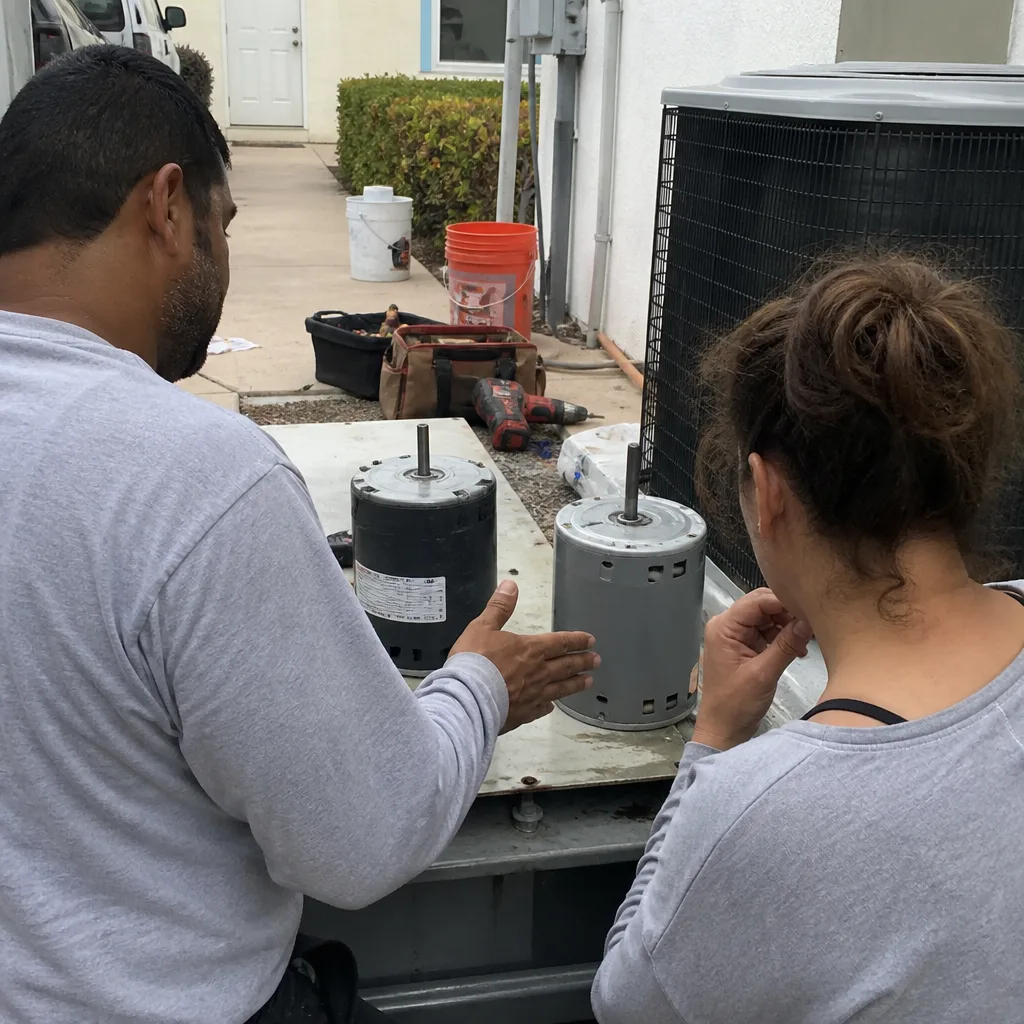
- Our technicians have up to 12 years of experience, and they arrive background-checked and in uniform.
- Pricing is upfront, with 0% financing for 18 months and $1,000 off projects over $10,000.
Brand matters less than the approval behind it. PGT, CGI, CWS, and ES Windows all make products for this market, but the only thing that counts on a Miami-Dade permit is whether that specific product line holds a current NOA. When you’re ready to compare options, our Windows & Doors team can walk you through which lines qualify for your home and which don’t – and we’ll tell you plainly when a window you’ve been quoted won’t pass.
FAQs
No. Non-impact windows cannot be permitted for new installation or replacement inside Miami-Dade’s High Velocity Hurricane Zone, so a contractor who offers them for a Miami home is offering something the county won’t approve. If you’ve been quoted non-impact glass, call (833) 968-1198 and we’ll help you get a compliant quote instead.
A Florida product approval (FL number) means a window passed statewide ASTM large-missile impact testing, while a Miami-Dade NOA means it also met the county’s stricter HVHZ design-pressure requirement and county review. A window can hold an FL number and still have no NOA, which makes it legal in most of Florida and non-compliant in Miami-Dade. Always ask for the NOA number specifically. Call (833) 968-1198 for a free estimate and we’ll show you the documentation before you commit.
Impact window installation in Miami typically runs $9,440-$29,500 depending on window count, frame material, and stucco repair on older CBS homes. Non-impact replacement pricing of $5,310-$17,700 doesn’t apply here because those windows aren’t legal in the HVHZ. Call (833) 968-1198 for an exact quote – estimates are free, and pricing is upfront with no surprises.
Yes, but only if the installation is documented with a valid Miami-Dade NOA and a wind-mitigation inspection – a Florida-approved but non-NOA window earns you nothing. The credit is tied to the paper trail, not the glass alone. Call (833) 968-1198 and we’ll make sure your project produces the documentation your insurer needs.
If you’d rather have it looked at, Groundwork Construction Co. of Miami offers a no-pressure assessment in Miami – we’ll check your current windows against county requirements, show you which NOA-rated lines fit your home, and give you an upfront number. Call (833) 968-1198, and a live person answers any hour. You can also explore our full Miami service area and see what else we handle from foundation to finish line.
Written by the team at Groundwork Construction Co. of Miami, serving Miami, FL.