
 Fence
 Kitchen remodeling
 Bathroom remodeling
 Home additions & ADU
 Roofing
 Windows & doors
 Driveway & pavers
Free written scope consultation - allowances, timeline, and change-order rules on paper before a single trade is scheduled
Styles & brands we work with
- Kitchen remodeling
- Bathroom remodeling
- Home additions & ADU
- Roofing
- Windows & doors
- Driveway & pavers
- Fence
See the difference
 Before
 After
 Before
 After
 Before
 After
Do You Need a Permit to Build a Fence in Miami, FL? Here’s the Straight Answer
Usually, yes. In Miami-Dade County, a fence permit is required when your fence will be over 6 feet tall, when the property sits in a FEMA flood zone (AE or VE), or when it’s in a designated historic district – and those triggers catch a lot of Miami homeowners by surprise, because it’s rarely just about height. Miami-Dade issues stop-work orders on unpermitted fences and makes the owner pay for demolition and reinspection before a compliant fence can go up. That’s not a scare tactic; it’s the actual enforcement path when a neighbor or a code inspector flags the work. If you want the short version before you read on, call us at (833) 968-1198 and we’ll tell you which triggers apply to your address.
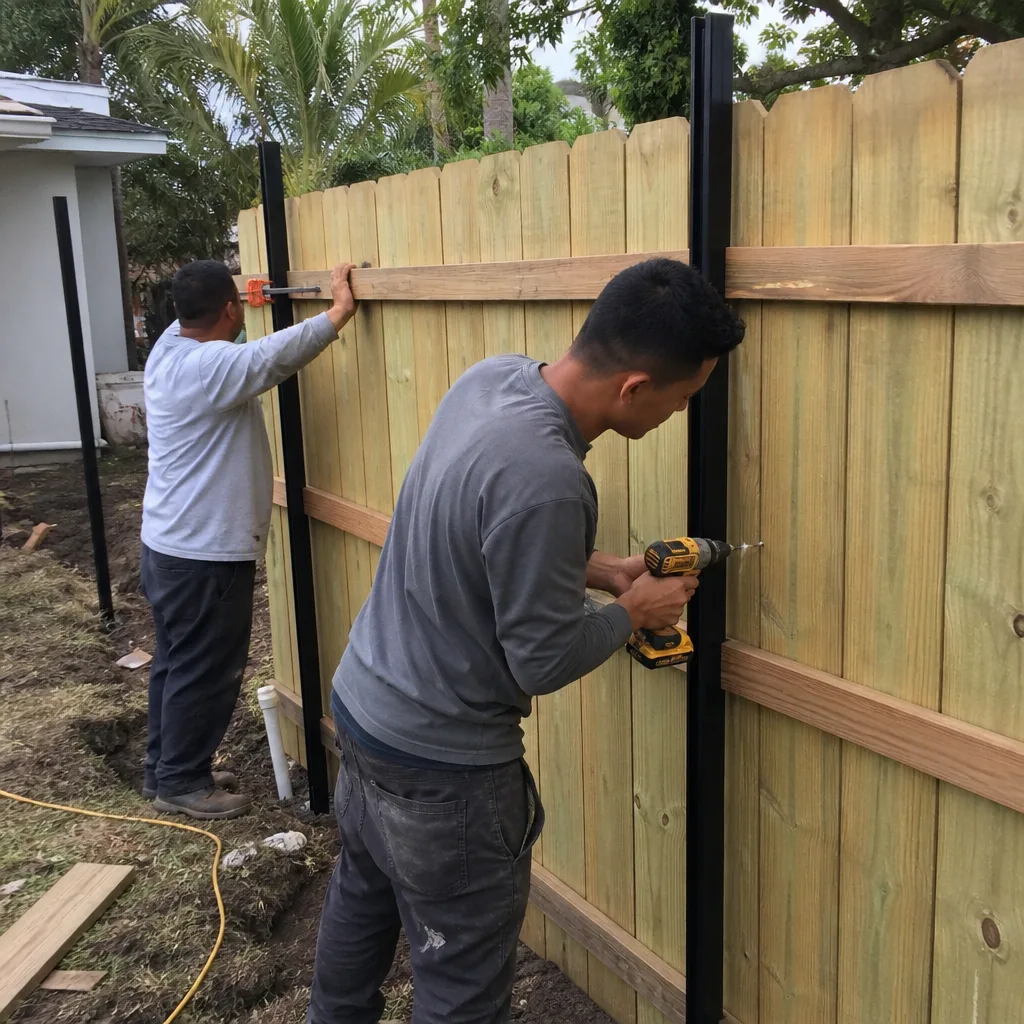
What Actually Requires a Fence Permit in Miami-Dade County
Fence rules here don’t follow the simple “6 feet and under is fine” logic that applies in most of Florida. Miami-Dade layers wind-load engineering, flood-zone elevation, and overlay-district review on top of the basics. Here’s where a permit becomes mandatory:
- Any fence over 6 feet in height. Height is measured from the finished grade, not from the top of your pavers, and that distinction matters on sloped lots near the bay.
- Any fence within a FEMA-designated flood zone. AE and VE zones cover large portions of Miami Beach, Coconut Grove, and the Biscayne waterfront. In these zones a fence has to meet elevation and openness requirements so it doesn’t block floodwater flow, which is why the permit review digs deeper.
- Any fence on property inside a designated historic district. Little Havana and the MiMo district along Biscayne Boulevard are the ones we see most. Material, height, and design all get reviewed, regardless of what the fence is made of.
Below 6 feet, outside a flood zone, outside a historic district, and not an HOA property? Plenty of Miami fences land in that gap and don’t need a county permit. But “no permit required” isn’t the same as “no rules apply,” and that’s the part most permit guides skip.
The Miami-Dade NOA Requirement Most DIYers Never Hear About
This is where Miami fencing diverges from the rest of the country. Miami-Dade is the only place in the U.S. with its own product-approval system – a Miami-Dade Notice of Acceptance (NOA) number – and in the High Velocity Hurricane Zone, fence posts and the hardware anchoring them to a permitted installation need to carry NOA numbers, not just Florida product approvals. That limits which post anchor systems and gate hardware are actually code-compliant, and it’s the single biggest reason a fence that looked fine at the big-box store gets rejected at inspection.
Our technicians have up to 12 years of experience reading these approvals, and it’s become routine work for us to check an anchor system’s NOA listing before it ever shows up on a job. A gate that works fine on a calm day can fail a wind-load check if its hardware isn’t listed for the HVHZ. Built to last, backed in writing – and here that backing starts with the hardware.
Where a County Permit Isn’t Enough: Coral Gables and HOA Overlays
Coral Gables has its own permitting authority, and it runs parallel to the county. The City Beautiful Commission governs fence height, material, and color through additional review, so a county permit alone is not sufficient there. We’ve seen fences that cleared Miami-Dade in days get held up for weeks in Coral Gables because the color didn’t match the approved palette or the material wasn’t on the allowed list.
HOA overlays add another layer on top. A community association in Kendall or Doral can set a stricter height cap or require a specific material even when the county would allow more. Read your HOA documents before you order anything. If you’d rather not untangle the layers yourself, we handle the paperwork as part of a full Fence Installation project. Upfront pricing, no surprises – and that includes the permit costs, which we spell out before we file.
What Skipping the Permit Actually Costs You
The stop-work order and reinspection fee are the obvious costs. The one most guides miss is the flood insurance side. An unpermitted fence in an AE or VE zone can trigger a FEMA flood insurance compliance review, and a fence the county later rules non-compliant can create problems when you file a claim or refinance. In Miami’s flood-zone footprint, that’s a real financial risk, not a hypothetical.
There’s also the 40-Year Recertification connection. Miami-Dade requires buildings at 40 years (25 near the coast) to be inspected for structural and electrical safety. If your property is approaching that window, a fence that triggers a structural inspection can accelerate or complicate the recertification process. Our pre-job site evaluation flags this before the permit application is filed, so you’re not discovering it mid-inspection. A typical permitted fence installation in Miami runs $4,130 to $10,620 depending on material, length, and the zone triggers involved.
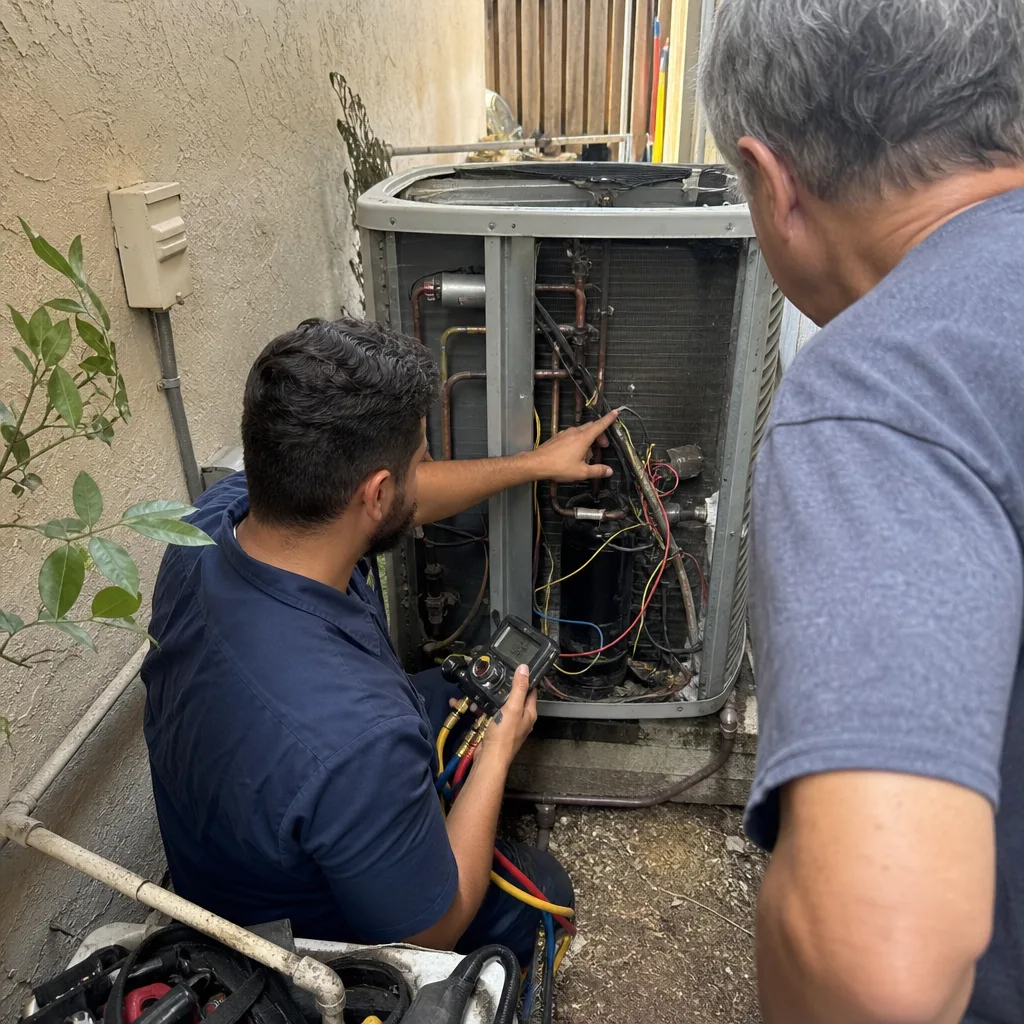
Common Miami Scenarios We See
On the Biscayne waterfront: A homeowner wants a privacy fence to block wind and salt spray. The lot sits in an AE zone, so the permit is required and the posts need NOA-listed anchors. Skipping this step invites a flood-insurance review later.
In Little Havana: A concrete-block wall style fence gets proposed inside the historic district. Height and material both get reviewed, and the county permit alone won’t clear it.
In Coconut Grove: A pre-1970s CBS home near the 40-year mark. The owner adds a fence and doesn’t realize the structural inspection requirement can overlap with recertification. We flag the timing up front.
In Coral Gables: The county approves, then the City Beautiful Commission asks for a color change. The extra review is normal there, and planning for it keeps the project on schedule.
FAQs
Often not, as long as the fence stays under 6 feet, sits outside an AE or VE flood zone, and isn’t in a historic district or HOA with stricter rules. The exception is the flood-zone and historic-district triggers, which apply regardless of height, so check your address before assuming you’re clear. Call (833) 968-1198 for a quick read on your specific lot.
A fence permit itself is a modest filing fee compared to the cost of getting caught without one, since a stop-work order plus demolition and reinspection can run into the thousands. Full fence installations in Miami typically land between $4,130 and $10,620, and a permitted job protects that investment. Call us for an exact quote – estimates are free.
Yes. We handle the permit application, the NOA documentation, and any Coral Gables or historic-district review as part of the project. That’s part of what separates a compliant install from a DIY attempt that stalls at inspection. Call (833) 968-1198 and we’ll walk you through the timeline.
The county can issue a stop-work order and require you to pay for demolition and reinspection before a compliant fence goes up, and in a flood zone it can trigger a FEMA insurance compliance review. Those costs usually dwarf the permit fee. Call (833) 968-1198 if you’re worried about an existing unpermitted fence.
Let’s Get It Right the First Time
Fence permits in Miami aren’t a formality – they’re a compliance checkpoint, and getting the triggers right saves you the cost of tearing a fence back down. If you’d rather have it looked at, Groundwork Construction Co. of Miami offers a no-pressure assessment in Miami – call (833) 968-1198 for a free estimate and a straight read on which rules apply to your address. We back every job with our 730-Day Done Right Promise.
Written by the team at Groundwork Construction Co. of Miami, serving Miami, FL.