
 Fence
 Kitchen remodeling
 Bathroom remodeling
 Home additions & ADU
 Roofing
 Windows & doors
 Driveway & pavers
Free written scope consultation - allowances, timeline, and change-order rules on paper before a single trade is scheduled
Styles & brands we work with
- Kitchen remodeling
- Bathroom remodeling
- Home additions & ADU
- Roofing
- Windows & doors
- Driveway & pavers
- Fence
See the difference
 Before
 After
 Before
 After
 Before
 After
Repair or Replace Fence in Miami, FL? Choose repair only if the structure is compliant and the posts are sound. Otherwise, replace.
That’s the short answer, and it’s the one most homeowners in Miami don’t hear first. Repair makes sense when your fence carries Miami-Dade NOA hardware, its posts still hold in the ground, and the damage is confined to a few boards or panels. Replace when the frame itself is non-compliant, corroded at grade, or leaning after a storm, because patching sections of a failing structure just buys you time you’ll pay for twice. If you want the honest read on your own fence, call (833) 968-1198 and we’ll send a technician out to put both numbers in writing.
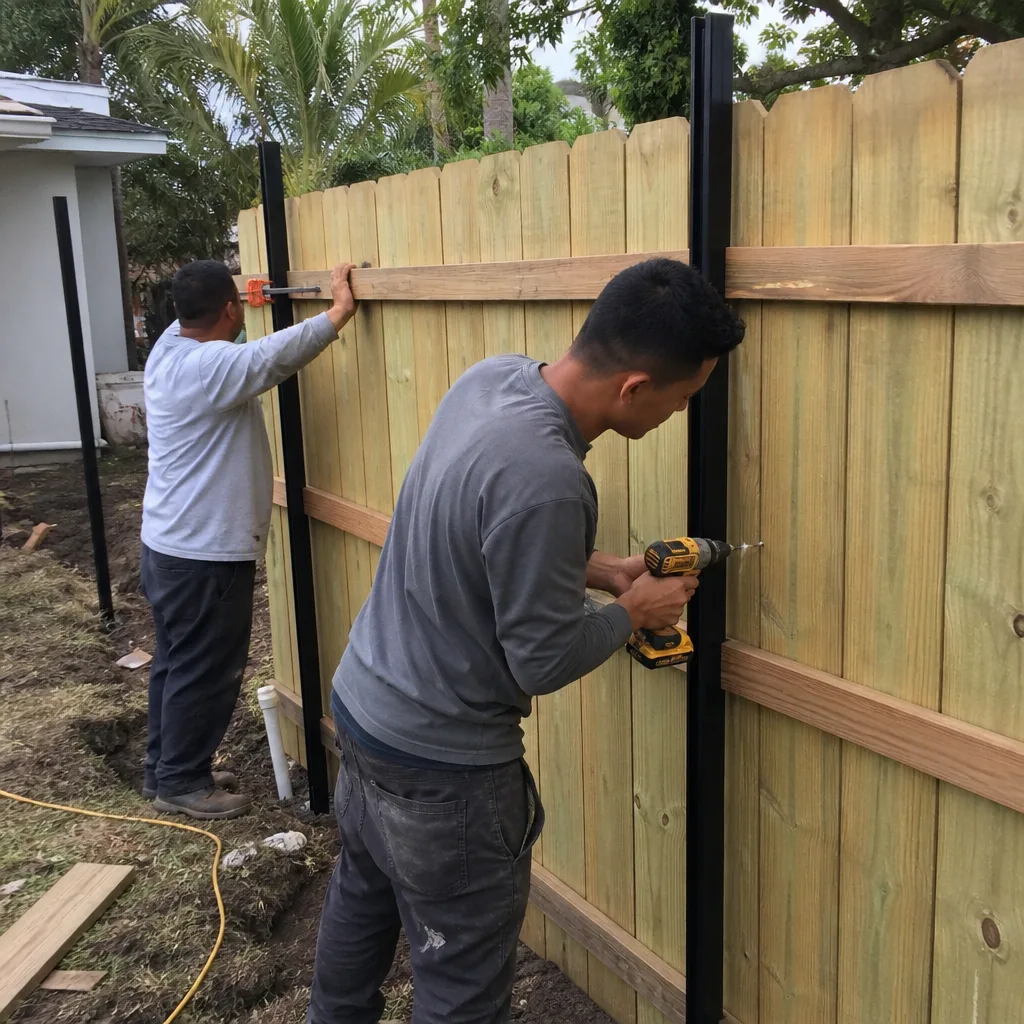
Here’s the part that gets skipped in most repair-or-replace conversations. The baseline lead range for a fence project in Miami runs $4,130-$10,620, and the spread inside that range almost always comes down to compliance status, not cosmetics.
Why compliance comes before cost in Miami
Miami-Dade is the only place in the country with its own product-approval system. Every roof, window, shutter, and fence anchor has to carry a Miami-Dade NOA number, not just a Florida state approval or a national listing. That’s the High Velocity Hurricane Zone doing what it’s supposed to do: making sure the hardware holding your fence down has been tested for the wind loads this county actually gets.
So when a homeowner calls us about a few loose panels, the first question isn’t “how much to fix it.” It’s “what’s holding it up, and is that documented?” If your fence went in before 2002, when the county codified NOA requirements for fence anchors and hardware, there’s a real chance it never carried those numbers. Repairs on that fence don’t bring it into compliance. They make a non-compliant fence look newer while the underlying liability stays exactly where it was.
It gets sharper if the fence was installed without permits. Any significant repair can pull the project into a bring-to-code review under Miami-Dade’s substantial improvement threshold, and at that point you’re paying for permits and upgraded hardware anyway. Piecemeal repair stops being the cheaper option.
The three compliance questions we ask first
- Do the posts, anchors, and hardware carry Miami-Dade NOA numbers, or was the fence built before the 2002 code update?
- Was the original install permitted, and is there a paper trail you can hand a future buyer?
- Are you in an AE or VE flood zone, and how much of the structure is the repair actually touching?
Get clear answers to those three and the repair-versus-replace math usually resolves itself.
The repair-versus-replace threshold for Miami conditions
Here’s a concrete line we use. If more than 30% of the posts show corrosion at or below grade, replace. If the fence has leaned after a documented storm event, replace. Not because the visible fence looks tired, but because the footing system that resists HVHZ wind loads is already compromised. A fence that survived one storm by luck doesn’t need a new top rail. It needs footings that will hold the next time.
Why 30% and why below grade? Because that’s where failure starts in this climate. Salt-laden coastal air, year-round humidity, and heavy summer rain go after the anchor and the first six inches of post before anything up top shows it. A post that looks fine above the soil line can be structurally gone at the base. That’s why our technicians probe and check grade-level condition on every assessment rather than eyeballing the fence from the driveway.
The flood-zone variable most homeowners miss
If you’re in an AE or VE flood zone and your repair touches more than 50% of the fence structure, you may trigger a substantial improvement review under the Miami-Dade flood damage prevention ordinance. In plain terms: a repair project can require the same permit documentation as a replacement. You won’t save on paperwork, and you won’t save on cost while keeping non-compliant elements. That flips the calculus fast. A repair that looked like the budget play can end up with the same permit path and none of the wind-load improvement.
We see this a lot in coastal and low-lying neighborhoods where a wind-blown section comes down and the homeowner assumes a patch job is simple. Half the time, once we map the affected area against the flood ordinance threshold, replacement is the cleaner and more defensible path.
Match your fence’s age to its realistic Miami lifespan
Label lifespans are written for average conditions. Miami isn’t average. Here’s what we actually see:
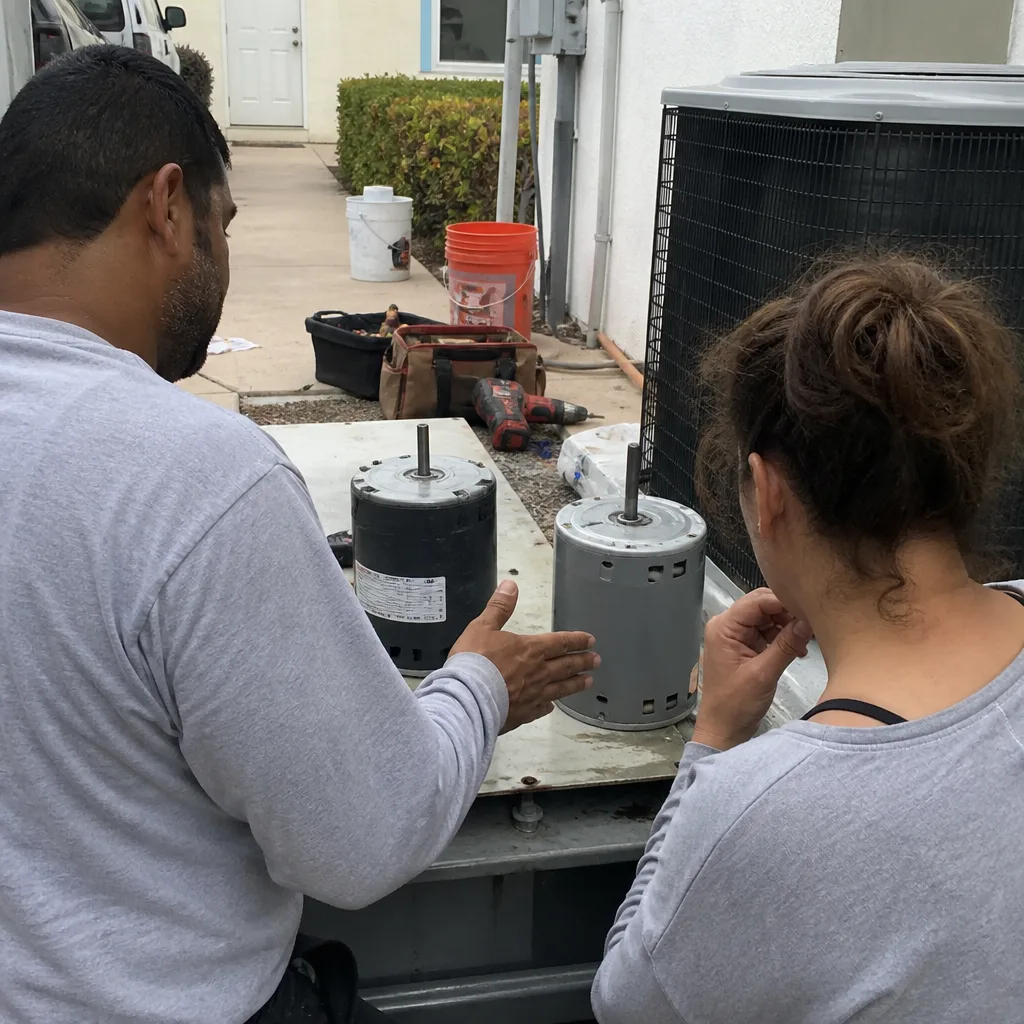
| Material | Label lifespan | Realistic Miami lifespan | Repair usually worth it? |
|---|---|---|---|
| Pressure-treated wood fence | 20+ years | 10-15 years (high-moisture soil, termite pressure) | Only if posts are dry and sound |
| Galvanized chain link (within 1 mile of coast) | 20+ years | 8-12 years before structural thinning | Panel-level only; replace rails once thinning starts |
| Aluminum with marine powder coat | 30+ years | 25+ years | Yes, hardware and panel repairs are worth it |
Match your fence’s current age to those benchmarks and you’ll know whether a repair is buying time or buying value. A 12-year-old pressure-treated fence in high-moisture soil with rusty post bases isn’t a repair candidate. It’s a replacement that’s already due. A marine-coated aluminum fence with one bent panel is an easy fix, and we’ll tell you so.
Common repair-or-replace scenarios in Miami
Every week we walk into the same handful of situations. Odds are yours is one of them.
- Post-storm lean on a pre-2002 fence. One or two sections tilted after a tropical system. The visible damage is small, but the footings never met current NOA requirements. Repairing sections extends a non-compliant structure. We usually recommend a full rebuild with documented anchors.
- Corroded chain link within a mile of the coast. The posts still look solid until you check where the rails bolt in. Once rail thinning starts from salt air, panel repairs are delaying the inevitable.
- Termite-softened wood posts in high-moisture soil. The boards look fine; the posts are hollow at grade. That’s a footing failure, not a fence board problem, and it’s a replacement.
- Aged aluminum with one bent panel. Genuine repair territory. In Miami, marine powder coat holds 25+ years, so keeping the structure and swapping a panel is the right money.
- Flood-zone fence with a big failed run. The 50% substantial improvement threshold can turn a repair into a replacement-path permit job. Worth checking before you sign anything.
If you’re weighing a replacement, our guide to Fence Installation in Miami walks through materials, permits, and what to expect on timeline.
How Groundwork Construction Co. of Miami handles the assessment
We don’t do pressure. When a homeowner in Miami calls us for a fence assessment, we send a uniformed, background-checked technician who puts both numbers on one document: the repair cost and the replacement cost, side by side, so you can make the call as a capable adult. Our technicians have up to 12 years of experience with HVHZ-compliant structures, and they’ll tell you plainly when a repair is the smarter spend.
Every project we take on is covered by our 730-Day Done Right Promise. If it’s not done right, we make it right, in writing. We also keep calls answered by a live person 24/7, so you’re not leaving a voicemail when a panel goes down ahead of a storm. Upfront pricing, no surprises: the number you see is the number you pay, and projects over $10,000 come with $1,000 off plus 0% financing for 18 months if you’d rather spread the cost. Whether you choose a targeted repair or a full Fence Installation, the material choices are yours, drawn from verified brand partners, because we’d rather you choose quality than just availability.
FAQs
Repair is cheaper only when the existing structure is compliant and the posts are sound; once a fence is non-compliant or the footings are compromised, replacement usually costs less over time. A repair that extends a pre-2002 fence with no Miami-Dade NOA hardware doesn’t fix the underlying liability, and it can pull you into the same permit path as a replacement. Most fence projects here land in the $4,130-$10,620 range. Call (833) 968-1198 for an exact quote with both options on paper; estimates are free.
Often yes, especially when the work touches more than a minor section or your property sits in a flood zone. Repairs affecting more than 50% of the structure in an AE or VE flood zone can trigger a substantial improvement review under the county flood damage prevention ordinance, which means permit documentation on par with a replacement. That’s why we check compliance and flood status before quoting a repair. Call (833) 968-1198 and we’ll walk you through what your property needs.
Check the base, not the top: if more than 30% of posts show corrosion or softening at or below grade, replacement is structurally warranted. Posts fail where salt, humidity, and rainwater meet the soil, so a post that looks fine above the line can be hollow at the anchor. If the fence also leaned after a storm, the footing system holding it in HVHZ wind loads is already compromised. Call (833) 968-1198 to have a technician probe the posts and give you a straight answer.
Shorter than the label says. Pressure-treated wood posts realistically last 10-15 years in Miami’s high-moisture soil, galvanized chain link within a mile of the coast thins out in 8-12 years, and aluminum with marine powder coat holds 25+ years. Matching your fence’s age to those benchmarks tells you whether a repair is buying time or buying value. Not sure where yours falls? Call (833) 968-1198 for a free assessment.
If you’d rather have it looked at than guess, Groundwork Construction Co. of Miami offers a no-pressure assessment anywhere in Miami. We’ll put the repair number and the replacement number on one page and let you decide. Call (833) 968-1198 for a free estimate and design consult.
Written by the team at Groundwork Construction Co. of Miami, serving Miami, FL.