
 Driveway & pavers
 Kitchen remodeling
 Bathroom remodeling
 Home additions & ADU
 Roofing
 Windows & doors
 Fence
Free written scope consultation - allowances, timeline, and change-order rules on paper before a single trade is scheduled
Styles & brands we work with
- Kitchen remodeling
- Bathroom remodeling
- Home additions & ADU
- Roofing
- Windows & doors
- Driveway & pavers
- Fence
See the difference
 Before
 After
 Before
 After
 Before
 After
Asphalt vs Concrete Driveway in Miami, FL: The Answer Changes South of Orlando
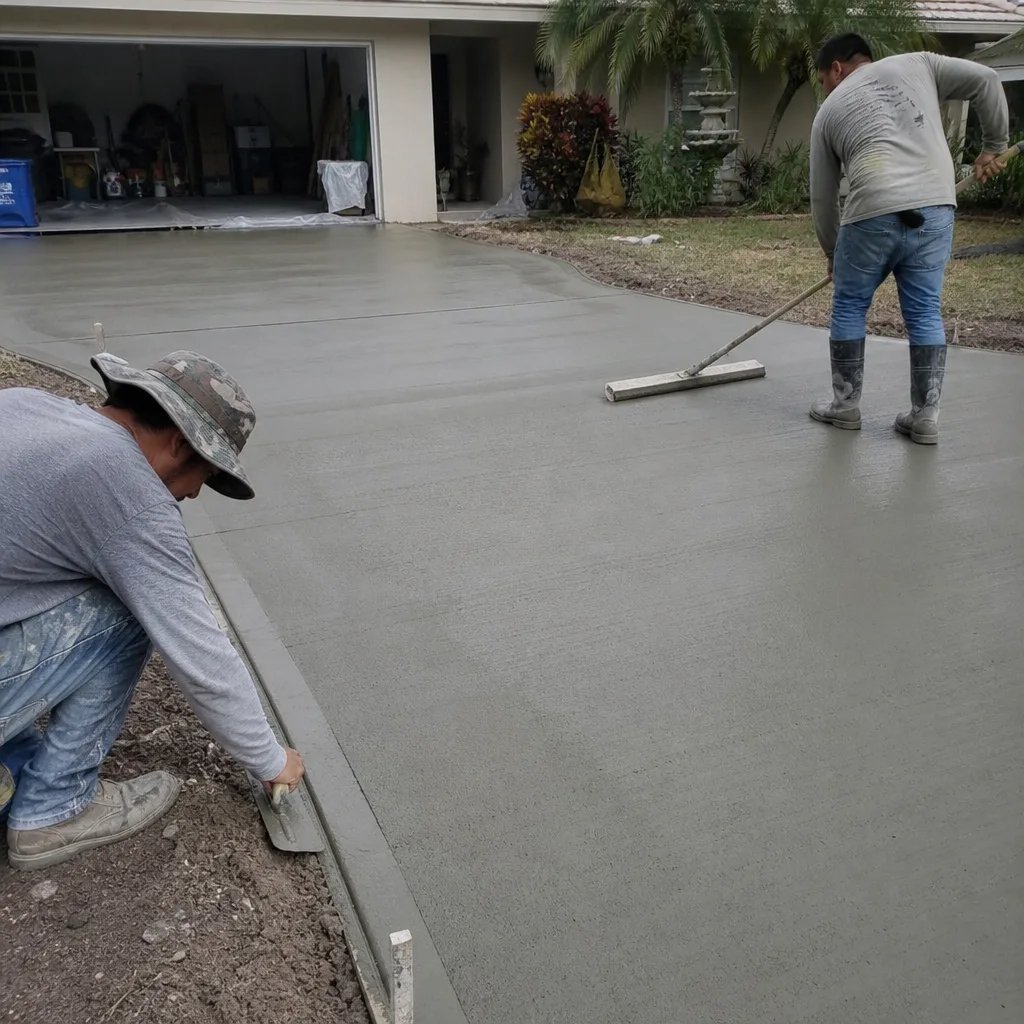
For most Miami homes, concrete is the better long-term driveway choice. Asphalt wins on upfront cost nearly everywhere, but in Miami’s heat, salt air, and hurricane season, that savings gets eaten by resealing every 1-2 years and rutting that shows up the first August after installation. Choose concrete unless you’re paving a short-lived access surface, a rental, or a shaded, low-traffic drive where the softer look and lower initial price actually make sense. Call (833) 968-1198 and we’ll walk your lot, check drainage and slope, and tell you straight which material fits your property.
Key Takeaways
- Concrete is the better default for Miami homes, especially pre-1970s CBS properties with flat lots and poor drainage.
- Asphalt’s lower sticker price is erased by resealing costs every 1-2 years instead of the national 3-5.
- Surface temps on Miami pavement top 140°F in summer, which softens asphalt and causes rutting and binder bleed-through.
- Concrete has to be specified correctly for salt air (water-cement ratio, chloride-resistant admixtures) or it spalls early.
- Every project is covered by our 730-Day Done Right Promise, and your quote breaks out material and labor separately.
Why the National “Asphalt Is Cheaper and Easier” Advice Doesn’t Hold Here
Nearly every asphalt-vs-concrete comparison you’ll read was written for a freeze-thaw climate. In Ohio or Pennsylvania, asphalt flexes through winter and concrete is the material that cracks. That logic is real, and it’s why the internet keeps recommending asphalt. But Miami doesn’t freeze. We have subtropical heat, year-round humidity, salt-laden coastal air blowing in off Biscayne Bay, and a June-through-November hurricane season. Those are the forces that actually age a driveway here, and they treat asphalt much worse than they treat concrete.
The single biggest thing national guides miss: asphalt softens. Once surface temperature climbs past about 120°F, the mix starts to give under a tire. Miami pavement routinely hits 140°F or higher on a July afternoon. That’s when you see rutting where the car parks, depressions under the garbage bin, and binder bleed-through, a shiny black sheen where the asphalt cement literally rises through the aggregate. It’s a known South Florida problem, and it shows up fast on an unshaded drive. Concrete doesn’t soften at those temperatures. It just sits there, hot and stable.
What Salt Air and Coastal Humidity Do to Each Material
The second Miami-specific cost is oxidation. Asphalt binder is a petroleum product, and salt air plus humidity speed up the rate at which it oxidizes and goes brittle. Inland on a national average, that resealing clock runs 3-5 years. Along Miami’s coast, from South Beach up through North Miami and Sunny Isles, we see it running closer to every 1-2 years. Run the numbers over ten years and the “cheaper” asphalt drive has quietly spent several thousand dollars on sealing, cracks, and patch repairs that nobody warned you about at quote time.
Concrete has its own enemy here: chloride. Salt ions penetrate porous concrete, reach the steel, and trigger rust that expands and spalls the surface from underneath. That’s the failure you see on unmaintained drives around older Coral Gables blocks. It’s avoidable, but only if the mix is specified right from the start. Low water-cement ratio, the correct air content, and chloride-resistant admixtures slow that penetration dramatically. The difference between a 30-year drive and one that spalls in 10 is a spec detail most crews skip because it costs a little more and nobody’s checking. We build to it by default.
Drainage: The Miami Problem That Decides This for You
Here’s the part that rarely makes national comparisons. A huge share of Miami’s housing stock is pre-1970s concrete-block and CBS homes on flat or nearly-flat lots. On those properties, getting water away from the foundation isn’t optional, and after a summer downpour the driveway is the main surface your roof runoff crosses. Concrete can be sloped and finished precisely to direct that water where it needs to go, all the way to the swale or a French drain. Asphalt is far more limited in how it can be graded and shaped, and pushing water off it usually means adding curbing. If your CBS home sits on a flat lot with poor drainage, concrete’s ability to move water away from your foundation is a structural advantage asphalt can’t match without extra work.
Asphalt vs Concrete Driveway in Miami: Side-by-Side
Same lot, same traffic, ten-year view. Reseal and repair ranges below are typical South Florida figures drawn from the jobs we quote around Miami.
| Factor | Asphalt (Miami) | Concrete (Miami) |
|---|---|---|
| Typical installed range | $4,130-$10,620 | $5,310-$14,160 |
| Resurface / reseal every | 1-2 years (coastal salt air) | Seal 3-5 years, optional |
| Resealing cost each time | $295-$825 | Within the same sealing range |
| Heat behavior | Softens above 120°F; ruts and bleeds | Stable to well past 140°F surface |
| Salt-air resistance | Oxidizes faster; brittle by mid-life | Resists well when spec’d with admixtures |
| Grading precision for drainage | Limited; often needs curbing | Precise slopes control stormwater |
| Hurricane-season debris cleanup | Softer surface dents under branches | Harder surface handles debris and boots |
The honest read: asphalt’s $4,130 lower-end price is real, and for a short-life surface it’s the right call. But add $295-$825 of resealing every couple of years and it crosses concrete’s range within roughly a decade, on top of the rutting and bleed-through you’ll be living with. When it’s time to resurface the whole length, see our Driveway & Pavers service page for how a full replacement and material choice get scoped.
What Does a Miami Driveway Actually Cost?
Upfront pricing is where Groundwork does things differently. Our quote breaks out material and labor separately, so you see exactly what the concrete mix spec, base depth, and finish choice add up to. No bundled number that hides where the savings are actually being made. Below are true market ranges for the Miami area.
- Asphalt driveway paving: $4,130-$10,620
- Concrete driveway installation: $5,310-$14,160
- Full driveway replacement: $5,900-$16,520
- Driveway sealing (either material): $295-$825
- Paver driveway as an upgrade: $8,260-$21,240
Base prep is where a lot of the real cost sits, and it’s where cheap quotes cut corners. A proper compacted base and correctly sloped subgrade are what keep cracks from opening in the first two summers, which is exactly why our work carries the 730-Day Done Right Promise. For a drive that ties into landscaping or a front walk, a paver or concrete spec run alongside our Driveway & Pavers in Miami page gives you a cleaner finish line.
Common Local Scenarios We See Around Miami
A 1950s CBS home on a flat lot in the Roads or Westchester. Poor drainage plus flat grade plus an aging slab means the new driveway has to be engineered to move water off the foundation. Concrete wins here nearly every time, and grading is the whole conversation.
A waterfront or near-coast property in North Bay Village or Sunny Isles. Salt air drives asphalt oxidation to that 1-2-year reseal cycle. The recurring cost makes asphalt the more expensive material by year five or six, so concrete with chloride-resistant admixtures is the smarter long play.
An unshaded west-facing drive that bakes all afternoon. Surface temps that run past 140°F cause asphalt rutting and bleed-through where the tires sit. Concrete holds its shape; you’ll notice the difference the first August.
A rental or a property you expect to sell within a few years. This is the one place asphalt earns its keep. Lower upfront cost, easier patch work, and the buyer, not you, absorbs the resurfacing cost.
How Groundwork Construction Co. of Miami Handles a Driveway Job
We’ve worked in this market since 2014, and our technicians bring up to 12 years of experience to every pour. Calls are answered by a live person 24/7, every technician is background-checked and arrives in uniform, and you get no-hassle upfront pricing so the number you see is the number you pay. Projects come with 0% financing for 18 months and $1,000 off when the work runs over $10,000. This is home work from foundation to finish line, built to last and backed in writing.
FAQs
Asphalt is cheaper upfront, running $4,130-$10,620 versus $5,310-$14,160 for concrete. But in Miami’s salt air, asphalt needs resealing every 1-2 years instead of 3-5, so the savings erode within about a decade. Call (833) 968-1198 for an exact quote on your lot.
Asphalt softens once surface temperatures pass roughly 120°F, and Miami pavement routinely exceeds 140°F. That lets tire loads press ruts into the surface and pushes the binder up in a shiny bleed-through, a known South Florida issue. Call (833) 968-1198 if your drive is already showing it.
Every 1-2 years along the coast, compared to the national 3-5-year cycle, because salt air and humidity speed up binder oxidation. Each reseal runs $295-$825, and that recurring cost is the main thing national guides leave out. Call (833) 968-1198 and we’ll give you a free, no-pressure estimate.
Yes. Concrete stays stable well past the temperatures that soften asphalt, and when it’s specified with a low water-cement ratio and chloride-resistant admixtures it resists salt-air damage that spalls weaker mixes in about 10 years. It can also be sloped precisely to move stormwater off your foundation. Call (833) 968-1198 if you’d rather have it looked at.
If you’d rather have it looked at, Groundwork Construction Co. of Miami offers a no-pressure assessment in Miami. We’ll check your slope, drainage, and traffic, lay out the real ten-year cost of each material, and let you decide. Call (833) 968-1198 for a free estimate.
Written by the team at Groundwork Construction Co. of Miami, serving Miami, FL.