
 Kitchen remodeling
 Bathroom remodeling
 Home additions & ADU
 Roofing
 Windows & doors
 Driveway & pavers
 Fence
Free written scope consultation - allowances, timeline, and change-order rules on paper before a single trade is scheduled
Styles & brands we work with
- Kitchen remodeling
- Bathroom remodeling
- Home additions & ADU
- Roofing
- Windows & doors
- Driveway & pavers
- Fence
See the difference
 Before
 After
 Before
 After
 Before
 After
ADU Setback Requirements in Miami, FL: What Actually Applies to Your Lot
In Miami, ADU setbacks are set by the local municipality, not by the state. Florida SB 102 requires cities to allow accessory dwelling units, but it doesn’t erase their setback rules. So a detached ADU still has to clear the rear and side setback lines your zoning district enforces. On a typical 50-foot-wide Miami lot, that often decides whether a detached unit even fits. Call (833) 968-1198 and we’ll pull your actual parcel survey before anyone draws a line.
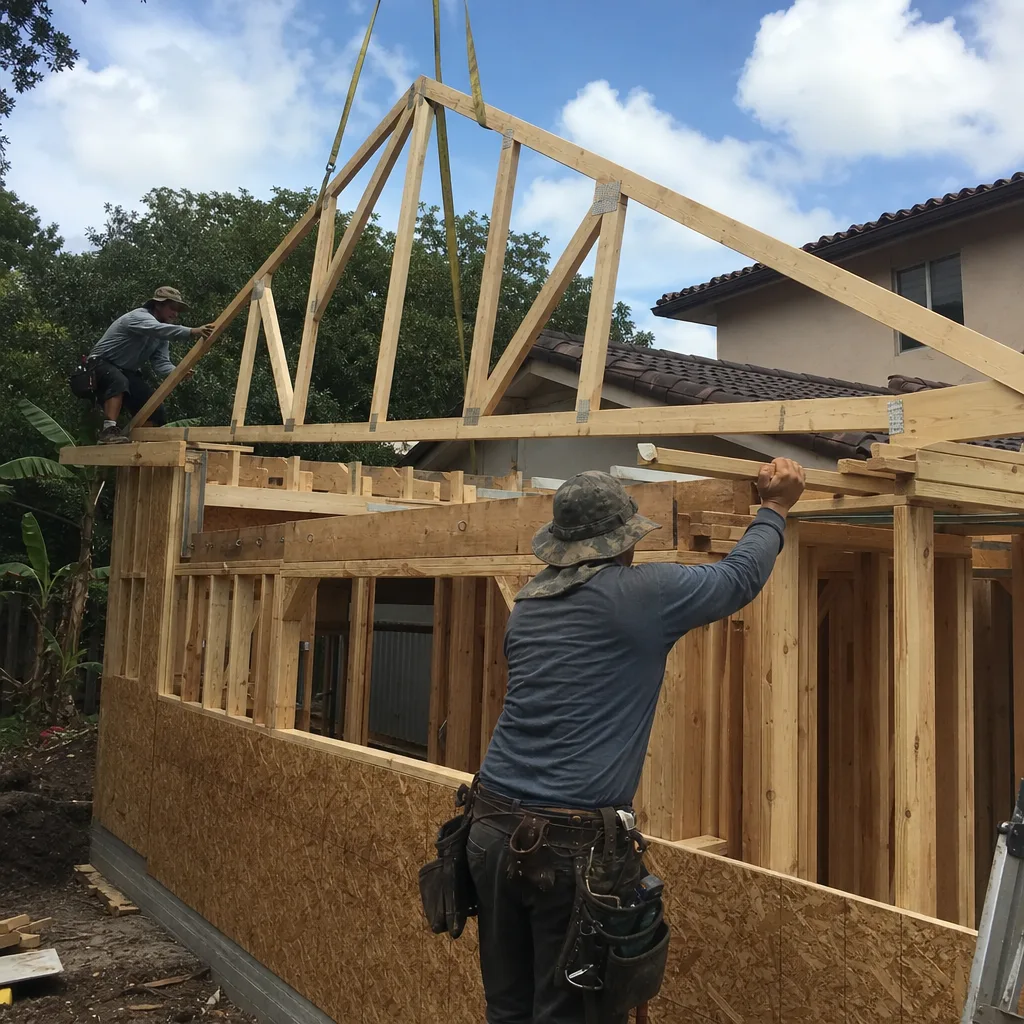
Miami’s lot layouts and housing stock give this question a twist you won’t find in generic guides. The city is dense with pre-1970s concrete-block and CBS homes, 1920s Mediterranean Revival buildings, and MiMo apartment blocks. Many of those parcels already carry an old accessory structure sitting well inside the current setback line, and that changes what you can build.
The Pre-Existing Structure Trap Nobody Warns You About
Your neighbor’s detached garage that’s two feet from the property line isn’t a model for your ADU. It’s a pre-existing non-conformity, and the county isn’t going to let you replicate it. That structure was legal when it went up. Today’s code would never approve it, so it’s allowed to stand as-is but not to guide a new build.
Here’s where homeowners get burned. An existing accessory structure inside the setback line usually can’t be converted to a legal ADU without a variance. Variances in Miami-Dade can add three to six months, and approval isn’t guaranteed. The most common scenario we see is a homeowner with a detached garage 1-3 feet from a side lot line who assumes it’s a shortcut to an ADU. It isn’t. The variance process turns that “easy conversion” into a longer, uncertain project.
If a pre-1970s structure is part of your plan, we check its legal status against county records before anything else. That one step saves months of wasted design work.
What Setbacks Actually Apply in Miami, FL?
Rear setbacks in Miami-Dade municipalities commonly run 5 to 10 feet. Side setbacks commonly run 5 to 7.5 feet, and corner lots often have different rules on the street-facing side. So the answer to “how close can I build?” depends entirely on your zoning district and your lot’s dimensions.
On a narrow lot, that math can make a detached ADU geometrically impossible at standard size. Say your lot is 50 feet wide with 7.5-foot side setbacks on each side. That leaves 35 feet of buildable width, and the rear setback carves further into depth. Sometimes a smaller unit works. Sometimes the only path forward is an attached addition. This is why we look at the actual parcel survey, not a generic code lookup.
- Detached ADU: full setback compliance applies, since it has its own exterior footprint.
- Attached addition: setbacks still apply, but it shares the main structure’s walls and roofline.
- JADU (interior only): a unit carved from the existing home’s interior sidesteps the setback question entirely, because there’s no new exterior footprint.
- Alley-access lot: alley setbacks are measured differently, which can open up rear-lot placement standard layouts don’t allow.
Why Alley-Access Lots Change the Game in Little Havana and Coconut Grove
Alley lots are a real local advantage, and most guides skip it. In neighborhoods like Little Havana and Coconut Grove, many parcels back onto a public alley. Rear-lot placement is measured from the alley lot line, not from a standard rear property line, and the rules differ. That can free up space a conventional lot layout locks shut.
Older Coconut Grove properties in particular tend to sit on irregular plats with alley frontage, so what’s impossible on one block is fair game on the next. We measure each one individually because the pattern isn’t consistent even on the same street.
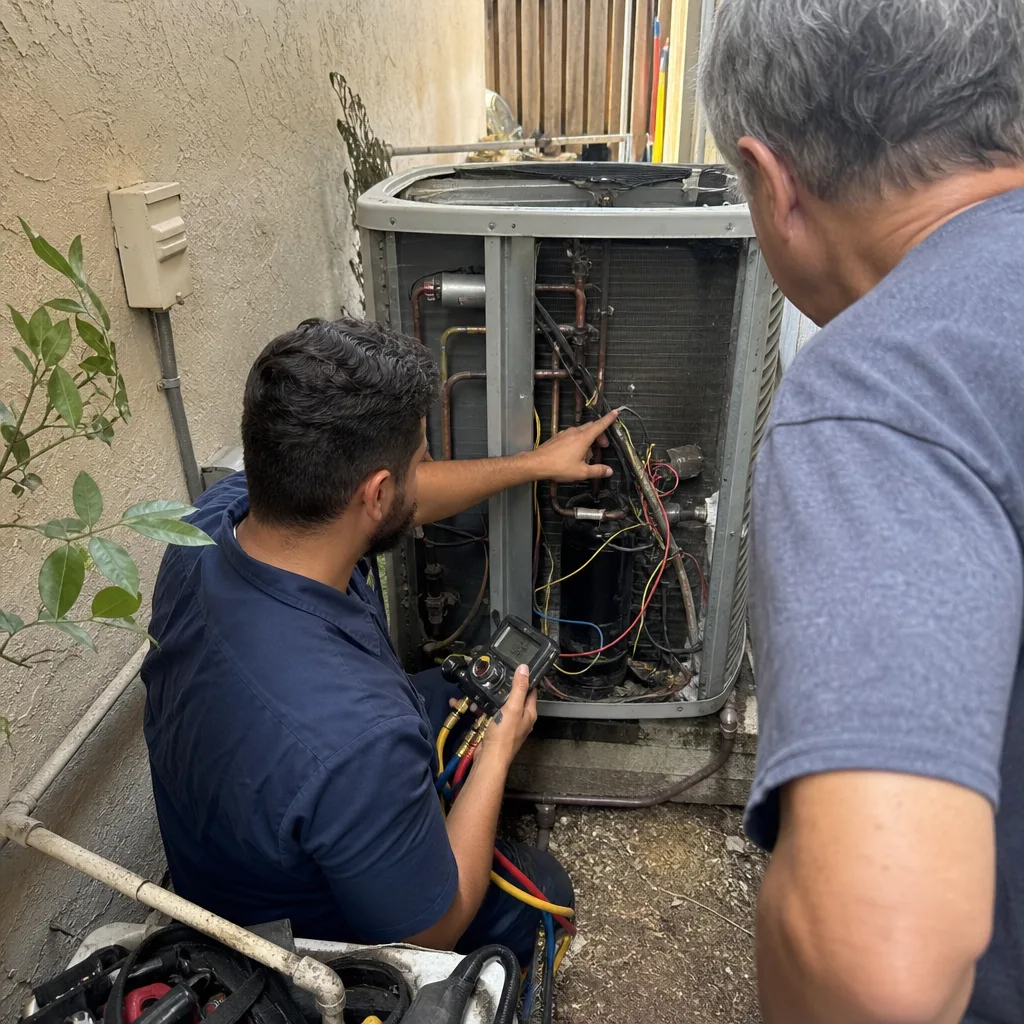
What Our Project Managers Check Before You Pay for Drawings
We pull the actual parcel survey and zoning record for your address before advising on placement. Not a website query, not a rough guess. We confirm:
- Your zoning district and the setbacks it enforces.
- Whether an existing accessory structure is conforming or non-conforming.
- Whether your lot has alley access and how it’s measured.
- What your buildable footprint actually allows, so you know before paying a designer.
Miami’s High Velocity Hurricane Zone matters here too. Miami-Dade County is the only place in the U.S. with its own product-approval system, so anyone building an ADU here needs Miami-Dade NOA numbers on windows, shutters, and roof materials, not just a Florida or national approval. Impact window installation in Miami runs $9,440 to $29,500, and that figure belongs in your ADU budget, not as an afterthought. For a full rundown of the build itself, see our Home Additions & ADU page and for the main scope, our Home Additions & ADU in Miami service.
Materials we specify carry weight for a reason. Andersen and Marvin windows meet Miami-Dade impact requirements, and GAF roofing systems hold up under the sun and salt air that chew through lesser underlayments. Choose quality materials and back them in writing with our 730-Day Done Right Promise. All projects are covered by it.
What Does an ADU Cost in Miami, FL?
ADU construction in Miami runs $106,200 to $259,600 depending on size, whether it’s detached, attached, or a conversion, and how much of the work sits inside the wind zone requirements. A garage conversion sits lower at $35,400 to $94,400. Here’s how the pieces stack up:
| Project | Typical Miami Range |
|---|---|
| ADU construction | $106,200-$259,600 |
| Garage conversion | $35,400-$94,400 |
| Home addition | $53,100-$153,400 |
| Impact window installation | $9,440-$29,500 |
| Roof replacement | $9,440-$23,600 |
Upfront pricing means the number you see is the number you pay. For projects over $10,000, we take $1,000 off, and we offer 0% financing for 18 months so a large unit doesn’t have to wait. Call (833) 968-1198 and we’ll give you an exact range based on your lot, not a guess.
FAQs
Yes. Florida SB 102 requires Miami-Dade municipalities to allow ADUs, but it doesn’t remove setback requirements. Rear setbacks of 5-10 feet and side setbacks of 5-7.5 feet still apply to any structure with an exterior footprint, so a detached ADU must comply. Call (833) 968-1198 for a survey check on your specific lot.
Not without a variance, and a variance isn’t guaranteed. A pre-existing accessory structure already inside the setback line is non-conforming, so converting it to a legal ADU usually requires a variance process that adds three to six months. If a detached ADU is blocked, a JADU carved from the home’s interior sidesteps setbacks since there’s no new exterior footprint. Call (833) 968-1198 and we’ll walk your options before you spend on drawings.
It depends on your zoning district, but rear setbacks commonly run 5-10 feet and side setbacks 5-7.5 feet. On a narrow lot that can leave too little room for a detached unit at standard size. We pull your parcel survey and zoning record to confirm what your buildable footprint allows. Call (833) 968-1198 for a free estimate and design consult.
Yes. Lots with alley access in neighborhoods like Little Havana and Coconut Grove have rear-lot placement measured from the alley line, which can open up space standard layouts don’t allow. It’s measured case by case, so the answer on one block won’t hold on the next. Call (833) 968-1198 and we’ll read your plat.
Get Your Lot Checked Before You Draw
If you’d rather have it looked at, Groundwork Construction Co. of Miami offers a no-pressure assessment in Miami. We pull the real survey, check for non-conforming structures, and tell you what meets setback requirements before you pay a designer. Our technicians have up to 12 years of experience, and calls are answered by a live person around the clock. Call (833) 968-1198 for a free estimate.
Written by the team at Groundwork Construction Co. of Miami, serving Miami, FL.