
 Kitchen remodeling
 Bathroom remodeling
 Home additions & ADU
 Roofing
 Windows & doors
 Driveway & pavers
 Fence
Free written scope consultation - allowances, timeline, and change-order rules on paper before a single trade is scheduled
Styles & brands we work with
- Kitchen remodeling
- Bathroom remodeling
- Home additions & ADU
- Roofing
- Windows & doors
- Driveway & pavers
- Fence
See the difference
 Before
 After
 Before
 After
 Before
 After
Prefab ADU vs Custom Built ADU in Miami: Which One Actually Gets Built?
For most Miami homeowners, custom-built wins over prefab unless you have a straightforward lot, a manufacturer who already holds every Miami-Dade NOA you need, and a budget that can absorb crane delivery and HVHZ upgrades. A prefab unit can ship in six weeks. Getting that same unit approved by Miami-Dade’s product-approval system can take longer than framing and finishing one on site. That single fact flips the math for most lots in this county, and it’s the part most comparison guides skip. Call (833) 968-1198 and we’ll walk your specific property through both paths before you commit a dollar.
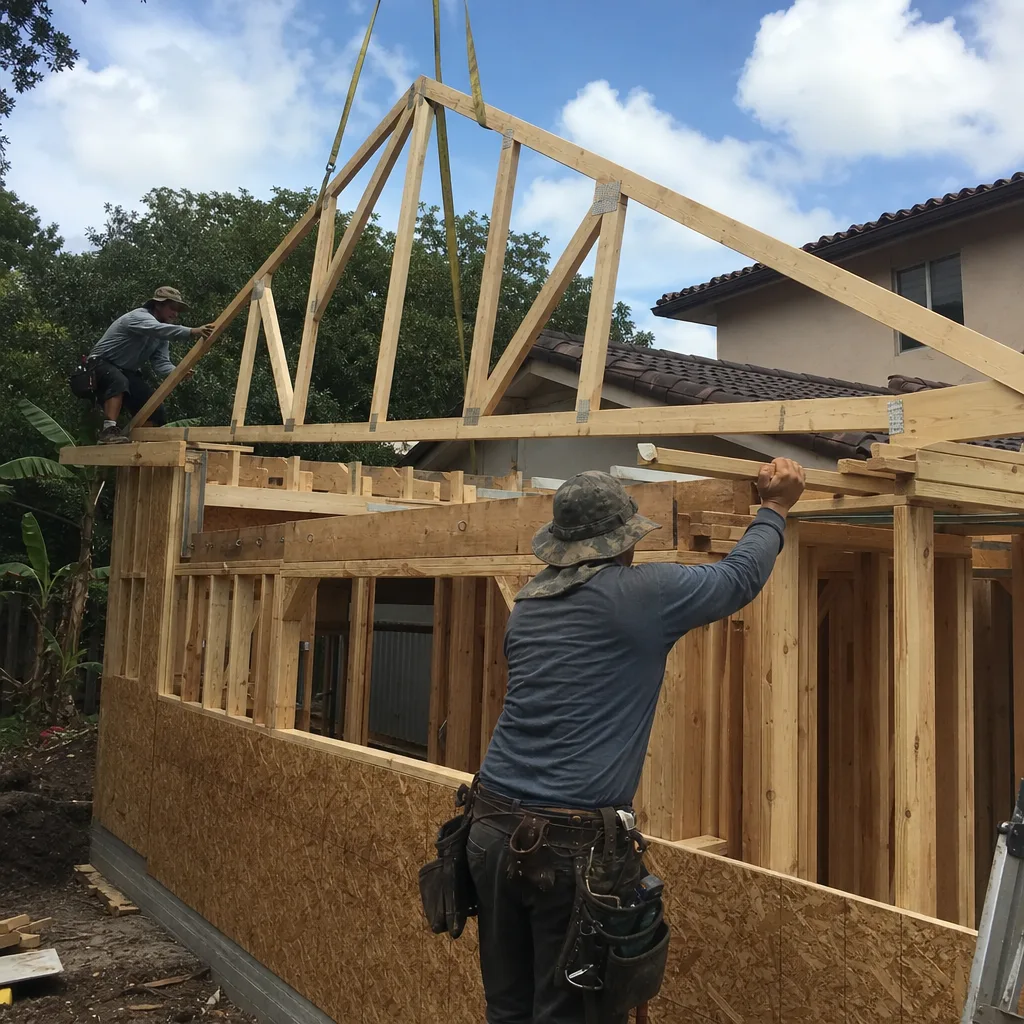
What Miami’s Building Reality Does to the Prefab Pitch
Prefab ADUs are marketed as a factory-built shortcut: panels cut indoors, assembled on your lot, done faster and cleaner than stick-building. That story holds up in most of the country. Miami is the exception, and it’s not a small one.
Miami-Dade County runs the only local product-approval system in the United States. Every component that resists wind – structural panels, roofing systems, windows, shutters – needs a Miami-Dade Notice of Acceptance, a NOA number, before it can be permitted here. A Florida Product Approval or a national code listing is not the same document. They’re not interchangeable, and a plan reviewer in Miami will reject one that only carries the state approval.
Here’s the trap: plenty of national prefab manufacturers hold a Florida approval and no Miami-Dade NOA. When that’s the case, your options narrow fast – swap components to approved alternatives (if the manufacturer offers them), submit for a product-control approval (slow and expensive), or abandon the unit. We’ve watched homeowners lose deposit money waiting on a NOA that never came. The prefab timeline on the brochure never included that queue.
What to Check Before You Compare Prices
Start with paperwork, not dollars. Ask each prefab manufacturer these questions in writing, and ask a custom builder the equivalent:
- Does every structural panel, roof assembly, and window carry a current Miami-Dade NOA number? Get the numbers, not a verbal yes. You can verify each one against the county’s approval database.
- What’s the design wind speed the unit is rated for? The High Velocity Hurricane Zone demands more than standard inland construction.
- Who stamps the foundation and tie-down engineering for my lot? Prefab units are typically engineered around a standard wood-frame suburban slab. Miami’s older neighborhoods are concrete block and CBS with flat or low-slope roofs, and the tie-downs and foundation details don’t transfer cleanly.
- What happens to my money if permitting stalls? Refund terms matter more here than anywhere.
On the custom side, the same questions get answered from the ground up: a soil report first, then engineering drawn for the actual site, then components selected from products that already hold the approvals Miami requires. That’s the difference between design-around-your-lot and design-around-a-template. If you want the full picture of what a ground-up build includes, our Home Additions & ADU in Miami page lays out the process.
Where the Prefab “Savings” Quietly Disappear
The sticker price of a prefab unit looks unbeatable next to a custom build. Then the line items arrive. In dense Miami neighborhoods – Little Havana, Shenandoah, Westchester – delivery often means a crane and a street closure, and the crane cost lands on you. Impact-glass windows rated for the HVHZ are frequently an upgrade, not a standard feature. Site prep, foundation, utility trenching, and MEP connections are usually excluded from the factory price. And every permit revision restarts the clock.
Custom-built ADU work in Miami generally runs $106,200 to $259,600 depending on size, site conditions, and finish level. A prefab unit might quote lower up front, but once you add crane delivery, HVHZ window upgrades, foundation work, and the permitting cycle, the gap narrows – and sometimes reverses. Compare it to the broader Home Additions & ADU range of $53,100 to $153,400 for the lighter end of additions, and you can see how much of the final number is driven by site reality rather than the box itself.
| Cost Factor | Prefab ADU | Custom-Built ADU |
|---|---|---|
| Base unit / build | Lower sticker | $106,200-$259,600 all-in |
| Miami-Dade NOA coverage | Often missing – risk of permit rejection | Specified from approved products |
| Crane delivery in dense neighborhoods | Usually extra, sometimes infeasible | Not applicable (built in place) |
| HVHZ impact glass | Frequently an upgrade | Engineered in from the start |
| Foundation & tie-downs | Designed for standard lots | Drawn from your soil report |
| Warranty coverage | Manufacturer components only | 730-Day Done Right Promise on the whole build |
The Warranty Gap Nobody Mentions
A prefab unit’s warranty typically covers the manufacturer’s components and nothing else. The foundation, the site work, the utility connections, and the finish work around the unit? Those fall between the manufacturer and whoever installed it. When something goes wrong – and on an ADU in Miami’s humidity and salt air, something eventually does – you can end up the referee in a dispute between two parties who each point at the other.
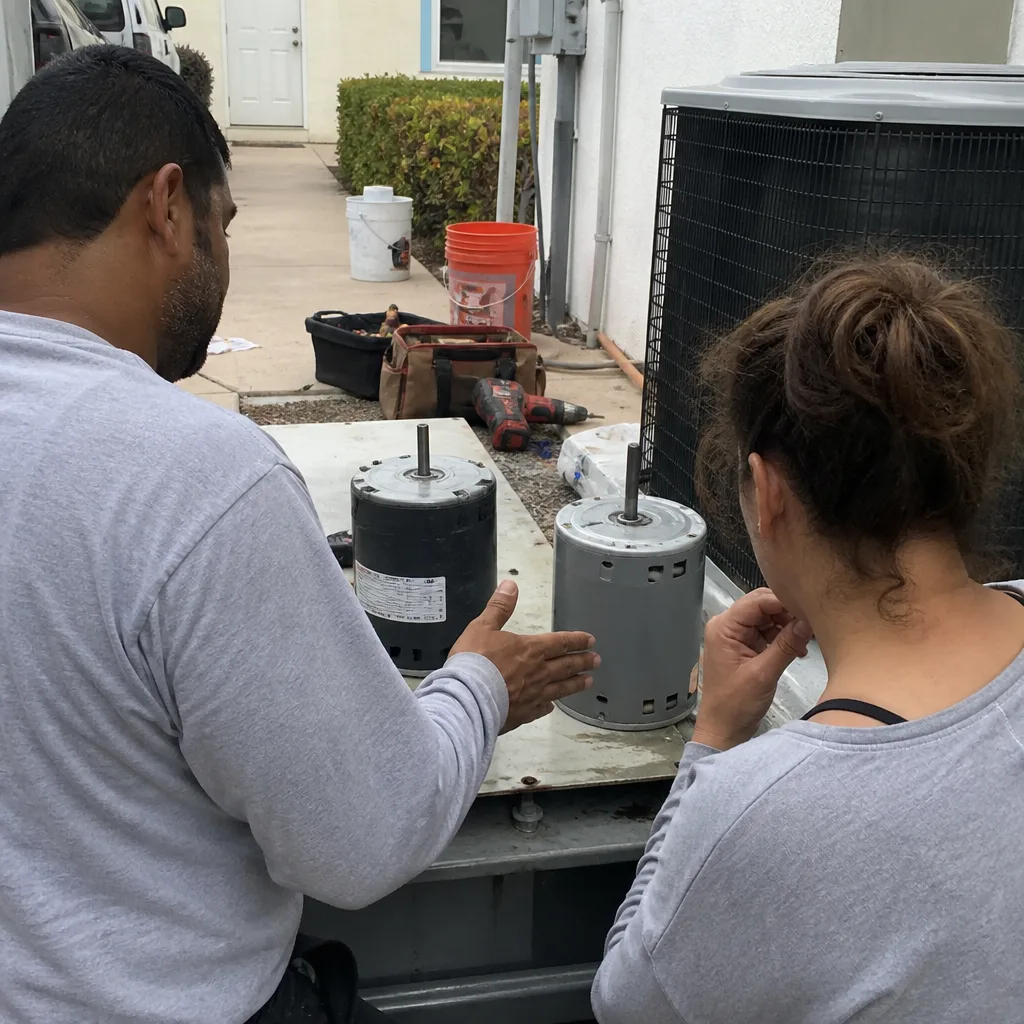
Groundwork Construction Co. of Miami builds custom ADUs under the 730-Day Done Right Promise: if it’s not done right, we make it right, for two full years. One company, one warranty, from foundation to finish line. That single point of accountability is worth more than a few thousand dollars of sticker savings once you’ve lived through a Florida hurricane season in the structure. Our technicians have up to 12 years of experience, and every one of them is background-checked and arrives in uniform.
Flood Zones and Flat Lots: Where Prefab Simply Can’t Go
Coastal Miami sits in VE and AE flood zones, and elevation rules often require a finished floor height well above grade. A prefab unit built to a standard slab-on-grade spec can’t just be lifted – the structural modifications to make it work often cost more than the unit. On top of that, much of the older housing stock here has flat or low-slope roofs, and reworking drainage and tie-downs around that geometry is a custom-engineering job, not a catalog pick.
In those zip codes, custom is usually the only practical path. Where a lot is high and dry, on a clean infill parcel, with a manufacturer who carries full Miami-Dade NOAs – prefab can genuinely make sense. We’ll tell you honestly which side your property falls on. We also handle related trades like roofing in Miami and impact window installation in Miami if the ADU scope grows.
What Custom ADU Building Looks Like With Us
We start with the actual site: soil, setbacks, flood zone, existing structure. Then we spec products that already hold the approvals Miami requires, so permitting moves without the NOA surprises that sink prefab timelines. Pricing is upfront – the number you see is the number you pay – and we back it with 0% financing for 18 months plus $1,000 off projects over $10,000. Finishes can pull from our brand partners, from Kohler fixtures to Delta and Moen hardware, at whatever tier your budget allows.
Key takeaways:
- Miami-Dade requires a NOA for every wind-resisting component; many prefab units don’t have one.
- Crane delivery, HVHZ window upgrades, and foundation work erode prefab savings.
- Custom builds are engineered for your site, flood zone, and warranty coverage.
- Prefab makes sense on straightforward lots with fully approved manufacturers; custom wins everywhere else.
FAQs
Usually not once everything is counted. The prefab sticker price is lower, but crane delivery, HVHZ impact-glass upgrades, foundation work, and permit revisions often push the true cost close to a custom build in the $106,200 to $259,600 range. Call (833) 968-1198 for a free side-by-side estimate on your lot.
No, not as-is. Miami-Dade requires its own Notice of Acceptance, and a Florida Product Approval is not a substitute. If a manufacturer doesn’t carry Miami-Dade NOAs for structural panels, roofing, and windows, the unit will fail plan review unless components are swapped or a costly product-control approval is obtained. Call us and we’ll check the NOA status before you sign anything.
Custom builds in Miami typically run several months from permit to completion, but they usually finish on a predictable schedule because permitting is designed around approved products. Prefab units often ship in six weeks yet stall for months in product approval and permit revisions. The faster-looking option isn’t always the faster one. Call (833) 968-1198 to map out timelines for your property.
Custom ADUs built by Groundwork fall under our 730-Day Done Right Promise covering the whole build – foundation, structure, and finish work. A prefab warranty typically covers only the manufacturer’s components, leaving site work and MEP connections unguaranteed. Call (833) 968-1198 with your questions; estimates are free.
Get an Honest Answer on Your Lot
If you’d rather have it looked at, Groundwork Construction Co. of Miami offers a no-pressure assessment in Miami – call (833) 968-1198. We’ll review your property, your flood zone, and the NOA status of any prefab unit you’re considering, then give you a straight recommendation with upfront pricing. Calls are answered by a live person 24/7.
Written by the team at Groundwork Construction Co. of Miami, serving Miami, FL.