

 Kitchen remodeling
 Bathroom remodeling
 Home additions & ADU
 Roofing
 Windows & doors
 Driveway & pavers
 Fence
Free written scope consultation - allowances, timeline, and change-order rules on paper before a single trade is scheduled
Quikrete Kitchen Remodeling: The Miami Owner’s Guide
Quikrete-compatible kitchen remodeling in Miami runs $16,520 to $53,100 installed for a full kitchen, and small kitchen projects land between $10,620 and $23,600. Most projects span several days to a few weeks, not a single visit. We schedule a free estimate and design consult first, then build the work around your home.
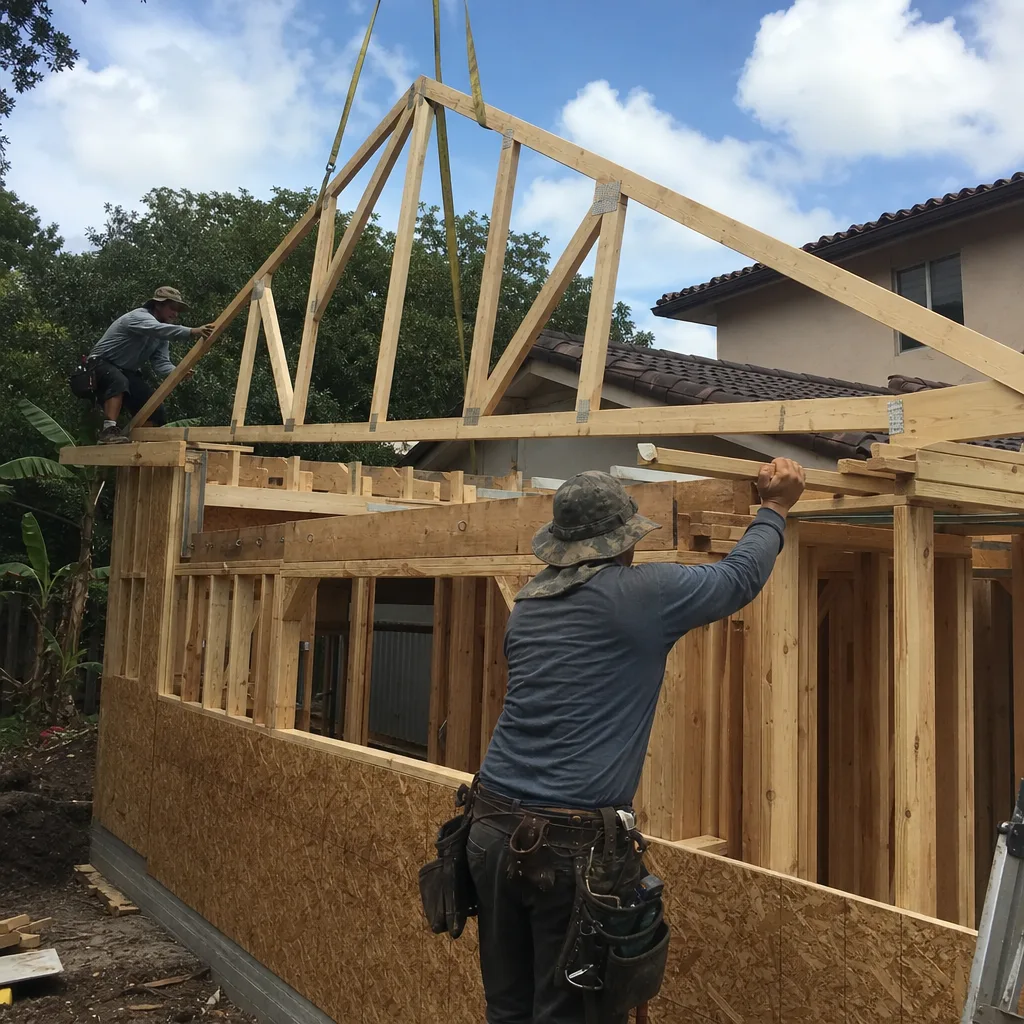
Owners rarely wake up thinking about Quikrete products. The discovery usually starts with something smaller: a tiled backsplash popping loose above the counter, grout cracking along the floor in a 1970s Miami ranch, or a concrete counter edge that’s begun to chalk and pit. Quikrete repair mortars, patching compounds, concrete mixes, and tile-setting products turn up all over Miami kitchens – under a new island base, behind a backsplash, or in a floor patch from a prior owner’s plumbing job. When those repairs fail, the kitchen shows it before anything else in the house does.
Which Quikrete Products This Applies To
Quikrete isn’t a kitchen appliance brand with model numbers bolted to a door panel. It’s a family of concrete and masonry products, and the “model” is the product line and mix printed on the bag. The ones that matter in a Miami kitchen: Fast-Setting Concrete Mix, Concrete Mix, Sand/Topping Mix, Vinyl Concrete Patcher, Mortar Mix, and their tile and surface-prep lines. Each has a different compressive strength, cure window, and best use, which is exactly why matching the right product to the right application matters more than matching a serial number.
To identify what you’re dealing with, read the bag or the remnant of material itself. Look for the product name, the mix type (topping, mortar, patching), and any printed lot or date. Older failed patches often can’t be identified by eye – a patching compound and a mortar mix can look identical once cured. Our technicians have up to 12 years of experience reading failed substrates and matching the correct replacement product, whether it’s a Quikrete line or a comparable quality material.
OEM versus aftermarket for Quikrete works differently than it does for a cabinet hinge. Quikrete itself sells through retailers, so “OEM” simply means the same product line that failed. Quality aftermarket equivalents exist for patching and mortar, but they must be rated for the same application and cure conditions. In Florida humidity, that distinction matters; a low-grade patching compound that cures too fast in Miami heat will crack within a season. We specify the right product for the job and back it in writing with our 730-Day Done Right Promise. Groundwork Construction Co. of Miami is an independent service provider and is not affiliated with Quikrete.
Styles & brands we work with
- Kitchen remodeling
- Bathroom remodeling
- Home additions & ADU
- Roofing
- Windows & doors
- Driveway & pavers
- Fence
Signs Your Quikrete Kitchen Remodeling Is Failing
Failed concrete and masonry work in a kitchen almost always announces itself. Here’s what to watch for and what’s usually underneath.
- Cracks radiating from a floor patch or island base. Shrinkage cracking and missed control joints are the usual cause, and in Miami’s humidity swings both accelerate. If a patch was poured too wet or cured without cover, it’s cracking from day one.
- Backsplash tile or grout coming loose. That points to an incompatible mortar or a substrate that flexed. Concrete-board or drywall edges that weren’t properly prepared will shed the tile-setting layer no matter how good the mortar is.
- Chalking or pitting on a concrete counter or island surface. The product was likely a patching compound used as a finish, or a topping mix that wasn’t sealed. It’s cosmetic at first, then structural once water gets in.
- Hollow sound when you tap the floor. A patch that’s debonded from the slab. The layer looks intact but is sitting loose, and it fails underfoot once traffic or moisture works the gap.
- Efflorescence, or white powdery bloom. Moisture migrating through the material. In Miami’s storm season, that’s a sign the barrier or substrate wasn’t handled before the patch was poured.
See the difference
 Before
 After
 Before
 After
 Before
 After
Replacement Cost & What’s Included
For a Miami kitchen, a full remodel runs $16,520 to $53,100, with small kitchen projects at $10,620 to $23,600. Cabinet installation alone is $4,720 to $15,340, countertops run $2,360 to $7,670, backsplash work is $945 to $2,950, and a kitchen island lands between $3,540 and $11,800. Every quote is itemized – products, labor, and demo listed separately – so the number you see is the number you pay, with no surprises once work starts.
What drives the range is scope, not the product line: how much demolition is needed to reach a sound substrate, whether we’re re-doing a small patch or rebuilding a slab section, and how premium the finish materials are. A failed Quikrete patch behind a backsplash is a modest repair; a debonded island base is a different job. We pair certified brand partners – KraftMaid, Cambria, Silestone and others – with the right prep materials so the finish layer sits on a substrate that holds. Every project is backed by our 730-Day Done Right Promise, and we also service KraftMaid, Cambria, and Silestone installations when a kitchen is being rebuilt around them.
DIY or Call Us?
A homeowner can safely check some things without touching a tool: tap on suspected patches to listen for hollow spots, check for cracking width, see whether grout is cracking, and read any product labels still legible. That much diagnosis is fine and useful.
Where DIY goes wrong is at the mixing and substrate stage. Getting Quikrete ratios wrong in Miami heat causes fast-setting failure; skipping substrate prep causes the same eventual debonding you started with; and using the wrong product for the application – patching compound where mortar belongs – means the repair fails again in a season. Those are the jobs where doing it twice costs more than calling once. If you’re unsure what failed or want it done right the first time, call (833) 968-1198 for a free estimate. Our pricing is upfront, and we stand behind the work in writing.
FAQs
Done correctly with the right product and proper substrate prep, a patched floor or island base lasts 15 to 25 years. Miami’s humidity and storm season are the deciding factor: unsealed toppings and patching compounds can fail within 2 to 3 seasons, while properly specified and sealed work holds up. Call (833) 968-1198 to have your situation assessed.
Often yes. Shallow cracking and localized debonding can be repaired if the substrate underneath is sound. Once a patch has fully separated from the slab or an island base has shifted, replacement is the more economical call. We tell you which applies after seeing it – the free estimate exists so you can decide with a real number in hand.
A small repair to a failed patch or island base is typically a single visit, while a full kitchen rebuild around new surfaces runs several days to a few weeks depending on scope. Most of that is cure and finish time, not labor. We give you a written schedule and hold to it.
We source the specific Quikrete line or a quality equivalent rated for your application and Miami’s climate, matched to the job rather than pulled from whatever’s on hand. If the right product is a different brand’s comparable line, we’ll tell you and explain why. Call (833) 968-1198 to schedule your free estimate and design consult.
Quikrete failures in a Miami kitchen are fixable, and the fix holds when the prep is right. Whether you’re patching one spot or rebuilding the whole kitchen around new finishes, Groundwork Construction Co. of Miami brings upfront pricing, a 730-Day Done Right Promise, and a free estimate with design consult. Calls are answered by a live person around the clock, and technicians arrive background-checked and in uniform. Call (833) 968-1198 for your free estimate.
Written by the team at Groundwork Construction Co. of Miami, serving Miami and nearby areas.