
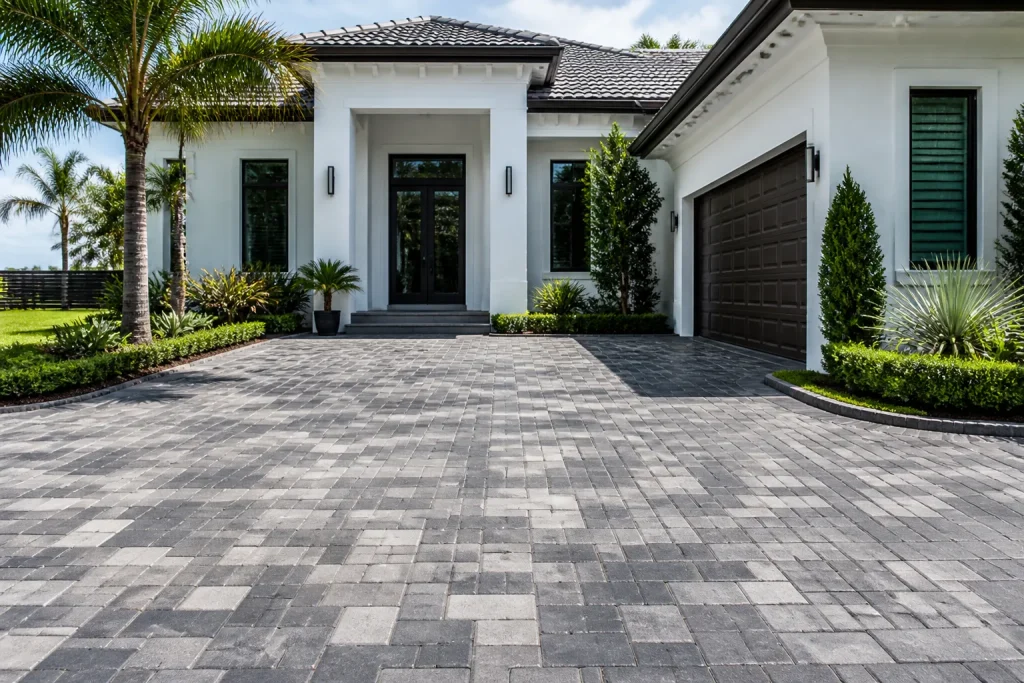
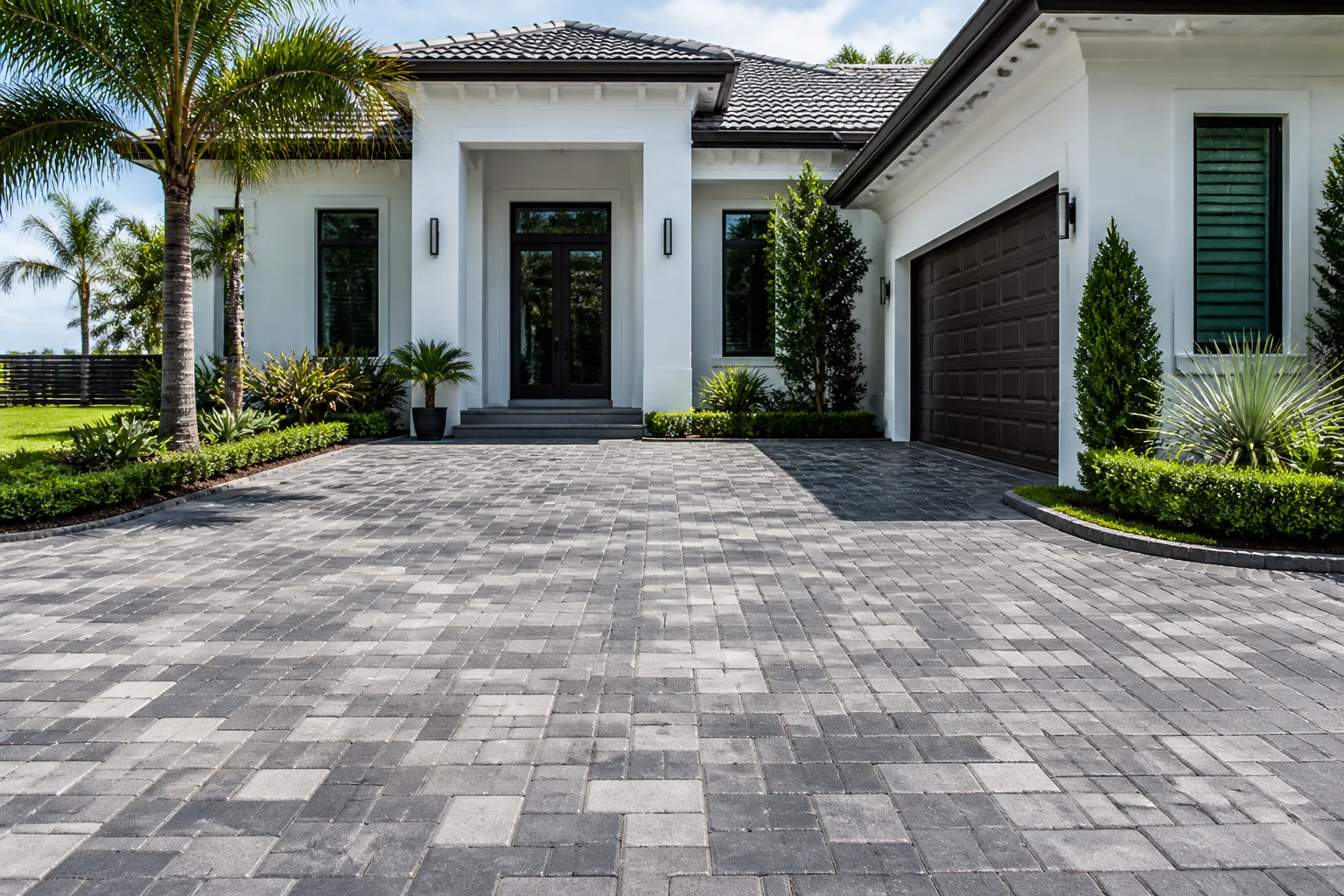
Techo-Bloc Driveway & Pavers in Miami: A Homeowner’s Guide
Techo-Bloc pavers cost roughly $18 to $32 per square foot installed in Miami, and the brand sells three very different product lines under one logo. Most Miami homeowners buying Techo-Bloc don’t know those lines carry dramatically different compressive strengths. Installers rarely bring it up, because the markup difference comes out of their pocket, not yours. This guide maps the right Techo-Bloc product to Miami’s actual soil, salt air, and storm-season conditions, so your money buys the result you think you’re paying for.
Why Does Techo-Bloc Matter More in Miami Than Anywhere Else?
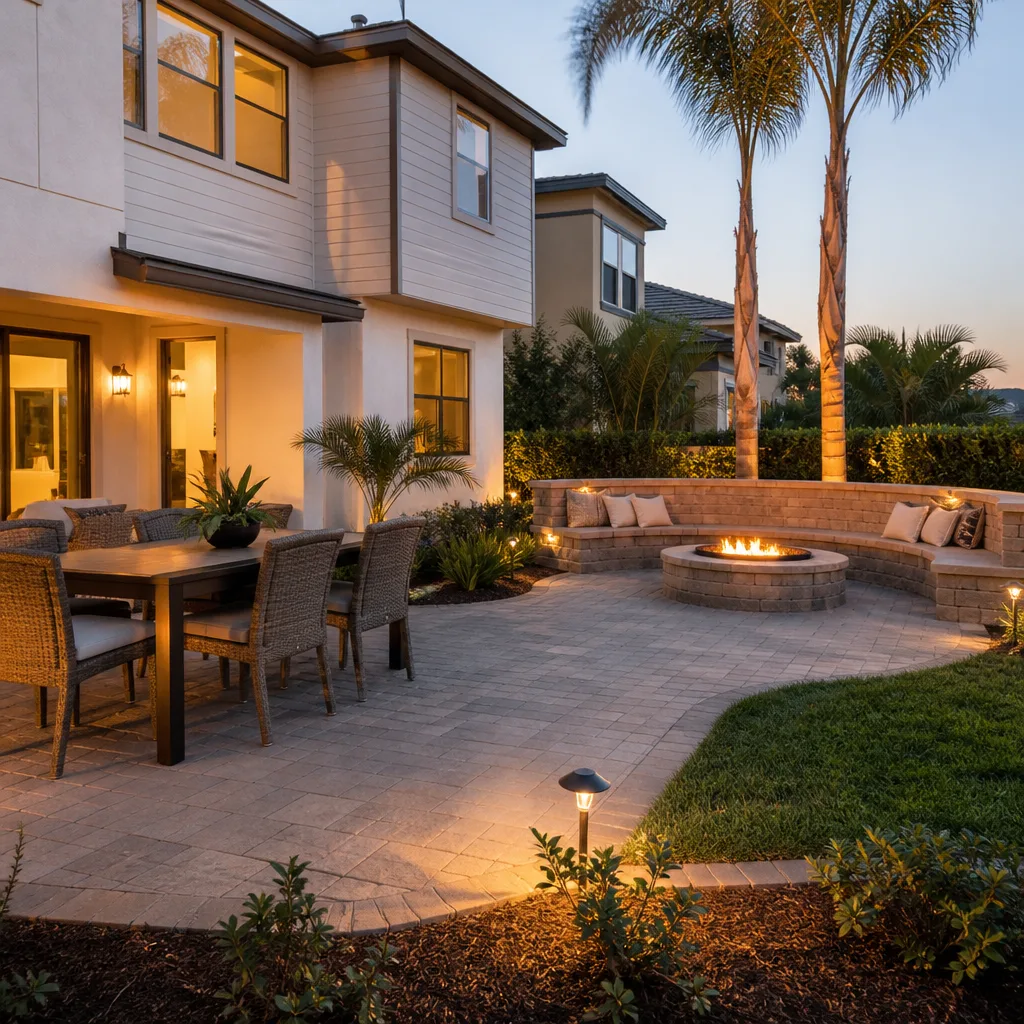
Miami’s climate punishes pavers in ways northern markets never do: a UV index that sits in the extreme range most of the year, salt air moving in off Biscayne Bay, and a rainy season that drops five to eight inches of water in a single afternoon. Add alkaline soil with a high water table, and you have three separate enemies of a driveway at once.
Standard concrete block fades and chalks under that kind of exposure. Techo-Bloc’s engineered density and integrated color technology are built to hold up where ordinary pavers give out. But “Techo-Bloc” on a quote doesn’t tell you much on its own. The brand’s lines differ in compressive strength, water absorption, and color-retention performance. In our experience, the homeowners who end up disappointed aren’t buying bad pavers. They’re buying the wrong line for a Miami driveway, or paying a premium for a product installed over a base that was never built for sand.
If you’d rather not sort through product specs and soil conditions on your own, call (833) 968-1198 and we’ll walk you through it without a sales pitch.
Which Techo-Bloc Line Holds Up Best Against Miami’s Alkaline Soil and Salt Air?
For most Miami driveways, the Blu and Umbriano lines outperform Sienna on density and color stability, while Sienna earns its place on patios and walkways where a warmer texture matters more than raw load strength. Here’s how they actually compare in a Miami context:
- Blu: The densest of the three, with very low water absorption. That matters when alkaline soil wicks moisture upward and minerals stain the surface. Blu resists that better than open-textured products, and its tight face holds color under Miami’s UV load.
- Umbriano: A granite-look paver with a smooth, low-porosity face. The sealed surface makes it easier to clean off salt film and the fine grit that blows in from Biscayne Boulevard, and less surface texture means fewer places for algae to take hold through the wet season.
- Sienna: Great aesthetic range, but a more textured, more absorbent product. On a driveway under full Miami sun with salt air on it, Sienna needs more maintenance and shows mineral haze sooner. We like it on shaded patios and pool decks, not on the main approach to your garage.
One more point on salt air: any paver joint that stays wet encourages efflorescence, the white powdery bloom you sometimes see on masonry. A dense product with proper polymeric joint sand cuts that risk sharply. On a driveway in Coconut Grove or along the water in Key Biscayne, it’s the difference between a wash-down twice a year and scrubbing every few months.
Why Does Base Compaction Depth Matter More in Miami Than Up North?
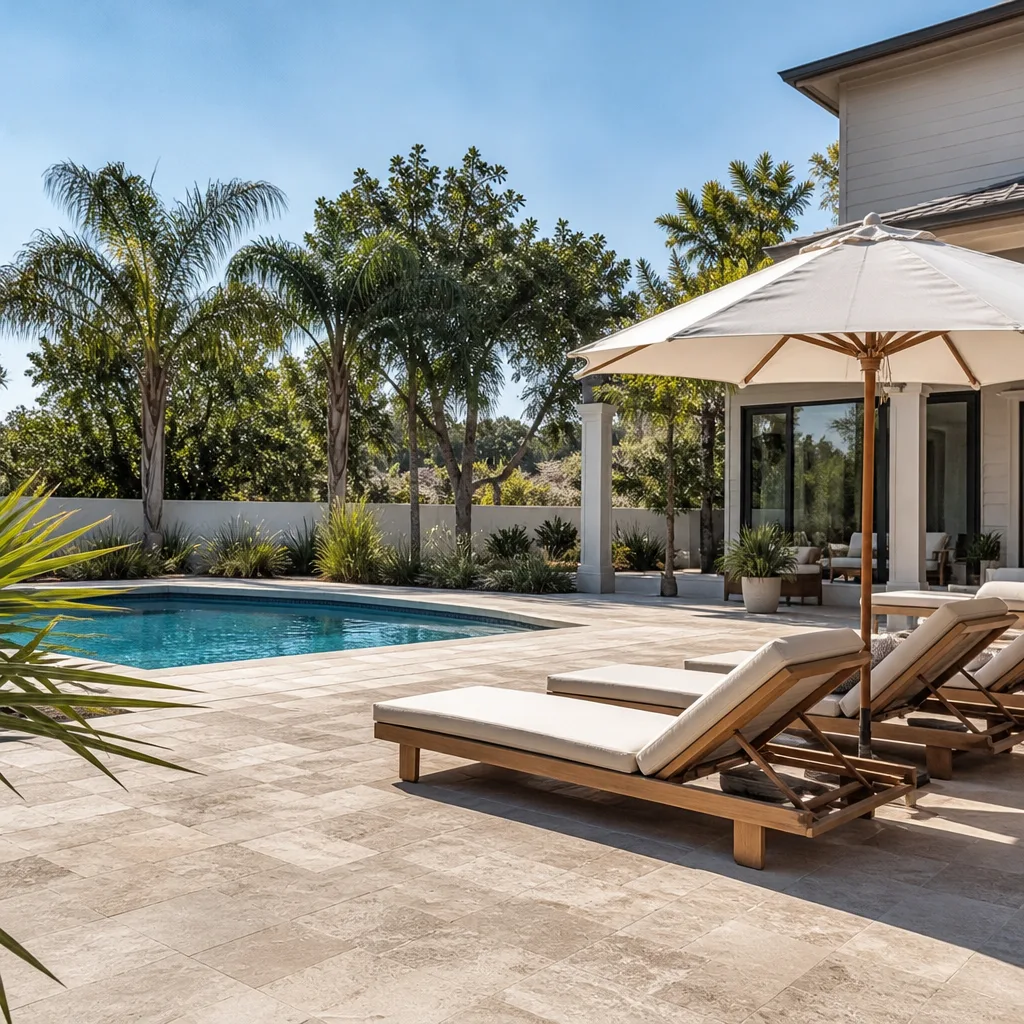
In Miami, base compaction depth matters more than the paver on top, and Techo-Bloc recommends a compacted aggregate base of 6 to 8 inches for a residential driveway, installed in lifts and compacted to 98% density. Many local installers pour an inch of sand, drop the units, and call it done. With Miami’s sandy substrate and high water table, that shortcut is where most failures start.
Frozen ground in northern climates locks a base in place. Miami’s ground never freezes, so it moves under load, water, and vibration year-round. The base has to do all the work. We’ve seen driveways in Cutler Bay that looked perfect at handoff and had rutting within two rainy seasons, because the installer skipped a compacted sub-base and let sand do the job. The pavers were fine. The base wasn’t.
What a proper Miami base looks like:
- Excavate to full depth and verify the subgrade drains. In areas with a high water table, that may mean a drainage cell or a slope adjustment.
- Lay aggregate in 2 to 3 inch lifts, compacting each one before the next. Skip a lift and the density never gets there.
- Add a thin bedding layer, screeded flat, not piled high and hammered down.
- Compacted edge restraint in concrete. Without restraint, a Miami driveway spreads at the edges under heat and moisture.
How Does Techo-Bloc iM Technology Affect Long-Term Color Retention?
Techo-Bloc’s iM technology is a manufacturing process that packs pigment through the full depth of the paver rather than spraying it on the surface, so the color sits inside the slab instead of on top of it. Under South Florida’s UV index, which stays elevated most of the year, that’s the difference between a driveway that looks new after a decade and one that fades to a flat, chalky gray by year four.
Surface-colored pavers lose their tone first on the south and west exposures, the sides that catch the most direct afternoon sun. You’ll see it as a visible drift between the sun-beaten section and the shaded entry. Depth-colored product doesn’t do that, because there’s nothing on the surface to wear away. Salt air compounds the problem by attacking thin finishes, so a Miami driveway gets both barrels: sun on top, salt-laden moisture in the joints.
What iM technology won’t do is fix a bad installation. Faded color and a settling base are two separate problems, and the second one is the expensive one. When we install Techo-Bloc, the color retention story only works because the base underneath is built to the number, not to whatever gets the crew off-site fastest.
What Does a Proper Techo-Bloc Installation Warranty Cover in Miami, and What Voids It?
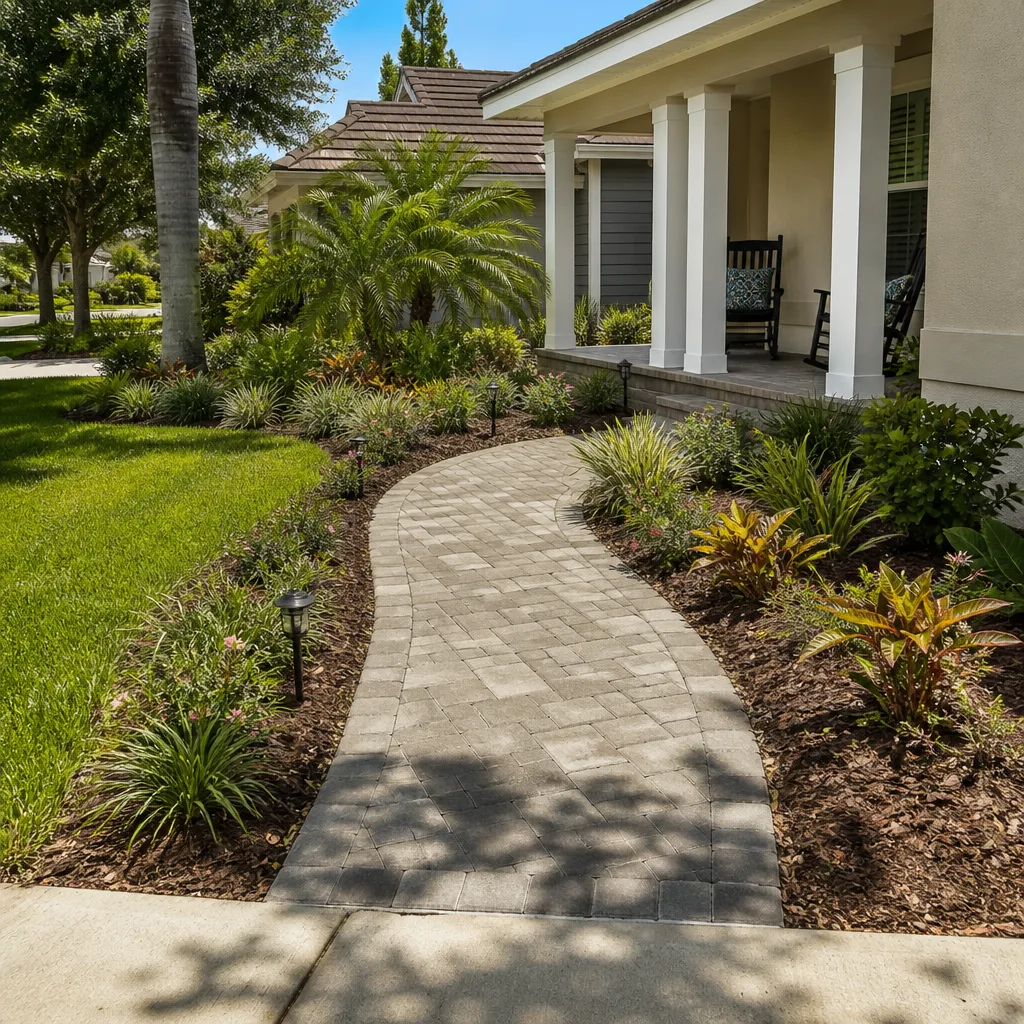
A proper Techo-Bloc installation warranty covers defects in the pavers themselves and, when the installer stands behind their work, failures in the base and joint sand. It does not cover damage from a bad sub-base, from failure to maintain drainage, or from the homeowner pressure-washing joints out twice a year. Those voids get argued about after every Miami rainy season.
Where Miami homeowners get caught: the manufacturer’s product warranty is one thing, and the installer’s workmanship warranty is another. Many local installers offer a one-year labor warranty that quietly expires before the first bad storm season does its work. We cover every install with our 730-Day Done Right Promise. If it’s not done right, we make it right, and that’s one of the longest workmanship guarantees in the residential construction space. On a job where the base is doing the heavy lifting, that kind of window matters.
Common warranty voids in Miami specifically:
- Driving heavier vehicles than the base was designed for, or parking a loaded trailer on the driveway.
- Pressure-washing at high PSI that blows out polymeric joint sand.
- Failure to keep drainage paths clear, so water pools against the edge restraint.
- Adding plants or landscaping that dam water against the driveway edge.
Ask for both warranties in writing before the first shovel hits the ground, and read the section that lists what voids them.
What Does Techo-Bloc Actually Cost in Miami vs. What Showroom Reps Quote?
Installed Techo-Bloc runs $18 to $32 per square foot in Miami. A showroom rep quoting $16 to $20 is usually pricing the pavers and laying sand, without drainage prep, sub-base compaction, or edge restraint. That gap is where the real cost lives.
Here’s how it breaks down on a typical Miami driveway:
- Standard product, straightforward yard: $18 to $23 per square foot, including excavation, compacted base, bedding, joint sand, and edge restraint.
- Premium line (Blu or Umbriano) with drainage work: $24 to $32 per square foot, depending on the drainage cell or slope adjustments needed.
- Showroom “material only” estimate: $12 to $18 per square foot, which is the number that makes the project look cheap until you see the full install quote.
- A complete driveway pour over compacted base, typical Miami size: plan on $9,000 to $18,000 for a two-car drive, with higher figures where the site needs drainage correction.
Upfront pricing means the number you see is the number you pay. Ours comes in writing, line-item by line-item, so you can see where the drainage prep sits before you commit. We also run 0% financing for 18 months and $1,000 off projects over $10,000, which makes the difference between mid-tier and premium Techo-Bloc a lot smaller than the showroom numbers suggest. Call (833) 968-1198 for an exact quote, and the estimate is free.
When to Call a Pro
If your driveway has settled at the edge, holds standing water after a storm, or shows efflorescence on a two-year-old install, call a professional. Base failures in Miami don’t fix themselves, and patching over the top just delays the full rebuild. For a look at our full range of paver options in the area, see Driveway & Pavers in Miami. We also handle adjacent work, from Fence Installation in Miami to Home Additions & ADU in Miami, so a single contractor can carry the whole scope from foundation to finish line.
The Bottom Line
Techo-Bloc is one of the few paver brands actually built to survive a Miami driveway, but only when the right line goes on the right base. Blu and Umbriano carry the density and color stability that Florida’s sun and salt air demand. Sienna earns its place on shaded patios, not the main drive. And none of it matters if the sub-base is an inch of sand and a promise. Base compaction at 6 to 8 inches, drainage you can inspect, and both warranties in writing are what separate a fifteen-year driveway from a four-year regret.
If you’re in Miami and need help getting this right, Groundwork Construction Co. of Miami offers free estimates, and a real person answers the line, 24/7. Call (833) 968-1198.
For the full picture of how we work across all seven service lines, start with our Groundwork Construction Co. of Miami home page.
Frequently Asked Questions
Ask for the product name and line in writing on the quote, and ask to see a sample of the actual unit before work starts. If the answer is “Techo-Bloc” without a line name, ask again. Blu and Umbriano should show up as named products, and the quote should list them by the square foot. Call (833) 968-1198 if you want a second set of eyes on a bid.
No, and it’s actually a smart place to spend the money. A shaded patio doesn’t take the same UV and vehicle load as a driveway, so a mid-tier line like Sienna performs well there and saves budget for the driveway itself. The mistake is buying premium product for the parking spot and mid-tier for the water exposure. Match the product to the position.
Individual pavers are dense and don’t fracture easily under wind-driven debris, but the base and edge restraint are what determine whether a driveway survives a storm intact. A properly compacted sub-base with concrete edge restraint keeps the field in place when water saturates the ground. A shallow base lets the whole field shift. The pavers are only as good as what’s under them.
Most residential paver driveways in Miami don’t require a full building permit, but drainage changes and any alteration to right-of-way or utility ties can. We check the requirement for your specific address before work begins, and any permit needed gets pulled and inspected. Call (833) 968-1198 for a free estimate, and we’ll tell you exactly what your property needs.
Written by the team at Groundwork Construction Co. of Miami.
Need Construction Help?
Call Groundwork Construction Co. of Miami - licensed & insured, here with fast after-hours help in Miami.
(833) 968-1198