
 Driveway & pavers
 Kitchen remodeling
 Bathroom remodeling
 Home additions & ADU
 Roofing
 Windows & doors
 Fence
Free written scope consultation - allowances, timeline, and change-order rules on paper before a single trade is scheduled
Paver Driveways in Glenvar Heights, FL: What They Cost and How Long They Take
Paver driveway installation in Glenvar Heights runs $7,000 to $18,000 depending on square footage, base condition and paver grade, and most jobs take three to five working days from demo to final compaction. A standard two-car apron on a 33143 lot usually lands in the $9,000 to $13,000 middle of that range. Call (833) 968-1198 for a free on-site estimate with a written line-item quote.
How a Paver Driveway Goes In: The Sequence, Stage by Stage
People ask us what actually happens on their property for four days, so here’s the honest version. No mystery, no disappearing acts.
Day 1 – Demo and excavation. We cut and pull the existing surface, whether that’s cracked concrete, worn asphalt or an older paver field. Excavation follows to roughly 9 to 11 inches of depth to make room for base, bedding sand and the pavers themselves. Debris leaves the same day. You’ll confirm the driveway limits and any plant or irrigation lines that need protecting before we cut.
Day 2 – Base and compaction. This is the stage nobody sees and the one that decides whether your driveway holds up. We build a graded aggregate base in lifts of 2 to 4 inches, compacting each lift before the next goes down. A laser level keeps the slope moving water away from the garage slab and into the swale or drain, which matters a lot in a county that gets afternoon downpours six months a year. Base day is when you decide whether you want any hard-piped drainage added, because it’s far cheaper now than after the pavers are laid.
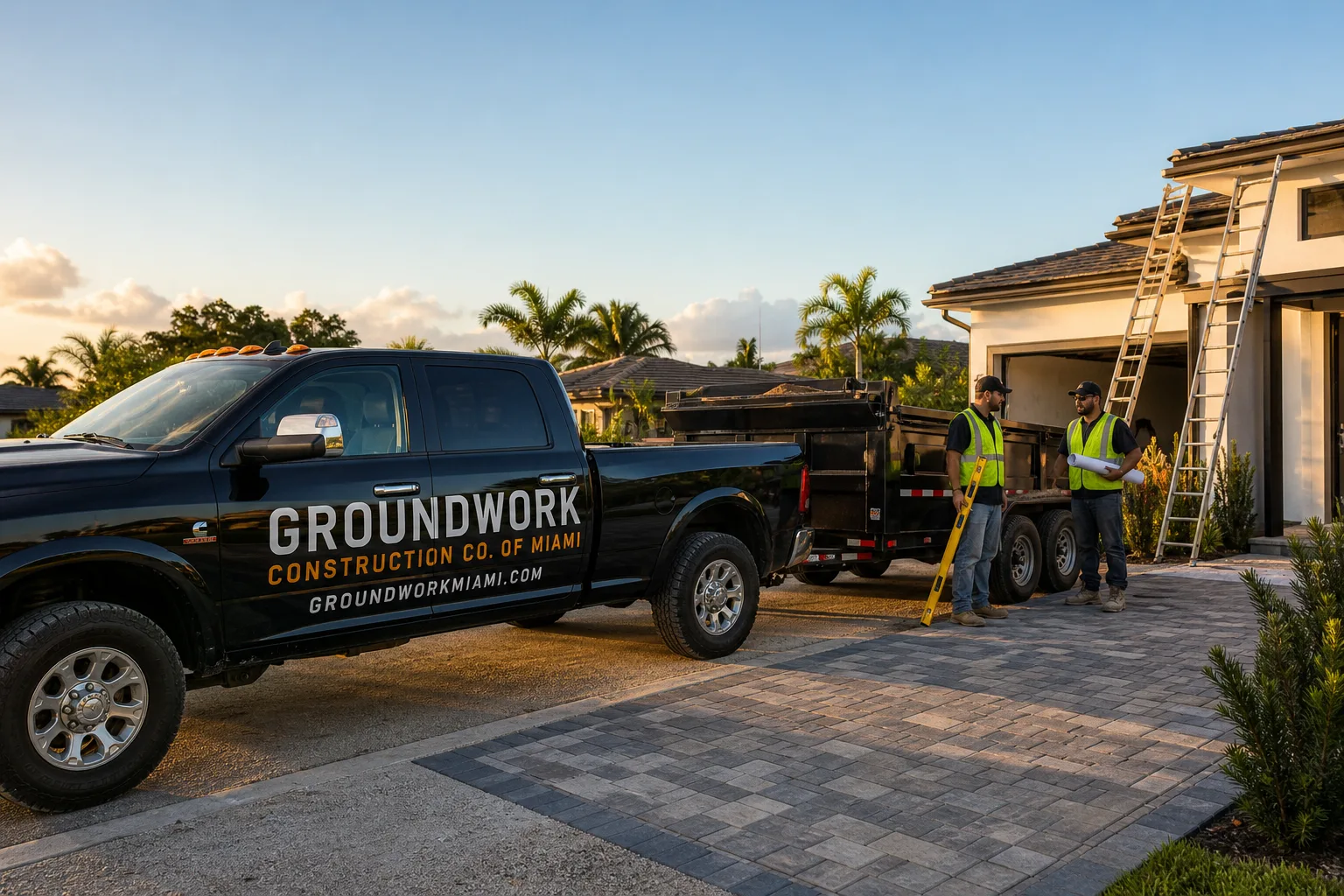
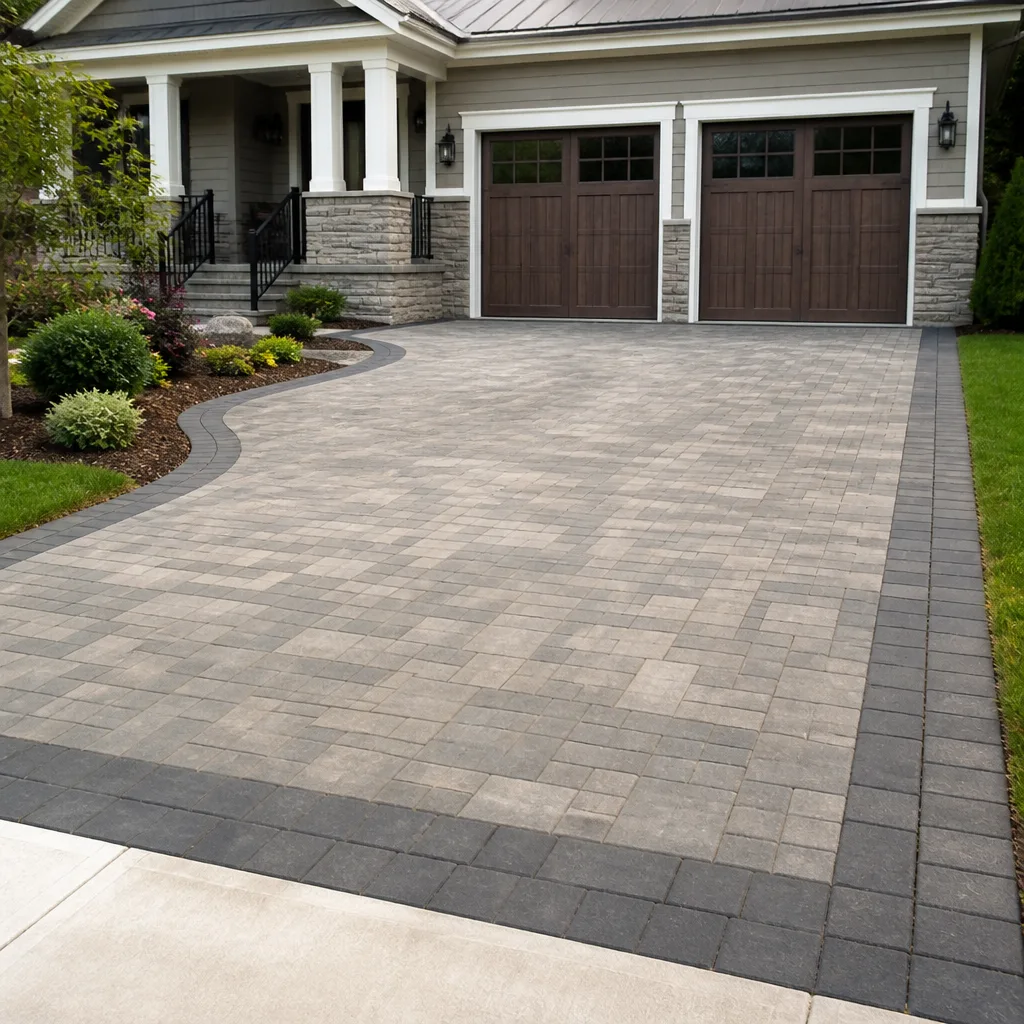
Day 3 – Bedding, edge restraint and pavers. A thin layer of bedding sand goes over the compacted base, edge restraint gets set on the sides, and the paver field goes in from the garage door out. Herringbone, running bond or a basketweave border all get laid at this stage. Roughly 1,200 to 1,600 square feet is a solid day’s work for a trained crew. This is your day to confirm the border pattern and the color blend before the full field is down.
Day 4 – Cutting, joint sand and final compaction. Perimeter and utility cuts get made with a wet saw, polymeric joint sand gets worked into the joints, and a plate compactor seats everything. We blow off the site and walk it with you. If the job runs to five days, it’s usually because of a long cut line, a tight turn radius or rain.
Day 5 (weather buffer) – Handoff and cure. Polymeric sand needs to set before vehicle traffic. We recommend staying off it for 24 hours and keeping heavy trucks off for a week. That buffer day is there for Florida weather, not padding: June through November, a storm can stall a base or sand stage, and we’d rather schedule the slack than rush the compaction.
Styles & brands we work with
- Kitchen remodeling
- Bathroom remodeling
- Home additions & ADU
- Roofing
- Windows & doors
- Driveway & pavers
- Fence
The Paver Options You’ll Choose Between
The material decision is where the price moves most, and where buyers tend to second-guess themselves. Here’s how the real choices compare.
- Concrete pavers, standard grade. The workhorse. $3 to $6 per square foot installed within the ranges above, holds color for years, and handles Miami sun without the fading you see on cheaper stamped surfaces. The honest trade-off: it’s a porous surface, so it needs joint-sand top-ups and an occasional clean to keep weeds out.
- Concrete pavers, premium or tumbled. Slightly higher cost, tighter dimensional tolerances, and a textured or tumbled finish that hides scuffs and tire marks much better. Suits homeowners who want a driveway that looks new after a decade of daily use. This is where we lean on Belgard and similar lines when a client wants a specific look.
- Clay brick pavers. The classic South Florida look and the most forgiving in heat, but pricier per square foot and heavier to install, which pushes labor up. Good fit for a block of older ranch homes where a new concrete field would look out of place.
- Permeable pavers. Open-graded joints and a stone reservoir base let stormwater filter through. Worth asking about if your lot has drainage trouble or you’re rebuilding near the swale. Costs more up front because the base is deeper and the system more involved.
- Layout and pattern. Herringbone is the strongest under turning tires and the standard we recommend for the main field. A soldier-course border or a contrasting band along the garage apron adds maybe 5 to 10 percent to the job and does a lot of visual work.
- Color and finish. Warm sand and terracotta tones read native to Miami-Dade. Gray blends look more contemporary. Either way, buy all the pavers for the job in one lot so the dye lot matches; that’s a spec detail cheaper contractors skip.
What Paver Driveways Cost in Glenvar Heights, FL
Expect $7,000 to $18,000 installed, with most Glenvar Heights paver driveways landing between $9,000 and $13,000. Here’s the line-item picture and what pushes a job from the low end to the high end.
- Paver driveway installation: $7,000 – $18,000
- Driveway replacement (removing and redoing an existing surface): $5,000 – $14,000
- Driveway sealing or protective top-coat: $250 – $700, done after the pavers cure
The five variables that move the number:
- Square footage. A single-car apron and a long double-wide pull-through can differ by $6,000 or more. Measure before you compare bids.
- Existing surface and base. A sound base can be reused with minor regrading. Old, cracked or settled base means full excavation, and that’s extra labor and disposal.
- Grade and drainage. A flat lot with a good swale is straightforward. A lot that slopes toward the house or needs a hard-piped drain adds cost and a design decision.
- Paver grade and pattern. Standard concrete pavers sit at the bottom of the range. Premium, tumbled, clay brick or a permeable system with a deeper reservoir base sits at the top.
- Access and utility conflicts. Tight side yards, low overhead lines, or water and sewer laterals running under the driveway all change the sequencing and sometimes the price.
A written estimate from us spells out square footage, base depth, paver line and color, joint sand, edge restraint, drainage if any, disposal and the workmanship guarantee. What it does not include unless we list it: landscape repair, irrigation rerouting, driveway widening beyond the agreed limits, or sealing, which is a separate line.
See the difference
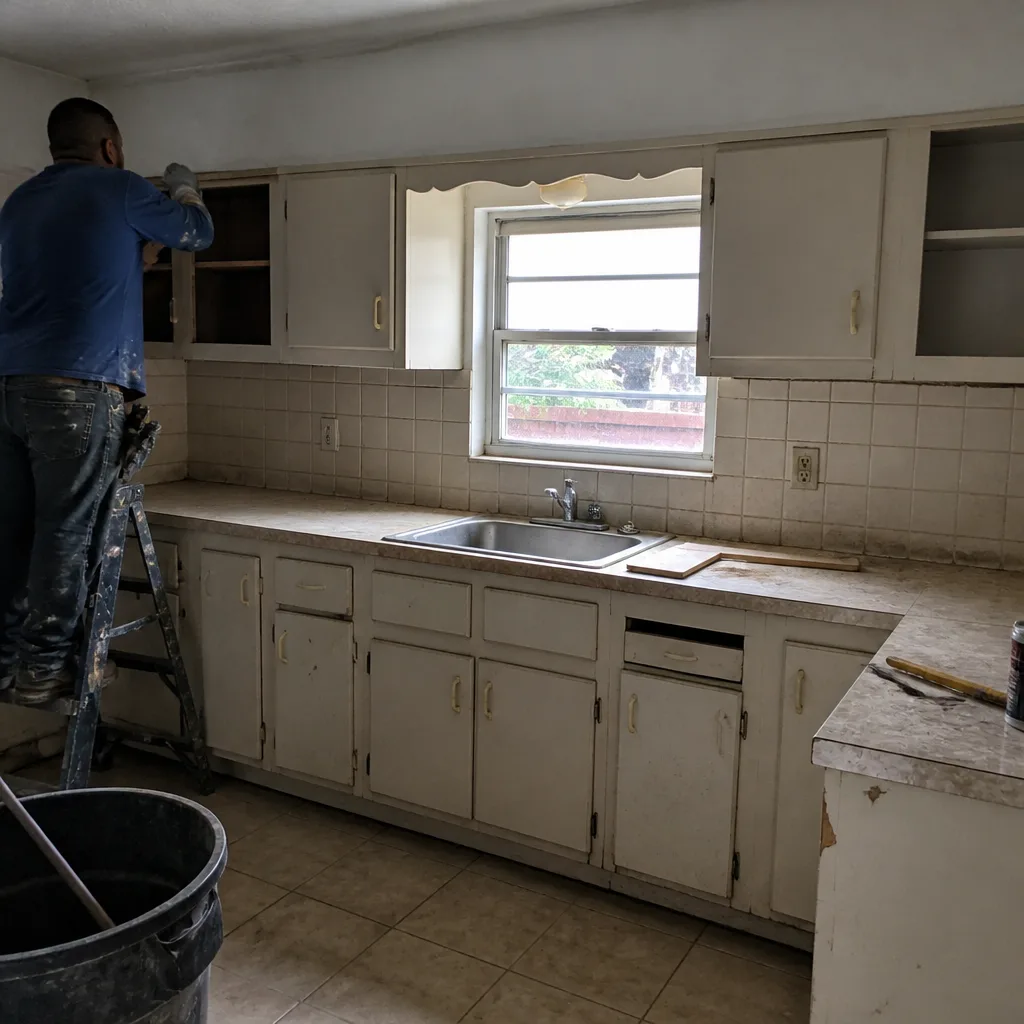 Before
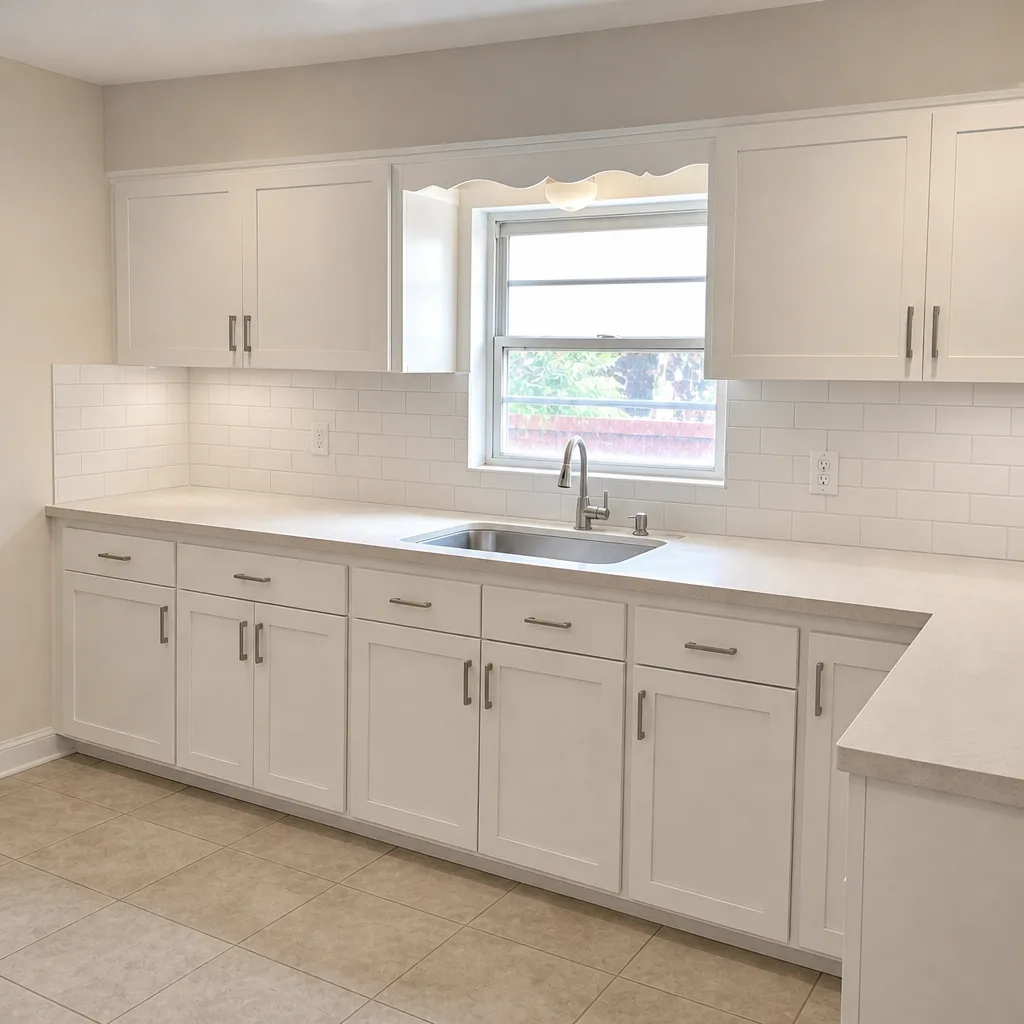 After
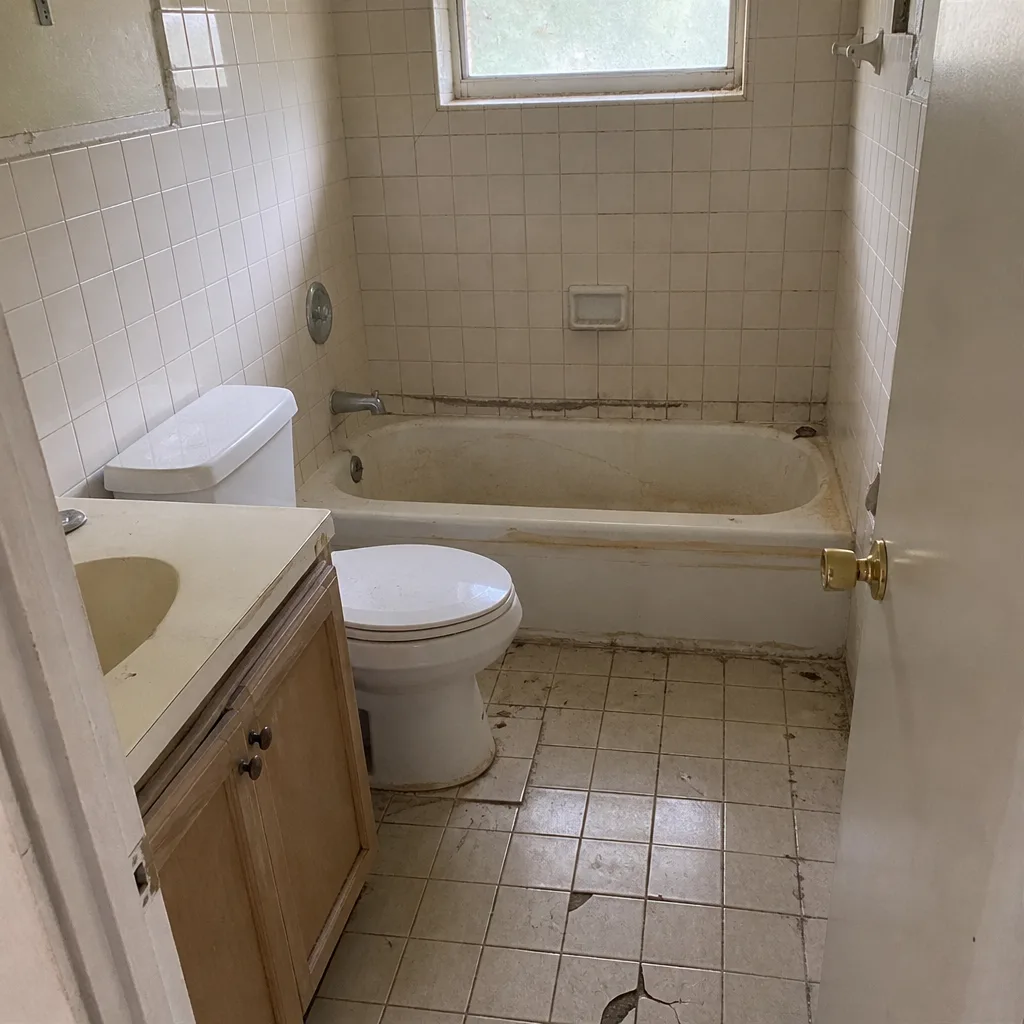 Before
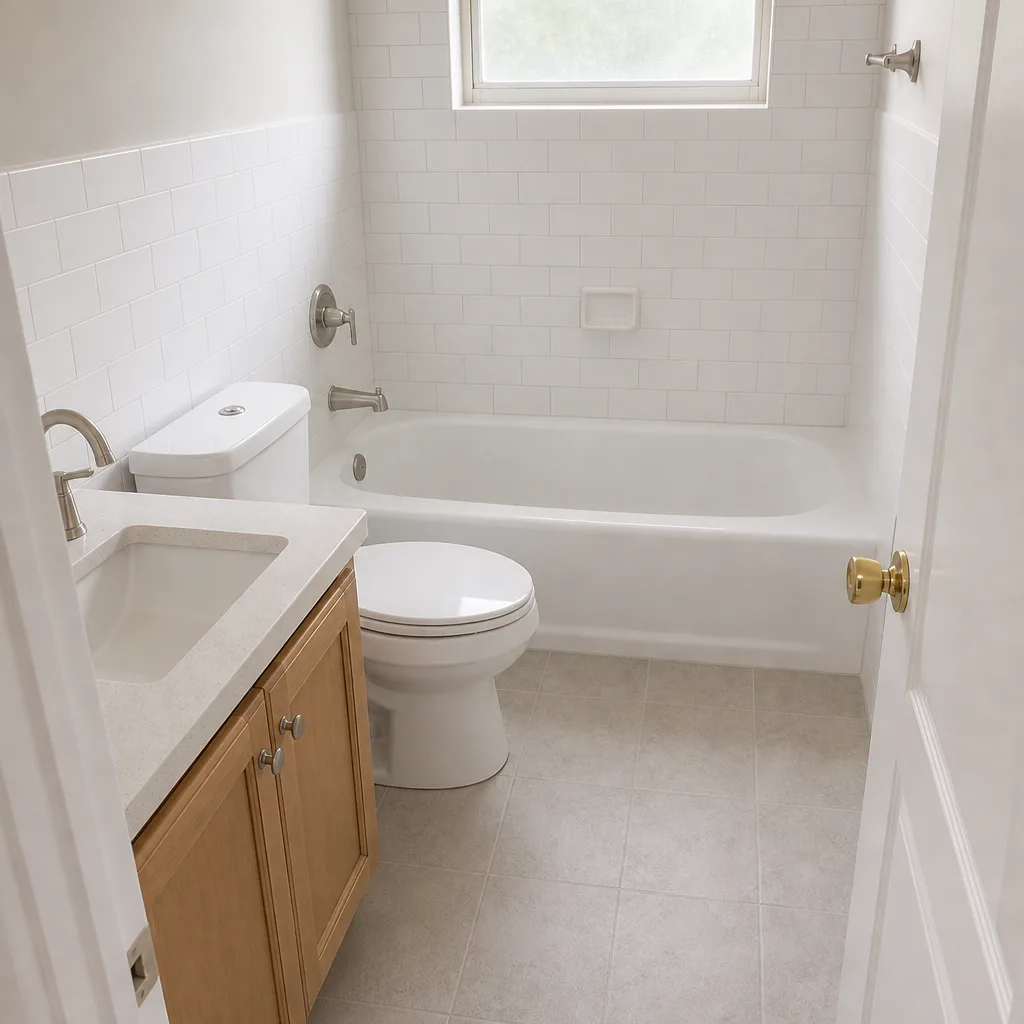 After
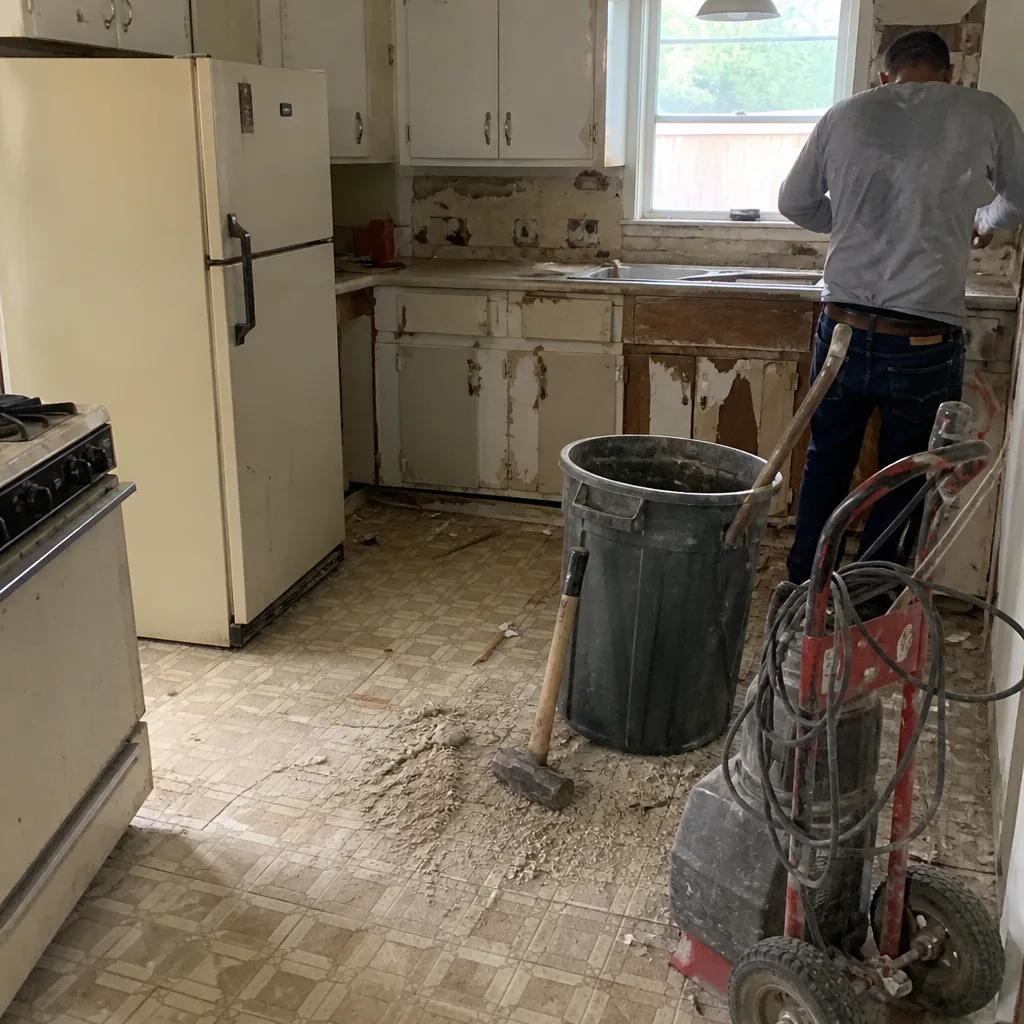 Before
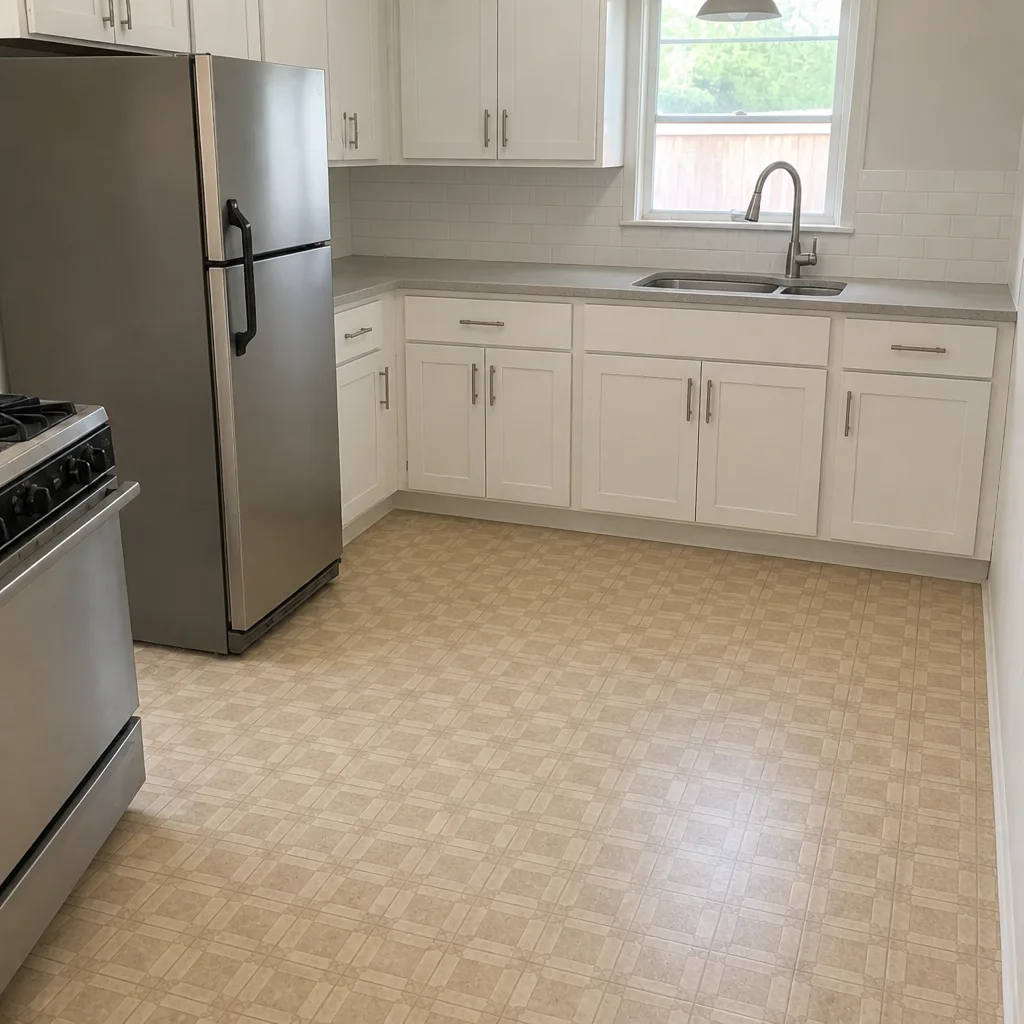 After
What Glenvar Heights Homes Specifically Do to This Job
Glenvar Heights sits in a stretch of unincorporated Miami-Dade where mid-century ranch homes on generous lots are being torn down and rebuilt as two-story customs along the Palmetto Expressway and US-1 spine. That changes a paver driveway job in ways that don’t show up on a generic quote. When a lot is a teardown-rebuild, the driveway has to be sequenced around the build, not before it, and the finished grade often shifts once the new house is set. On the block of original 1950s to 1970s concrete-block ranches, we’re usually cutting out a slab that’s settled or cracked at the expansion joints after decades of tree roots and rain. Site work here falls under Miami-Dade County code, not City of Miami, and everything touching the structure or drainage must meet Florida Building Code High-Velocity Hurricane Zone (HVHZ) requirements and Miami-Dade product-control approvals. We pull the permits and pass the inspections. Salt-laden air from near Biscayne Bay also eats at metal edging and hardware faster than inland, so we spec galvanized restraint. If your long-term plan includes an ADU over the old garage, homeowners often pair this with Garage Conversion ADU in Glenvar Heights, and the driveway grade needs to be planned in tandem.
Serving Glenvar Heights, FL – Our Local Coverage Area
We serve Glenvar Heights and nearby communities. Use the map below to see the area we cover. If you’re nearby, we can almost certainly help.
Frequently Asked, Paver Driveways in Glenvar Heights
Most Paver Driveways in Glenvar Heights are complete in three to five working days: one day for demo and excavation, one for base, one for laying, one for cuts and joint sand, with a weather buffer. Larger jobs or a lot needing drainage add a day. Call (833) 968-1198 to get a firm timeline from a written estimate.
Often yes, especially when you’re changing the surface, altering drainage or changing the driveway footprint. Because this is unincorporated Miami-Dade County and not the City of Miami, permitting and inspection run through the county, and drainage and grade must meet HVHZ-related requirements. We pull the permits and pass the inspections; you don’t chase paperwork.
Not under our upfront pricing. The number on the written estimate is what you pay. The two things that can truly change scope are unknown underground conditions, like a failed base or a broken lateral, or a change you request mid-job. Both get priced in writing before we proceed. No surprises.
Between $7,000 and $18,000 installed, with a typical two-car driveway near $9,000 to $13,000. The line items that move it are square footage, existing base condition, drainage, paver grade and pattern. Call (833) 968-1198 for a free, no-pressure estimate with a fixed number.
Every paver driveway we install is covered by the 730-Day Done Right Promise: if it’s not done right, we make it right. That’s one of the longest workmanship guarantees in residential construction, and it’s in writing. Call (833) 968-1198 to review the terms before you commit.
Get a Free Paver Driveway Estimate in Glenvar Heights
Call (833) 968-1198 to schedule a free on-site estimate. We’ll measure your driveway, check the base and grade, talk through paver options and give you a written line-item quote with every number on it. A live person answers the phone, 24/7. No voicemail, no waiting until Monday. From foundation to finish line, this is how a driveway gets built to last and backed in writing.
Written by the team at Groundwork Construction Co.