
 Kitchen remodeling
 Bathroom remodeling
 Home additions & ADU
 Roofing
 Windows & doors
 Driveway & pavers
 Fence
Free written scope consultation - allowances, timeline, and change-order rules on paper before a single trade is scheduled
Styles & brands we work with
- Kitchen remodeling
- Bathroom remodeling
- Home additions & ADU
- Roofing
- Windows & doors
- Driveway & pavers
- Fence
See the difference
 Before
 After
 Before
 After
 Before
 After
How to Choose a General Contractor in Miami, FL (The Miami-Dade Vetting Checklist)
Choose a general contractor in Miami by vetting for Miami-Dade code competence first: ask for their NOA product approval numbers, confirm they’ve pulled permits in Miami-Dade County in the last 12 months, and make them explain the 40-Year Recertification and substantial improvement thresholds as they apply to your exact scope. A Florida license alone doesn’t prove any of that. If you’d rather have the vetting done for you, Groundwork Construction Co. of Miami answers live calls 24/7 at (833) 968-1198.
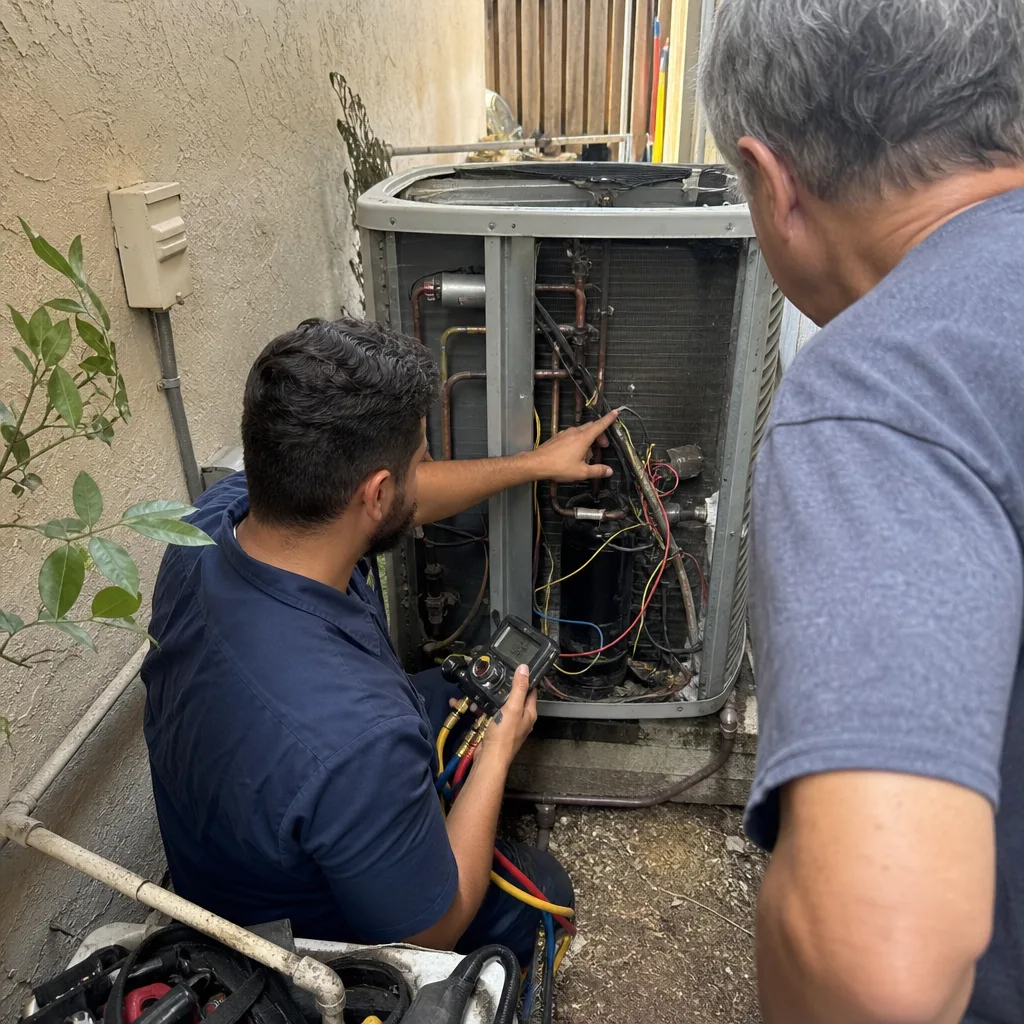
A licensed general contractor in Florida is not automatically qualified to build in Miami-Dade. The High Velocity Hurricane Zone has its own product approval system, its own inspection protocols, and its own code amendments that contractors from other Florida markets routinely get wrong. So the question isn’t just “are they licensed?” It’s “do they know Miami-Dade code well enough that they won’t fail your project at inspection or leave you holding a non-compliant structure?”
Why the Standard “Check License and References” Advice Falls Short Here
Miami-Dade County is the only place in the United States with its own product-approval system. Every roof, window, and shutter has to carry a Miami-Dade Notice of Acceptance (NOA) number, not just a Florida or national approval. A GC who built for years in Tampa or Orlando can still hand you a spec sheet full of products that will get rejected at inspection here. The homeowner never sees it coming until the inspector does.
Layer on the building stock and it gets more specific. Much of Miami’s older housing is pre-1970s concrete-block and CBS with flat or low-slope roofs, and a lot of it is unreinforced masonry. Re-roofing or renovating that stock routinely triggers structural and wind-mitigation upgrades nobody budgeted for. Add salt-laden coastal air, year-round humidity, a June-to-November hurricane season, and severe termite pressure on wood framing, and the margin for a contractor who’s learning the market on your dime gets thin fast.
This is the practical difference between qualification on paper and qualification in Miami. Your vetting has to test for the second one.
The Miami-Dade Contractor Vetting Checklist
These questions separate contractors with real Miami experience from the ones who will learn Miami code on your job. Ask them before you sign anything.
- NOA numbers. Can they name the NOA numbers for the roofing or window products they’re specifying for your home? Vague answers (“it’s all code-approved”) mean they haven’t done the product research.
- Recent Miami-Dade permits. Have they pulled permits in Miami-Dade County in the last 12 months? Broward and Palm Beach permits don’t count. You want the county’s own inspection history.
- The substantial improvement threshold. Can they explain how it applies to your scope? If your renovation crosses it, current code can be triggered for the whole structure, and that changes the budget and timeline.
- 40-Year Recertification work. Ask whether they’ve managed a project that included recertification compliance. Contractors who have will know concrete spall repair, rebar restoration, and the documentation Miami-Dade requires. The ones who haven’t will subcontract it blind.
- A written workmanship warranty. Get it in writing before work starts, and read what it actually covers.
- How they vet and present their field crews. Background-checked, uniformed technicians are a verifiable standard, not a slogan.
Run the list against any contractor you’re considering. A crew that checks every box is a crew that’s already built in this county, in this code environment, with products that pass the first inspection.
Use the 40-Year Recertification Wave to Read a Contractor’s Experience
Miami-Dade requires buildings at 40 years old (25 near the coast) to be inspected for structural and electrical safety. Those deadlines arrive on a predictable schedule by neighborhood age, which means there’s a steady wave of concrete restoration, balcony and spall repair, and re-roofing work moving through older parts of Miami every year.
A GC who has managed recertification work knows what the county wants to see: how spalls get documented, how rebar restoration is sequenced, what inspection photos and reports get filed. A GC who hasn’t will hand that scope to a subcontractor and hope. Ask the question directly, and listen for specifics rather than a confident yes.
This matters on the trust side too. Choosing a general contractor means granting strangers access to your home for weeks or months. Groundwork Construction Co. of Miami sends background-checked, uniformed technicians on every job, and every project is backed by the 730-Day Done Right Promise. That’s one of the longest workmanship guarantees in residential construction, and it covers the workmanship itself, not just materials. Set it next to the standard one-year warranty most contractors offer and the gap is obvious. Compare warranties line by line, then get an upfront project estimate so the scope and the warranty match in writing.
The Warranty Question That Actually Matters in Miami
Hurricane season runs six months. A defect in roofing or window installation can show up in the first storm after the job closes, and a one-year warranty can expire before the next season rolls around. Ask every contractor for their written workmanship warranty and confirm what triggers a callback, who pays for labor, and how long the coverage runs.
On the material side, brand partners tell you something about how a contractor buys. Groundwork works with GAF and CertainTeed on roofing and options from Therma-Tru and Mr-Glass for doors and glazing, all of it specified to meet Miami-Dade NOA requirements. Premium materials with documented approvals are the point. Built to last, backed in writing.
Budget context helps you read bids against each other. Line-item ranges for common Miami scopes:
| Project | Typical Miami Range |
|---|---|
| Roof Replacement | $9,440-$23,600 |
| Metal Roof Installation | $17,700-$47,200 |
| Impact Window Installation | $9,440-$29,500 |
| Kitchen Remodel | $16,520-$53,100 |
| Bathroom Remodel | $10,620-$33,040 |
| Home Addition | $53,100-$153,400 |
| ADU Construction | $106,200-$259,600 |
Bids far under these ranges usually mean missing scope, and missing scope on a Miami project means code upgrades later. Upfront pricing, no surprises: the number you see is the number you pay. Groundwork pairs that with 0% financing for 18 months and $1,000 off projects over $10,000.
The 7 PM Phone Test
Call the contractor at 7 PM on a weekday before you sign anything. The response tells you how they’ll communicate when a problem surfaces mid-project. Live person? Voicemail? Nothing at all?
Groundwork answers calls with a live person 24 hours a day, 7 days a week. No voicemail black hole, no waiting until Monday. If a question comes up while your crew is mid-scope during hurricane season, you’re talking to someone that day. That’s the standard to hold every contractor you interview to.
Your Hiring Shortlist
- Ask for NOA numbers on specified products.
- Confirm Miami-Dade permits pulled in the last 12 months.
- Have them walk through the substantial improvement threshold for your scope.
- Ask about 40-Year Recertification project experience.
- Get the written workmanship warranty and read the fine print.
- Ask how field crews are vetted and presented.
- Run the 7 PM phone test.
- Request a free estimate with upfront pricing before signing anything.
FAQs
A Florida license isn’t enough on its own. Miami-Dade has its own product approval system (NOA numbers), its own inspection protocols, and its own code amendments under the High Velocity Hurricane Zone rules. Ask any candidate to confirm Miami-Dade permitting experience and NOA product knowledge before you sign. Call us at (833) 968-1198 with your scope and we’ll walk through what your project actually requires.
A workmanship warranty should cover installation labor, not just the product. In Miami, where a defect can show up in the first storm after the job closes, coverage length matters. The 730-Day Done Right Promise covers the work for two full years, well beyond the standard one-year warranty most contractors offer. We’ll put the warranty terms in writing with your estimate. Call (833) 968-1198 to review the details on your project.
Miami-Dade requires buildings at 40 years old (25 near the coast) to be inspected for structural and electrical safety. If you’re renovating and the recertification deadline is approaching, hire a contractor who’s managed compliance work: concrete spall repair, rebar restoration, and the documentation the county requires. We’ll assess your recertification scope and price it on the same estimate as the rest of the project. Call (833) 968-1198 to schedule a free design consult.
In Miami, a kitchen remodel typically runs $16,520-$53,100 and a bathroom remodel $10,620-$33,040, depending on scope and finishes. Bids far below those ranges usually leave out code upgrades, permit fees, or structural work that older CBS homes in Miami need. Get line-item pricing in writing. Call (833) 968-1198 for a free estimate with upfront pricing, and we’ll show you exactly what’s covered.
Get a Straight Answer on Your Miami Project
If you’d rather have it looked at, Groundwork Construction Co. of Miami offers a no-pressure assessment in Miami. You get upfront pricing, a full project design, and a live person on the line 24/7. From foundation to finish line, one contractor for the whole job. Call (833) 968-1198 for a free estimate.
Written by the team at Groundwork Construction Co. of Miami, serving Miami, FL.