
 Kitchen remodeling
 Bathroom remodeling
 Home additions & ADU
 Roofing
 Windows & doors
 Driveway & pavers
 Fence
Free written scope consultation - allowances, timeline, and change-order rules on paper before a single trade is scheduled
Styles & brands we work with
- Kitchen remodeling
- Bathroom remodeling
- Home additions & ADU
- Roofing
- Windows & doors
- Driveway & pavers
- Fence
See the difference
 Before
 After
 Before
 After
 Before
 After
ADU Contractors Near Me in Miami, FL: Who Can Actually Get Your Permit Approved?
The right ADU contractor near you in Miami is the one who can run two approval tracks at once: the Miami-Dade Building Department plan review and the separate product-approval (NOA) track that covers every window, door, roofing system, and structural panel on the unit. Get only one of those right and your project stalls in correction comments for months. Groundwork Construction Co. of Miami builds accessory dwelling units across Miami-Dade, and we price the HVHZ compliance work up front instead of springing it on you mid-build. Call (833) 968-1198 and a live person answers, day or night.
Key Takeaways
- Most ADU delays in Miami aren’t construction problems. They’re paperwork problems from a permit package missing proper NOA documentation.
- Miami-Dade reviews ADU permits in roughly 8-14 weeks and often sends correction notices partway through, so reachability matters as much as carpentry.
- Full ADU construction here runs $106,200-$259,600; garage conversions run $35,400-$94,400. Those are real budgets, not teaser numbers.
- Every envelope product on the unit needs to survive salt air, year-round humidity, and a June-November hurricane season.
Why Miami ADU Projects Need Two Approvals, Not One
Miami-Dade County is the only county in the United States with its own product-approval system independent of the state. Your plans can pass structural review and still get kicked back if the windows listed on the permit don’t carry valid Miami-Dade NOA numbers.
A Florida statewide product approval isn’t enough here. When a submission lists a product with only a state approval, the county rejects it, and the homeowner eats the delay. We’ve watched bids fail on this exact point. The manufacturers who know the local market – ES Windows and ECO Window Systems among them – publish NOA numbers alongside their impact products, so the documentation is straightforward. The problem is contractors who’ve only ever pulled permits under Florida’s statewide system and don’t know the product-approval section of a Miami-Dade package exists.
So the question to ask any ADU contractor near you is simple: have you pulled an NOA-specific permit in this county before? If the answer is vague, your schedule is a guess.
Miami’s Climate Doesn’t Follow the Manufacturer’s Spec Sheet
Roof underlayments, exterior stucco finishes, and sealants in Miami degrade faster than the lifespans printed on the label. Those specs are written for temperate climates. Salt-laden coastal air, year-round humidity, and intense sun shorten the service life of anything that isn’t rated for high-velocity hurricane zone exposure.
What holds up here:
- Underlayments rated for HVHZ conditions, not the standard felt that performs fine in drier regions. GAF and Owens Corning both make products suited to this market, and we specify them for ADU roofs.
- Impact-rated glazing throughout, because the units we build get used as rentals and guest houses and nobody wants to hang shutters every storm.
- Stucco and sealant systems chosen for salt air, with a maintenance schedule that reflects the real degradation curve instead of the brochure’s.
- Termite-resistant detailing on any wood framing, since pressure in South Florida is severe and an ADU’s framing is the last place to save money.
These choices show up in the budget. They’re also where a low base bid quietly turns into change orders once the contract is signed. Upfront pricing, no surprises, is how we handle it – the HVHZ upgrades are line items in your estimate from day one, not sucker punches at week six.
One Contractor “In Miami” Isn’t the Same as One Who Knows Your Municipality
Many ADU guides treat Miami as a single zoning jurisdiction. It isn’t. Miami-Dade is a patchwork of 34 municipalities, and the unincorporated areas run on county rules while Coral Gables, Hialeah, and Miami Beach each enforce their own ADU ordinance for setbacks, lot coverage, and allowable unit size. A plan that sails through the county can fail outright two blocks away inside a city limit.
Lot coverage gets homeowners especially. On a denser lot in an older neighborhood – the pre-1970s concrete-block and CBS homes that make up so much of Miami’s housing stock – the rear yard may look open until you measure the allowable impervious coverage. Flood zone rules matter too: VE and AE zones carry elevation requirements that change foundation design and add cost. We check the address before we sketch, because it’s cheaper to design around the rules than to redesign after a rejection.
The 40-year recertification cycle is worth knowing about as a homeowner, since it shapes neighborhood construction patterns here and tells you a lot about the age of the buildings around your lot.
What ADU Contractors Near Me Should Offer, Compared Side by Side
Here’s how we’d frame the comparison for a homeowner sorting through three or four bids. Price alone is the wrong filter, but it’s the one most people start with.
| What to check | What it looks like when it’s done right |
|---|---|
| NOA familiarity | The contractor asks for your product NOA numbers before submitting, not after the first rejection |
| Municipality awareness | They confirm whether your address is unincorporated county or inside a city with its own ADU rules |
| Pricing structure | Impact windows, HVHZ roofing, and elevation certificates appear in the base estimate |
| Reachability | Someone answers when a correction notice lands, not on Monday morning |
| Written workmanship coverage | A defined guarantee period for the work itself, stated in the contract |
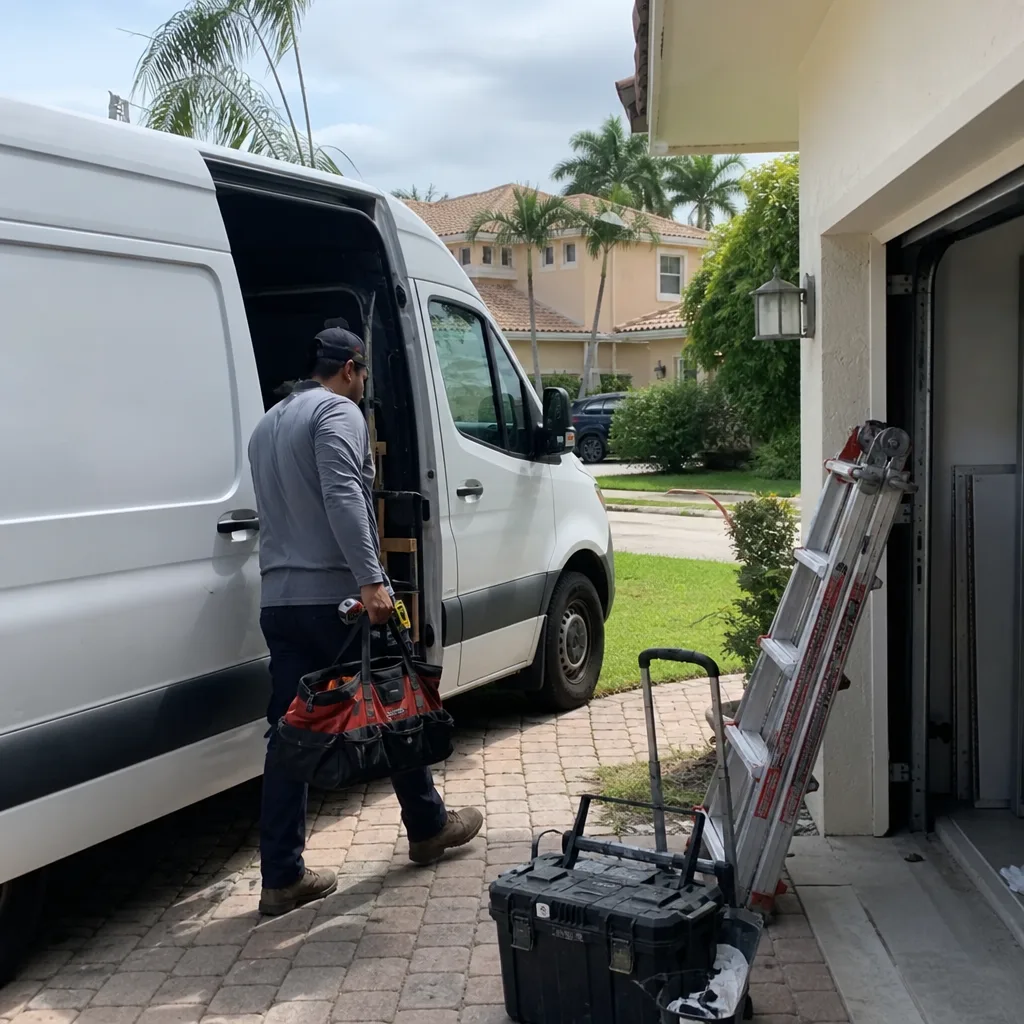
| Who shows up | Background-checked technicians who arrive in uniform, not an unknown crew in an unmarked van |
Permit review cycles for ADUs run 8-14 weeks in Miami-Dade, and correction comments routinely arrive mid-review. That’s why we answer the phone 24/7 with a live person. When a reviewer flags a product approval at 4:40 on a Friday, you need your contractor on it that afternoon. A voicemail box doesn’t submit revised documents.
Groundwork Construction Co. of Miami backs every project with our Home Additions & ADU work under the 730-Day Done Right Promise. If something isn’t done right, we make it right, for two full years after the final walkthrough. Our technicians bring up to 12 years of experience to each job, and every project runs under upfront pricing with 0% financing for 18 months and $1,000 off projects over $10,000.
What Does an ADU Cost in Miami?
Full ADU construction in Miami runs $106,200-$259,600, and garage conversions run $35,400-$94,400. The spread inside each range comes down to size, foundation type, flood zone elevation requirements, and how many HVHZ upgrades your lot needs. A detached unit on an AE-zone lot with impact glazing throughout sits at the top; a compact conversion of an existing garage sits at the bottom.
For context on how an ADU compares to a larger addition, a full home addition in this market runs $53,100-$153,400. Whether an ADU or a home addition is the better fit for your property is worth a real conversation before anyone draws anything.
Want an actual number for your address? Call (833) 968-1198 for a free project estimate and design consult. We’ll put the compliance items in writing at the start.
FAQs
Yes. Every window, door, roofing system, and structural panel on your ADU needs a valid Miami-Dade product approval number to pass the county’s product-approval review. A Florida statewide approval alone isn’t accepted. This is the single most common reason ADU permit packages get rejected in Miami, and it’s why we verify NOA numbers before submission rather than after. Call (833) 968-1198 and we’ll walk through what your specific design requires.
We work across Miami-Dade’s municipalities, but the rules change at the city line. Coral Gables, Hialeah, and Miami Beach each enforce their own ADU ordinance for setbacks, lot coverage, and unit size, and those rules differ from the unincorporated county’s. We check your jurisdiction before design starts. That one step saves months. Call us for a free estimate and we’ll confirm what applies at your address.
Plan review typically runs 8-14 weeks in Miami-Dade, and correction notices often arrive partway through the cycle. The review time itself is out of anyone’s hands; how fast the corrections get answered is not. We answer the phone around the clock with a live person, so when a reviewer flags something, it gets handled that day. Call (833) 968-1198 to talk through a realistic timeline for your lot.
A garage conversion usually costs less: $35,400-$94,400 versus $106,200-$259,600 for ground-up ADU construction in Miami. The catch is that a conversion only pencils out if your existing garage has the structure and ceiling height to support living space, and if your municipality allows it. Sometimes the detached unit wins on rental potential and resale. Call us for a free design consult and we’ll price both options honestly.
Get a Real Number Before You Sign Anything
Sorting through ADU contractors near you in Miami shouldn’t come down to who bid lowest. It should come down to who can run both approval tracks, price HVHZ compliance up front, and pick up the phone when a correction notice lands. Groundwork Construction Co. of Miami does all three, backed by the 730-Day Done Right Promise. Call (833) 968-1198 for your free project estimate and design consult.
Start with our home page to see the full scope of what we build across Miami.
Written by the team at Groundwork Construction Co. of Miami, serving Miami, FL.
What Our Customers Say
"The schedule he gave me at the start was accurate to within four days on a three month job. Anyone who has done a renovation knows how unusual that is."
- Laura Bennett"He pulled the permits himself, scheduled every sub and ran the inspections. I made one decision a week and otherwise stayed out of it, which is exactly what I was paying for."
- Robert Sullivan"He told me one part of what I wanted was a bad idea structurally and offered an alternative instead of just taking the money."
- Angela Wong