
 Kitchen remodeling
 Bathroom remodeling
 Home additions & ADU
 Roofing
 Windows & doors
 Driveway & pavers
 Fence
Free written scope consultation - allowances, timeline, and change-order rules on paper before a single trade is scheduled
Styles & brands we work with
- Kitchen remodeling
- Bathroom remodeling
- Home additions & ADU
- Roofing
- Windows & doors
- Driveway & pavers
- Fence
See the difference
 Before
 After
 Before
 After
 Before
 After
ADU Rules and Requirements in Miami, FL: What Actually Decides Your Project
Miami-Dade’s ADU rules come from three overlapping layers: municipal zoning, your FEMA flood zone (VE or AE), and Florida’s HB 1267 from 2023, which stopped cities from banning ADUs outright in single-family zones. The short answer most homeowners need: zoning rarely kills an ADU here – the elevation certificate usually does, and the High Velocity Hurricane Zone material rules decide whether it’s buildable at all. If you’d rather have someone read your lot’s flood zone and permit path before you spend a dollar on plans, call Groundwork Construction Co. of Miami at (833) 968-1198.
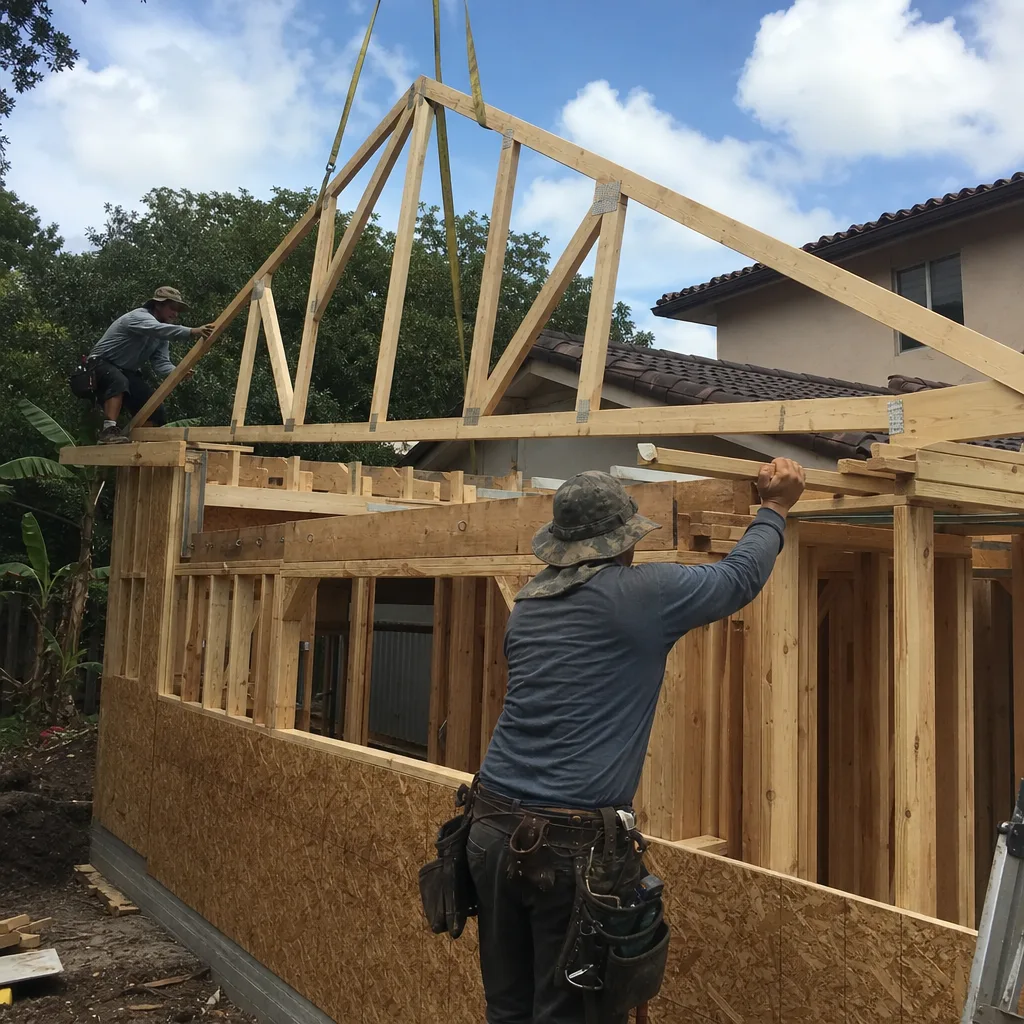
Here’s the part that catches people mid-project. A coastal lot in Coconut Grove or Key Biscayne that shows up as VE or AE on the FEMA map can add $40,000 to $80,000 to your foundation line before an architect has drawn a single wall. That’s not a contractor markup. It’s elevation requirements, and no city variance gets you out of them.
Key Takeaways
- HB 1267 limits outright ADU bans, but it doesn’t override FEMA elevation rules or Miami-Dade’s hurricane zone product approvals.
- Detached ADUs on VE/AE lots commonly cost $40,000 to $80,000 more in foundation work than inland equivalents.
- Every window, door, and roof assembly needs a Miami-Dade NOA number – national prefab ADU kits often fail inspection here.
- Pre-1970s CBS homes often have 60 to 100 amp panels that must be upgraded before an ADU can be permitted.
- Full ADU construction in Miami typically runs $106,200 to $259,600 depending on flood zone, panel upgrades, and whether the unit has a kitchen.
What Did Florida HB 1267 Actually Change, and What Didn’t It?
HB 1267 gave homeowners the right to build an ADU on a single-family lot in most Florida municipalities, including Miami, and it capped some of the restrictions cities could impose. What it did not do is exempt anyone from FEMA flood elevation, Miami-Dade’s High Velocity Hurricane Zone rules, or the county’s product approval system. That distinction trips up out-of-state designers who read the state law and assume they’re clear.
What that means in practice: your zoning code path is usually the easy part now. The harder questions come next. What flood zone is your lot in, and at what base flood elevation? Does your electrical service carry the load? Does your chosen building material system carry current NOA numbers? Miami-Dade is the only place in the US with its own product-approval system, and every roof panel, window, and door must carry a Miami-Dade NOA – not just a Florida approval or a national one.
This matters even more because of Miami’s building age. A lot of the older stock here is pre-1970s concrete block and stucco with flat or low-slope roofs. When an ADU goes up next to that, inspections often flag structural and wind-mitigation upgrades on the main house too. Budget for it on paper, not on the change order.
Why the Flood Zone, Not Zoning, Is the Real Limit on Your ADU
If your property sits in a VE or AE zone, your ADU has to be elevated to a specific base flood elevation. That means fill, pilings, or an engineered stem wall – all of which cost real money. On a coastal lot in Miami Beach, Coconut Grove, or Key Biscayne, this alone can push a detached ADU from feasible to financially impractical before you’ve selected a single finish.
Compare the numbers on the same unit type:
| Scenario | Foundation impact | Typical total ADU cost |
|---|---|---|
| Inland lot, X zone, standard slab | Baseline | $106,200 – $185,000 |
| AE or VE coastal lot, elevated foundation | +$40,000 – $80,000 | $153,000 – $259,600 |
That’s a wide band, and it’s intentional. A studio without a kitchen may qualify under a lighter permitting path that saves you another $20,000 or more. A full one-bedroom with a kitchen triggers complete residential code compliance: impact glazing, energy efficiency, the whole set. The decision between those two paths should happen before you buy plans, because it reshapes cost, timeline, and inspection scope.
Miami-Dade NOA Requirements: Why Prefab ADU Kits Fail Inspection Here
National ADU kits are usually engineered to a generic code set. Under Miami’s High Velocity Hurricane Zone rules, they routinely fail. Windows, doors, and roof panels all need Miami-Dade NOA numbers, which are issued against the specific product, tested to hurricane-driven-missile and cyclic-pressure standards. A kit with Florida-wide or national approvals often clears the manufacturer’s home state and stops cold at the county product control office.
That’s why local material sourcing isn’t a preference. It’s the only path that survives inspection. When we spec a project, we build from brands that already carry the approvals – Andersen and Marvin impact-rated window lines for the glazing package, GAF roofing systems with current NOA documentation, James Hardie for cladding, and KraftMaid and Wellborn for interior cabinetry where the ADU doubles as a guest suite or rental.
Getting those numbers into the submittal before you file the permit saves a discovery phase during inspection, and a six- to ten-week delay. If you want the full picture of how ADU construction runs here, the Home Additions & ADU service page walks through the project scope in detail.
What Most ADU Quotes Leave Out: The Electrical Panel
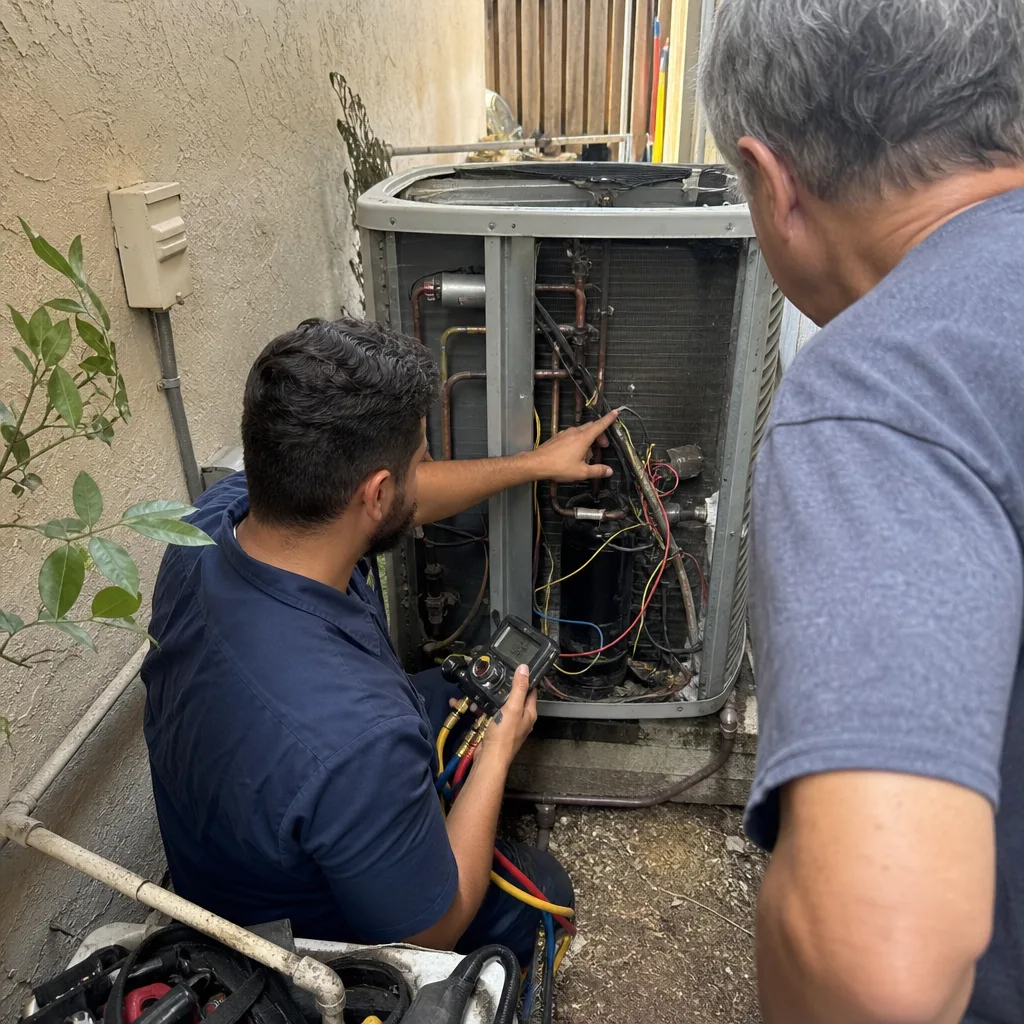
Older Miami lots nearly always carry a surprise. Concrete block and CBS homes from the 1950s, 60s, and 70s frequently have 60 to 100 amp service panels. Adding a self-contained dwelling – with its own HVAC, water heater, range, and outlets – typically requires upgrading to 150 or 200 amp service before the county will issue the ADU permit.
That upgrade is almost never included in a “starting from” ADU quote. It runs into the low five figures by the time you account for the panel, the meter work, and the FPL disconnect and reconnect scheduling. If you’re collecting bids, ask directly: is the panel upgrade in scope, and who pulls the electrical permit? If the answer is vague, the number you’re comparing isn’t real.
Budgeting on paper with an honest scope is the fastest way to avoid this. That’s also why we offer paver driveway installation and the ADU as a coordinated plan – a new rear access drive to the unit is part of the site work, not an afterthought.
How Much Do ADU Permits and Construction Cost in Miami?
Full ADU construction in Miami typically runs $106,200 to $259,600, with the wide range driven almost entirely by flood zone, panel upgrades, and whether the unit includes a kitchen. County permit fees, impact fees, and inspection costs sit on top of that and depend on square footage and the number of fixtures. Here’s how the surrounding scope breaks down:
- ADU construction: $106,200 – $259,600
- Garage conversion (simplest ADU path): $35,400 – $94,400
- Home addition (attached ADU or expansion): $53,100 – $153,400
- Impact window installation (required for ADU glazing): $9,440 – $29,500
- Roof replacement on the primary home, if triggered: $9,440 – $23,600
Roof underlayments, sealants, and exterior finishes degrade quickly in Miami’s sun and humidity, so anything exposed during construction should be specified for a salt-air coastal environment, not a national average. Salt damage is not cosmetic; it’s a wind-resistance issue on a Miami-Dade structure.
Miami ADU Requirements FAQs
Yes, if your Miami property sits in a VE or AE flood zone, an elevation certificate is required before permit submittal and it drives the required foundation height. That certificate is the single most important document in the project – it tells you whether a detached ADU makes financial sense. Call (833) 968-1198 for a free estimate on scope and cost.
Usually not without significant modification, because prefab kits sold nationally rarely carry Miami-Dade NOA numbers on the windows, doors, and roof panels. Without those approvals, the kit fails inspection and the product can’t be installed. Local sourcing with documented NOA products is the practical answer – call (833) 968-1198 to review options.
Garage conversion is cheaper in most cases, typically running $35,400 to $94,400 versus $106,200 to $259,600 for detached construction – and it sidesteps the flood-zone elevation problem entirely because the foundation already exists. Call (833) 968-1198 for a free estimate that compares both paths on your lot.
In most pre-1970s Miami homes, yes – the existing panel is a 60 to 100 amp service and the county requires adequate capacity for a self-contained dwelling before permitting the unit. Upgrading to 150 or 200 amps is common and should be priced in the initial scope, not discovered later. Call (833) 968-1198 to confirm what your home needs.
Every ADU we build is covered by our 730-Day Done Right Promise, with upfront pricing so the number you see is the number you pay. Our technicians have up to 12 years of experience, they’re background-checked, and they arrive in uniform. Calls are answered by a live person, 24/7 – no voicemail, no waiting until Monday. Financing at 0% for 18 months is available, plus $1,000 off projects over $10,000.
If you’d rather have it looked at, Groundwork Construction Co. of Miami offers a no-pressure assessment in Miami – call (833) 968-1198 for a free estimate, and we’ll start at the flood map, not the sales brochure.
Written by the team at Groundwork Construction Co. of Miami, serving Miami, FL.