

 Home additions & ADU
 Kitchen remodeling
 Bathroom remodeling
 Roofing
 Windows & doors
 Driveway & pavers
 Fence
Free written scope consultation - allowances, timeline, and change-order rules on paper before a single trade is scheduled
CGI Home Additions & ADU: The Miami Owner’s Guide
Quick answer: If you have an existing CGI structure in place – a shell, a converted garage, a framed addition – a full Home Addition build-out in Miami typically runs $53,100 – $153,400, and ADU construction runs $106,200 – $259,600. Garage conversions land between $35,400 and $94,400. These are planned builds, not same-day repairs, so we schedule a site visit and provide a written line-item estimate after we assess what’s already there. Nobody finishes a build-out in an afternoon, and we won’t tell you otherwise.
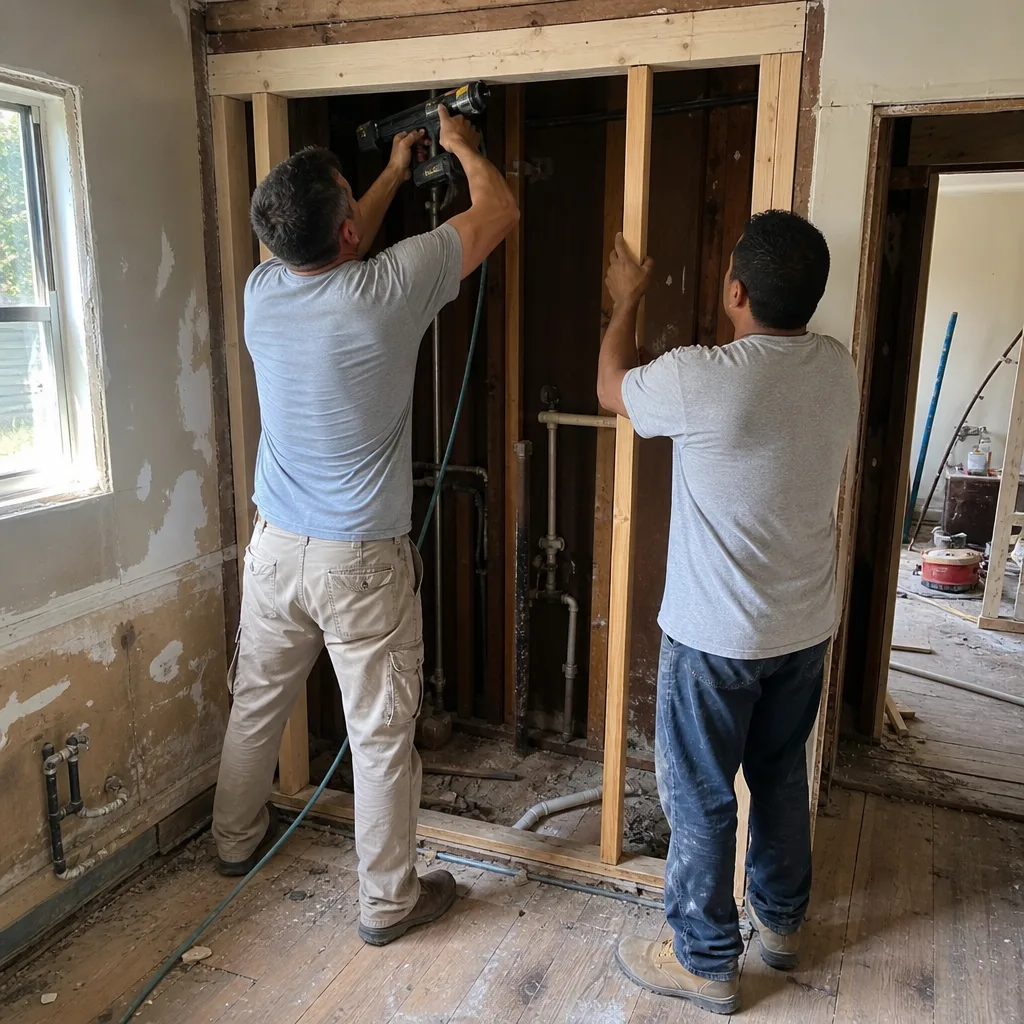
Most Miami homeowners don’t wake up one morning and decide their addition “failed.” They discover it in pieces: a hairline crack that spread across a block wall after a wet season, a permit inspection that flagged framing that didn’t match the approved drawings, or a section of flat roof they can see from the driveway because the membrane is lifting. By the time they call, the question isn’t whether to fix it – it’s what it costs to make the structure right and whether the previous scope was done correctly in the first place.
Groundwork Construction Co. of Miami is an independent builder, not affiliated with CGI. We work with what’s on your site and tell you plainly what it needs.
Which CGI Models This Applies To
The compatibility questions for a CGI structure come down to three things: the building system the shell was engineered on, the foundation and tie-down method used for Florida’s wind requirements, and the finishes specified in the approved plans. Miami sits in the high-velocity hurricane zone, so the structural attachments – connecting hardware, anchor spacing, uplift capacity – are not interchangeable between systems, and inspecting them is where a lot of build-outs quietly go wrong.
How to identify what you’re working with:
- Check the permit records first. Miami-Dade County keeps the approved plans and the product approval numbers on file. That document tells you what the shell was spec’d to be, which is more reliable than what a previous contractor said verbally.
- Look for stamped design documents. Engineered systems and site-built additions carry different documentation, and the scope of what you can legally build into the shell depends on which one you have.
- Measure what’s actually there. Room dimensions, ceiling heights, and door and window rough openings should match the plans. When they don’t, that’s the first thing we flag.
OEM vs. aftermarket: for structural attachments and engineered connectors, don’t substitute an aftermarket equivalent on a Florida addition. Use the hardware specified in the approved design – it’s what the inspection requires and what your wind coverage assumes. For finish materials and interior systems, quality aftermarket options are fine and often more cost-effective. We’ll tell you which category each part of your project falls into.
Styles & brands we work with
- Kitchen remodeling
- Bathroom remodeling
- Home additions & ADU
- Roofing
- Windows & doors
- Driveway & pavers
- Fence
Signs Your CGI Home Additions & ADU Is Failing
What to look for, and what each symptom usually means:
- Cracks in block or stucco walls that keep widening. Stucco hairline cracking is normal in Miami’s humidity and heat cycling. Cracks that step diagonally across a wall, or that open and close with the season, point to settlement or a tie-down problem rather than cosmetic wear.
- Water staining on interior ceiling or wall near a junction. Usually the roof-to-wall transition or a flashing detail that wasn’t done right, not an interior leak. Miami’s summer rain doesn’t need much of a gap to find it.
- Framing that doesn’t match the approved drawings. A common find during a second-opinion inspection – a header where none was specified, or missing blocking behind a wall. It’s fixable, but it needs to be corrected in writing before anything is closed up.
- Doors and windows that no longer close cleanly. In a slab-on-grade addition, this can mean a foundation issue. In a raised structure, it’s more often decay or soft framing at the opening.
- Musty smell or visible mold at the base of a wall. Miami’s humidity makes an undersized vapor barrier or a missing drainage plane show up fast. It’s a moisture-management failure, not a cosmetic one.
See the difference
 Before
 After
 Before
 After
 Before
 After
Replacement Cost & What’s Included
For a Miami build-out of an existing CGI structure, expect $53,100 – $153,400 for a full home addition, and $106,200 – $259,600 for a complete ADU. A garage conversion sits between $35,400 and $94,400, and is often the most cost-efficient route if the shell is sound.
What drives the range up or down:
- Whether the foundation and tie-downs already meet wind-zone requirements, or need work
- Roof system and how the new roof ties into the existing house
- Impact-rated openings, which Miami-Dade essentially requires on new construction
- Plumbing and electrical rough-in distance from existing service
- Permit and inspection costs, which vary by scope and jurisdiction
Every estimate is written line-item, so you see the cost of each scope element. The price on the estimate is the price on the invoice – no change orders unless you ask for something new. All work is backed by our 730-Day Done Right Promise. The workmanship guarantee covers the install, not materials supplied by a third party.
DIY or Call Us?
Some things you can safely check yourself: look at the permit records, measure rooms against the approved drawings, photograph any cracks or water stains with a tape measure for scale, and note when a symptom started. That preparation will save you time and money once we’re on site.
What you shouldn’t DIY on a CGI addition: structural modifications, tie-down hardware, roof penetrations, electrical rough-in, gas line work, or anything that touches the building envelope and wind rating. Getting these wrong in a Miami addition can cost far more to correct later – and in some cases it voids the inspection history of the structure. We’re a licensed and insured builder, and we pull the permits and stand behind the inspections. Calls are answered by a live person, 24/7. Call (833) 968-1198 for a free estimate.
FAQs
How long does a home addition or ADU last in Miami?
A properly built addition or ADU should hold up for 50+ years of structure, but in Miami’s climate, the roof membrane, flashing, and exterior stucco need attention every 15 – 20 years – not because the structure failed, but because sun and humidity wear on the exterior envelope. The structure itself is built to last when inspected and maintained. Call (833) 968-1198 if you’re uncertain about the condition of an existing structure.
Can I repair the existing structure instead of rebuilding?
Often, yes. Garage conversions and additions with sound foundations can be brought up to standard without starting over, and that’s usually the smarter spend. If the foundation, tie-downs, and roof structure are good, the scope is a build-out, not a rebuild. If the foundation is compromised, we’ll tell you – but the decision starts with an honest assessment. Call (833) 968-1198 for a free evaluation.
How long does the build-out take?
A garage conversion usually runs 6 – 10 weeks. A full addition or ADU in Miami runs 3 – 6 months depending on permit timelines and scope. We give you a written schedule and flag delays in writing when they happen – no silence, no surprises.
How do you source materials for a CGI-compatible build?
We use a curated set of verified brand partners – KraftMaid and Cambria in kitchens and baths, Andersen and Pella for windows and doors, GAF and CertainTeed on roofing – and we source structural hardware to the specification in the approved design documents, not the cheapest equivalent. Brand names are used once; we choose materials you can count on. Call (833) 968-1198 for a line-item estimate.
Written by the team at Groundwork Construction Co. of Miami, serving Miami and nearby areas.