
 Driveway & pavers
 Kitchen remodeling
 Bathroom remodeling
 Home additions & ADU
 Roofing
 Windows & doors
 Fence
Free written scope consultation - allowances, timeline, and change-order rules on paper before a single trade is scheduled
Styles & brands we work with
- Kitchen remodeling
- Bathroom remodeling
- Home additions & ADU
- Roofing
- Windows & doors
- Driveway & pavers
- Fence
See the difference
 Before
 After
 Before
 After
 Before
 After
How Thick Should a Concrete Driveway Be in Miami, FL?
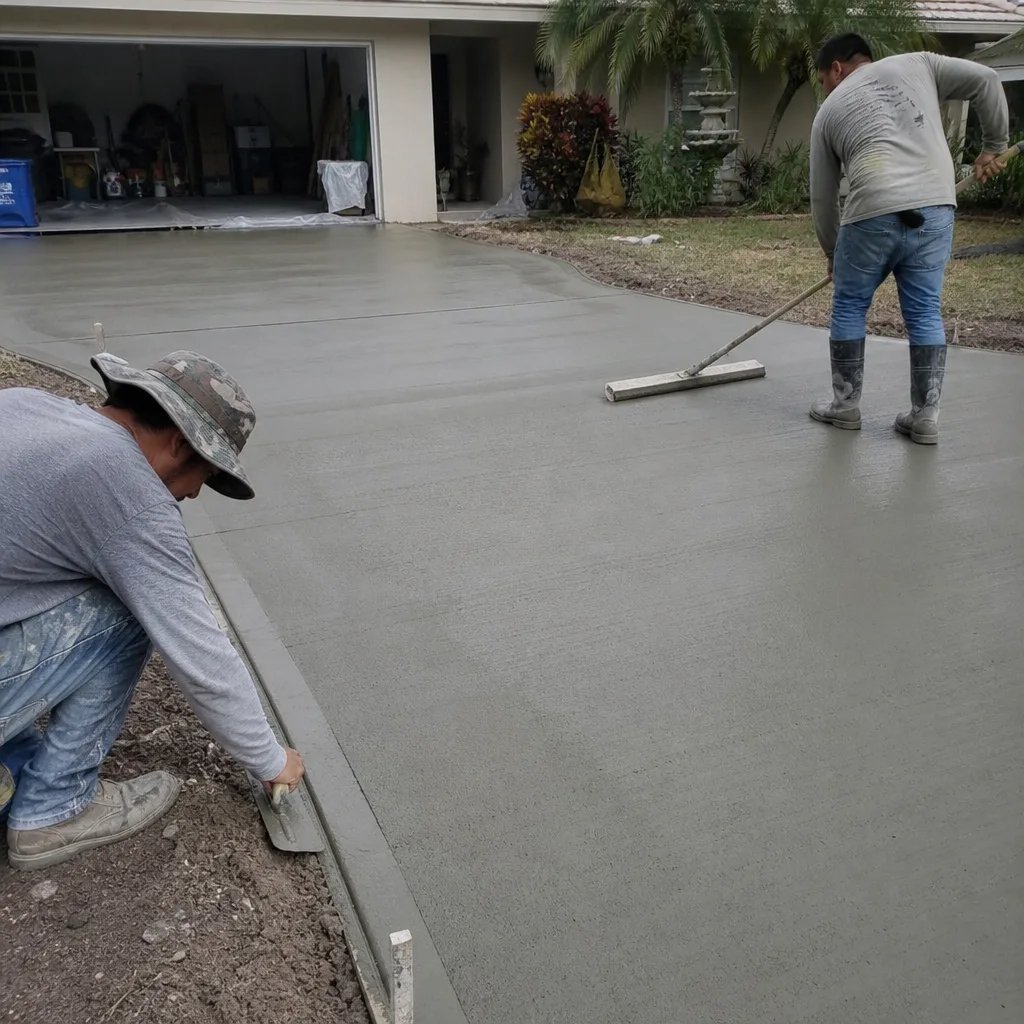
The short answer: 4 inches is the code-minimum baseline for residential concrete driveways, but in Miami the real-world spec should be 5 to 6 inches over a properly compacted base. A 4-inch slab can work in dry, stable soil. On Miami-Dade’s sandy limestone substrate, under summer downpours and salt-laden coastal air, 4 inches is where driveways start failing early. If you want a slab that survives a decade of hurricane-season staging and daily parking, plan on 5 to 6 inches, reinforcement included. For a straight answer on your specific driveway, call Groundwork Construction Co. of Miami at (833) 968-1198.
Why the National 4-Inch Standard Falls Short in Miami
Most driveway guides you’ll find online say 4 inches. That number comes from colder, drier markets with dense, stable clay soils. Miami isn’t that market. Our subgrade is a mix of sandy fill and porous limestone (Miami oolitic limestone, in local terms) that drains fast when it’s dry and loses bearing capacity when it’s saturated. That matters here because June through November brings afternoon downpours that soak the base and turn a marginal subgrade into a soft one.
Once the base gives, the slab takes the load. A 4-inch slab on a compromised sub-base doesn’t fail dramatically. It cracks in a wandering pattern, starts rocking at control joints, and settles unevenly toward the street. We see it every week in older Miami neighborhoods: hairline cracks that turn into trip hazards after three or four wet seasons. At 5 to 6 inches, the slab has the thickness to bridge minor subgrade soft spots. That’s the difference between a driveway that lasts and one that becomes a line item in your 40-Year Recertification punch list.
What the Specs Actually Call For
Here’s what we put in writing on every Miami driveway quote, so the homeowner can see the numbers before the truck rolls:
- Standard slab: 5 inches minimum over 4 to 6 inches of compacted limerock base.
- Driveways taking heavy loads (boats on trailers, RVs, contractor staging equipment after a storm): 6 inches minimum.
- Reinforcement for standard pours: #3 rebar on 24-inch centers OR high-dose synthetic fiber, depending on subgrade condition.
- Reinforcement for heavy-load pours: #4 rebar on 18-inch centers. Fiber alone won’t handle concentrated point loads from a trailer tongue or a loaded service truck.
- Concrete mix: 4,000 to 4,500 PSI. Cheap 3,000 PSI mixes crack faster on Miami’s summer heat swings.
- Control joints: cut to one-quarter of slab depth, spaced no more than 10 feet apart.
A quick spec reference
| Condition | Slab thickness | Reinforcement |
|---|---|---|
| Passenger cars only, good base | 5 in. | #3 rebar @ 24 in. or fiber |
| SUVs, trucks, standard family use | 5 to 5.5 in. | #3 rebar @ 24 in. |
| Boat trailers, RVs, storm staging | 6 in. | #4 rebar @ 18 in. |
| Coastal properties (salt-air exposure) | 5 to 6 in. | Epoxy-coated rebar |
If you want to see your driveway options side by side, our Driveway & Pavers page lays out paver and concrete comparisons, and the Driveway & Pavers in Miami page covers the specific reinforcement and finish choices we recommend for this market.
Salt Air and Rebar: A Failure Mode You Won’t Read About in Most Guides
Here’s the detail that surprises homeowners in coastal Miami neighborhoods like Coconut Grove, the Roads, and Key Biscayne: salt air infiltrates micro-cracks in concrete and reaches the rebar inside. Standard black rebar starts to rust, expands, and spalls the concrete from the inside out. That’s why a slab that looks fine on top can start popping at the surface within 8 to 12 years. The fix is simple and worth the upcharge: epoxy-coated rebar on any driveway within a half-mile of the water. It costs roughly 10 to 15 percent more on the reinforcement line item and substantially extends the slab life. If your driveway faces salt spray on a regular basis, spec it. On a standard residential pour with good rebar, expect a concrete driveway installation in Miami to land in the $5,310 to $14,160 range; epoxy rebar and thicker slabs will push toward the upper end, and a full replacement (including tear-out) typically runs $5,900 to $16,520.
When Miami’s Storm Cycles Push the Spec Higher
Miami’s High Velocity Hurricane Zone is the only place in the US with its own product-approval system, so every roof, window, and shutter needs a Miami-Dade NOA number. Concrete driveways don’t require an NOA, but the same storm logic applies to the loads the slab will carry. After a named storm, a driveway that looked fine during the calm season suddenly takes weight from contractor trucks, tree crews, generator trailers, and equipment staging. A 4-inch slab on saturated limestone base can’t handle that. A 6-inch slab with #4 rebar can.
If you own a property with a boat trailer, an RV, or even a work truck that parks regularly at home, show us the tongue weight and we’ll quote the right thickness. Nobody should be guessing at this after the slab’s already cracked.
Older Miami Driveways: What the 40-Year Recertification Reveals
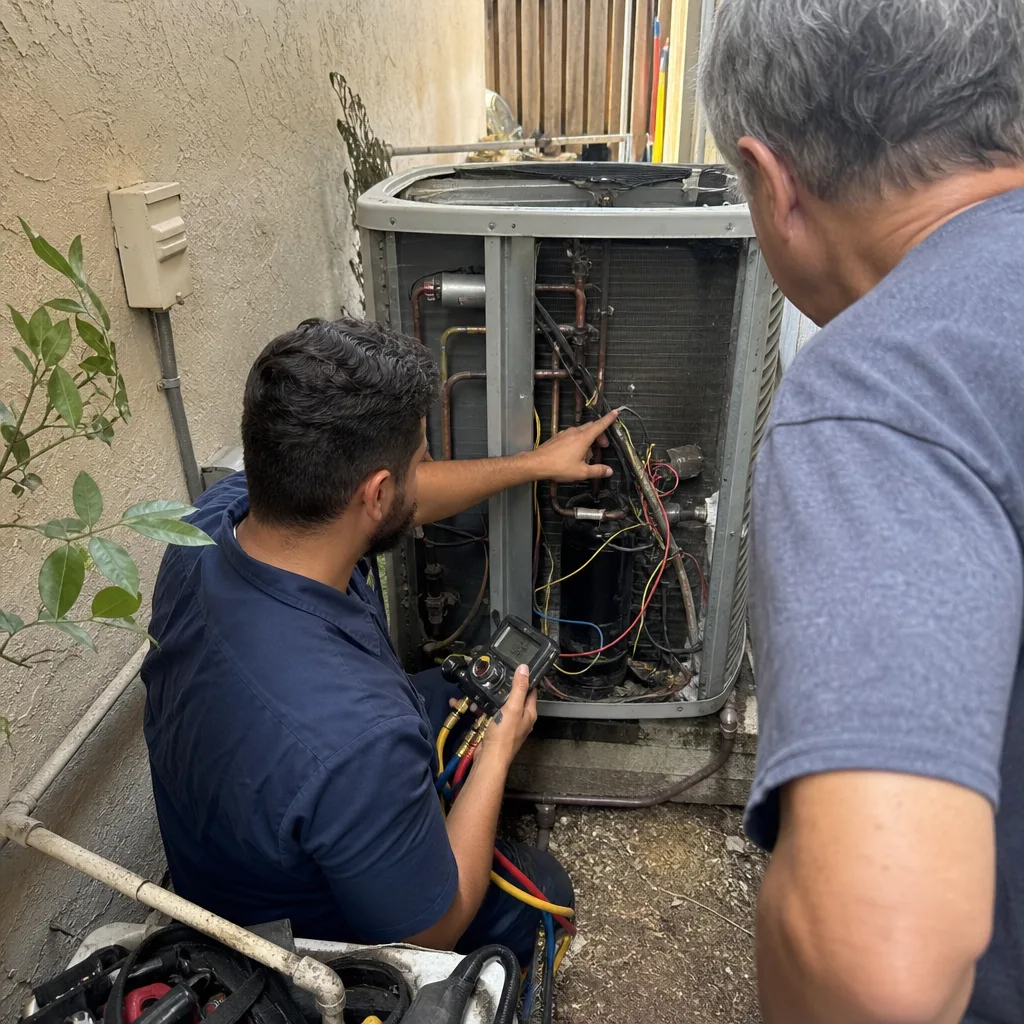
Many Miami homes in neighborhoods like Little Havana, Allapattah, and Shenandoah are now hitting the 40-Year Recertification window (25 years for buildings near the coast). During the structural review, we regularly find original driveways poured at 3 to 3.5 inches in the 1960s and 1970s. They pass casual inspection but fail structural review once an engineer looks at the slab under load. Patching doesn’t fix them. They get torn out and repoured at modern specs. If you’re facing a recertification inspection, it’s cheaper to spec your driveway replacement proactively than to discover the problem under deadline pressure.
Groundwork’s quotes spell out the numbers
One thing we hear from burned homeowners: “The bid just said ‘concrete driveway.'” Our upfront pricing explains slab thickness as an explicit line item, rebar grade and spacing as an explicit line item, mix design PSI as an explicit line item, and base compaction depth. The number you see is the number you pay. Every Miami driveway project is backed by our 730-Day Done Right Promise - if something isn’t done right, we make it right. Calls are answered by a live person 24/7, and our technicians have up to 12 years of experience on concrete, pavers, and hardscape work.
Common Miami Scenarios We See on Estimates
- Coral Gables home with a 1970s 3.5-inch pour. Cracks at every joint, spalling on the sun-facing side. Full replacement to 5.5 inches with #3 rebar.
- Kendall property with a boat trailer. SUV and boat share the driveway. We spec 6 inches with #4 rebar at 18-inch centers.
- Key Biscayne coastal home. Salt air has already popped the top layer at the slab edge. Replacement with epoxy-coated rebar.
- New construction in Doral. Builder poured 4 inches on unproven base. Three rainy seasons later, cracking at the apron. Upgrade to 5.5 inches.
- Hialeah rental property with high turnover. Heavy traffic, low budget. We use 5 inches with high-dose fiber and a 4,000 PSI mix as a cost-conscious spec that won’t fail early.
FAQs
Usually no. Four inches is the code baseline, but in Miami-Dade’s sandy limestone substrate with summer saturation, a 4-inch slab cracks under normal passenger loads within a few years. We spec 5 inches as the real-world minimum and 6 inches for any driveway taking boats, trailers, or storm-season staging.
Concrete driveway installation in Miami typically runs $5,310 to $14,160, with the upper end reflecting thicker slabs and heavier reinforcement. Full replacement including tear-out and disposal lands between $5,900 and $16,520. Call (833) 968-1198 for an exact quote - estimates are free and the price you see on the bid is the price you pay, with 0% financing for 18 months available and $1,000 off projects over $10,000.
Fiber works for low-traffic driveways on good, well-compacted base. If your driveway takes trailers, RVs, or storm-season equipment, you want #4 rebar on 18-inch centers - fiber alone won’t handle concentrated point loads. On coastal properties, spec epoxy-coated rebar to resist salt-air corrosion from the inside out.
Yes. We do no-pressure assessments across Miami and will tell you whether you’re looking at a repair, a resurfacing, or a full replacement. Most driveway projects can be quoted same-week. Call (833) 968-1198 and a real person will answer, day or night.
If you’d rather have it looked at, Groundwork Construction Co. of Miami offers a no-pressure driveway assessment in Miami. We’ll measure the base, spec the right thickness, and put the rebar and mix details in writing before you commit. Call (833) 968-1198 for a free estimate and design consult.
Written by the team at Groundwork Construction Co. of Miami, serving Miami, FL.