
 Kitchen remodeling
 Bathroom remodeling
 Home additions & ADU
 Roofing
 Windows & doors
 Driveway & pavers
 Fence
Free written scope consultation - allowances, timeline, and change-order rules on paper before a single trade is scheduled
Styles & brands we work with
- Kitchen remodeling
- Bathroom remodeling
- Home additions & ADU
- Roofing
- Windows & doors
- Driveway & pavers
- Fence
See the difference
 Before
 After
 Before
 After
 Before
 After
HVHZ Window Requirements in Miami: What the Code Actually Requires
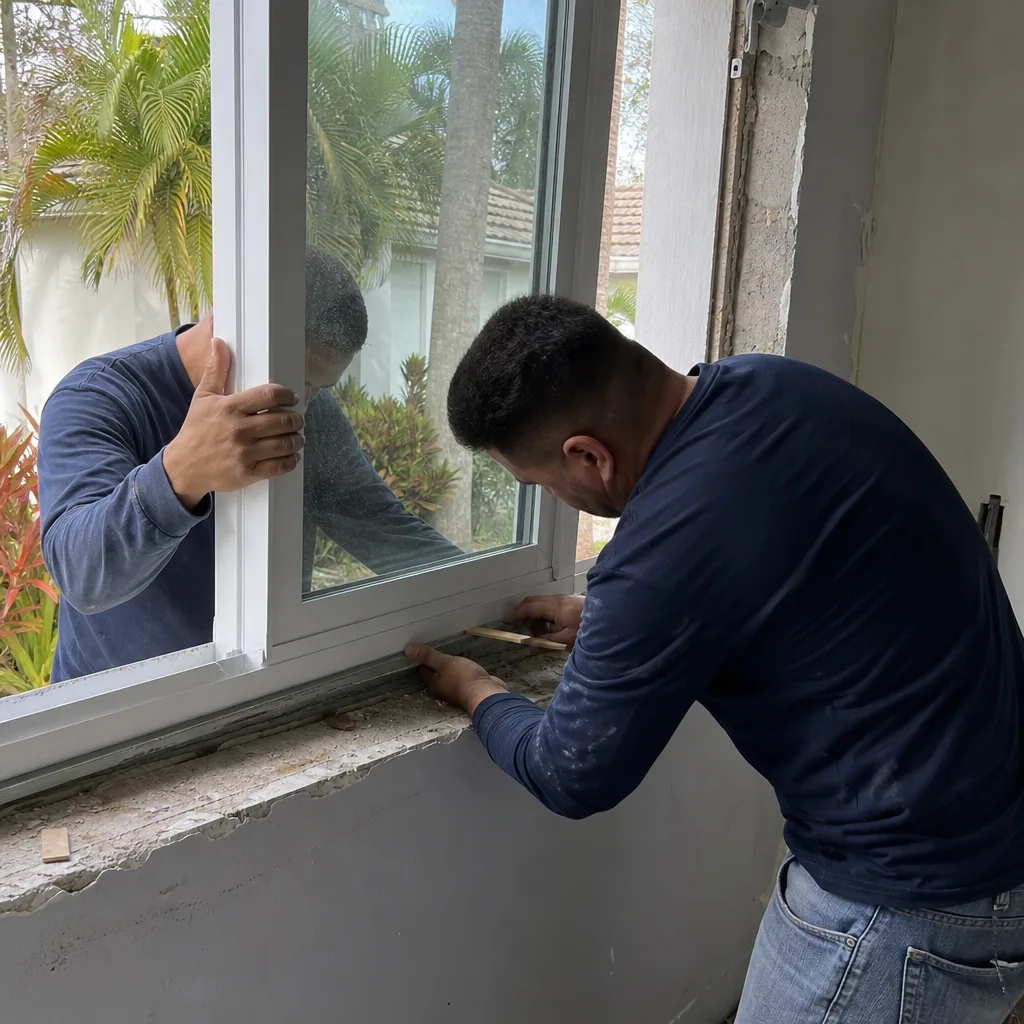
HVHZ window requirements mean your windows must be tested to a much tougher standard than the rest of the state: they need to pass Miami-Dade County’s High-Velocity Hurricane Zone rules, which require large-missile impact testing plus cyclic pressure testing that go beyond what the rest of Florida requires. Every exterior opening needs a Miami-Dade NOA (Notice of Acceptance), an installation that follows the NOA drawings to the letter, and a licensed contractor who pulls the permit and passes both a rough-in and final inspection. Miss any one of those three and the window isn’t legally compliant. Call (833) 968-1198 if you want a straight answer on your own home.
Why Miami Has Its Own Set of Window Rules
Miami-Dade and Broward are the only two counties in the United States designated as a High Velocity Hurricane Zone under the Florida Building Code. That designation isn’t just a wind-speed category upgrade. It puts every exterior opening in your home on a completely separate approval path.
A window that’s perfectly legal in Tampa or Orlando is not legal in Miami. The product has to meet the FBC’s HVHZ sections, not the standard wind-load provisions the rest of the state follows. Impact testing for HVHZ involves a 9-pound 2×4 fired at 50 feet per second, plus cyclic pressure cycling that simulates sustained hurricane conditions. A Florida statewide approval doesn’t automatically cover Miami-Dade. It’s a parallel system, and it runs on its own track.
This is why you’ll see two windows that look identical sitting side by side in a showroom, one carrying a current Miami-Dade NOA and one carrying only a statewide approval. The second one cannot go into a Miami home, no matter what the sales sheet says.
The Three-Layer Compliance Chain You Can’t Skip
Here’s the part most homeowners don’t find out about until they’re already under contract: compliance in Miami isn’t one thing. It’s three, and all three have to line up.
- The product must carry a Miami-Dade NOA. That’s the county’s own approval document, keyed to a specific product and the specific pressures and impact rating it was tested to. When a NOA expires or gets superseded by a newer version, the install may need to follow the current one.
- The installation must match the NOA’s approved drawings exactly. This is where things go sideways. The NOA doesn’t just approve a window – it approves a window installed a certain way, with specific buck materials, anchor spacing, and fasteners. Swap the anchors or skip the buck and you’ve voided the approval even if the glass is perfect.
- A licensed contractor pulls the permit and passes both inspections. Miami-Dade requires an inspector sign-off at rough-in (before the window goes in, when the opening and anchoring system can be seen) and again at final. Both stages matter. A job that only passes final with no rough-in record can get flagged during a real estate sale or a 40-Year Recertification inspection.
Groundwork Construction Co. of Miami works only in Miami-Dade, and our technicians have up to 12 years of experience in this market. Our crews are trained on the current FBC HVHZ chapter requirements, which means the compliance path gets priced into the upfront quote – not discovered as a change order after demo. That’s backed by our 730-Day Done Right Promise: if it’s not done right, we make it right.
Common Local Scenarios That Change the Answer
Miami’s housing stock is old, dense, and varied, and each vintage creates its own wrinkle.
Pre-1970s CBS and concrete-block homes
Much of Miami’s older residential stock is unreinforced concrete block, and not all of it has the structural depth the NOA’s buck and anchor specs require. A window that’s fully compliant in a code-built opening from 2010 can need structural modification to become compliant in a 1955 CBS home. This is a real cost and a real timetable change, and it should be identified before you sign, not after your old windows come out.
Coastal VE and AE flood zones
If your home sits in Miami-Dade’s coastal VE or AE flood zones, HVHZ compliance is only one layer. Flood-zone glazing requirements tied to FEMA elevation certificates are a separate regulatory track. Not every HVHZ-approved window automatically meets flood-zone glazing rules, so a window that passes one test can still fail the other. Both have to be satisfied, and the FEMA elevation certificate on file for your property sets the bar.
Renovation and recertification work
The 40-Year Recertification law (25 years for buildings near the coast) tends to trigger structural, balcony/spall, and re-roofing work alongside window replacements. When that happens, the opening assessment needs to account for the whole envelope, not just the windows. A 1920s Mediterranean Revival building and a post-2000 glass condo on Brickell need completely different approaches even when the query starts with “impact windows.”
Groundwork’s crews run the structural opening assessment before quoting for exactly this reason. That’s how you get upfront pricing with no surprises instead of a mid-job scramble. We work with brand partners like Andersen and Marvin for windows and doors, and our full-scope service line covers Windows & Doors plus the surrounding trades so you have one contractor from foundation to finish line.
What HVHZ Windows Cost in Miami
Realistic ranges for Miami-Dade projects, assuming a code-built opening with no structural modification:
| Work | Typical Range |
|---|---|
| Window replacement (standard opening) | $5,310-$17,700 |
| Impact window installation (HVHZ-compliant) | $9,440-$29,500 |
| Roof replacement (often bundled with window work on older homes) | $9,440-$23,600 |
Those numbers move when the opening needs structural work, when flood-zone glazing rules apply, or when the NOA on the product being installed requires a heavier buck than the wall can take without modification. Call us for an exact quote on your specific openings – estimates are free and we’ll tell you plainly which of those situations you’re in. There’s also $1,000 off projects over $10,000 and 0% financing for 18 months if you’re bundling window work with a larger remodel.
FAQs
No – a window needs a Miami-Dade NOA to be legally installed in Miami-Dade, not just a statewide approval. An “impact window” by itself means nothing here; what counts is whether the specific product carries a current NOA for the pressures and impact rating your home requires. Call (833) 968-1198 and we’ll check the product before you buy.
A Miami-Dade Notice of Acceptance is the county’s own product approval document. It confirms a specific window model was tested and approved for HVHZ conditions – which is a stricter standard than the rest of Florida requires, so a statewide approval isn’t a substitute. The NOA also specifies how the window must be installed, and deviating from that installation voids the approval.
Often, yes – and you need to know that before you sign. Pre-1970s CBS homes in Miami frequently lack the structural depth the NOA’s buck and anchor drawings call for, so a compliant window in a modern opening may need the opening modified to become compliant. Our crews assess the opening first and price the structural work into the quote upfront.
No, they’re separate tracks and both have to be satisfied. HVHZ rules control the wind and impact performance of the window and its installation; flood-zone requirements in Miami-Dade’s coastal VE and AE zones are tied to FEMA elevation certificates and cover different glazing criteria. Not all HVHZ-approved windows also meet flood-zone glazing rules, so the two need to be checked independently.
Getting This Right the First Time
If you’d rather have it looked at, Groundwork Construction Co. of Miami offers a no-pressure assessment in Miami – call (833) 968-1198. We’ll walk the openings, check the NOA, confirm any flood-zone overlay, and give you an upfront number before anything gets ordered or removed. Read more about our Miami service area and start with our home page to see the full scope of what we handle.
Written by the team at Groundwork Construction Co. of Miami, serving Miami, FL.