
 Driveway & pavers
 Kitchen remodeling
 Bathroom remodeling
 Home additions & ADU
 Roofing
 Windows & doors
 Fence
Free written scope consultation - allowances, timeline, and change-order rules on paper before a single trade is scheduled
Styles & brands we work with
- Kitchen remodeling
- Bathroom remodeling
- Home additions & ADU
- Roofing
- Windows & doors
- Driveway & pavers
- Fence
See the difference
 Before
 After
 Before
 After
 Before
 After
Pavers vs Concrete Driveway in Miami: Which One Actually Survives a Hurricane?
For most Miami driveways, we recommend interlocking pavers unless you’re working with a tight budget and a lot that sits safely outside the flood zone. Pavers cost more upfront, but they survive storm surge, thermal cycling, and root heave without the full-slab replacement that concrete forces on you. A paver driveway in Miami runs $8,260-$21,240 installed; concrete comes in at $5,310-$14,160. The gap looks small until you pay for a second concrete pour after one bad season. Call (833) 968-1198 for a free estimate and we’ll walk your lot with you.
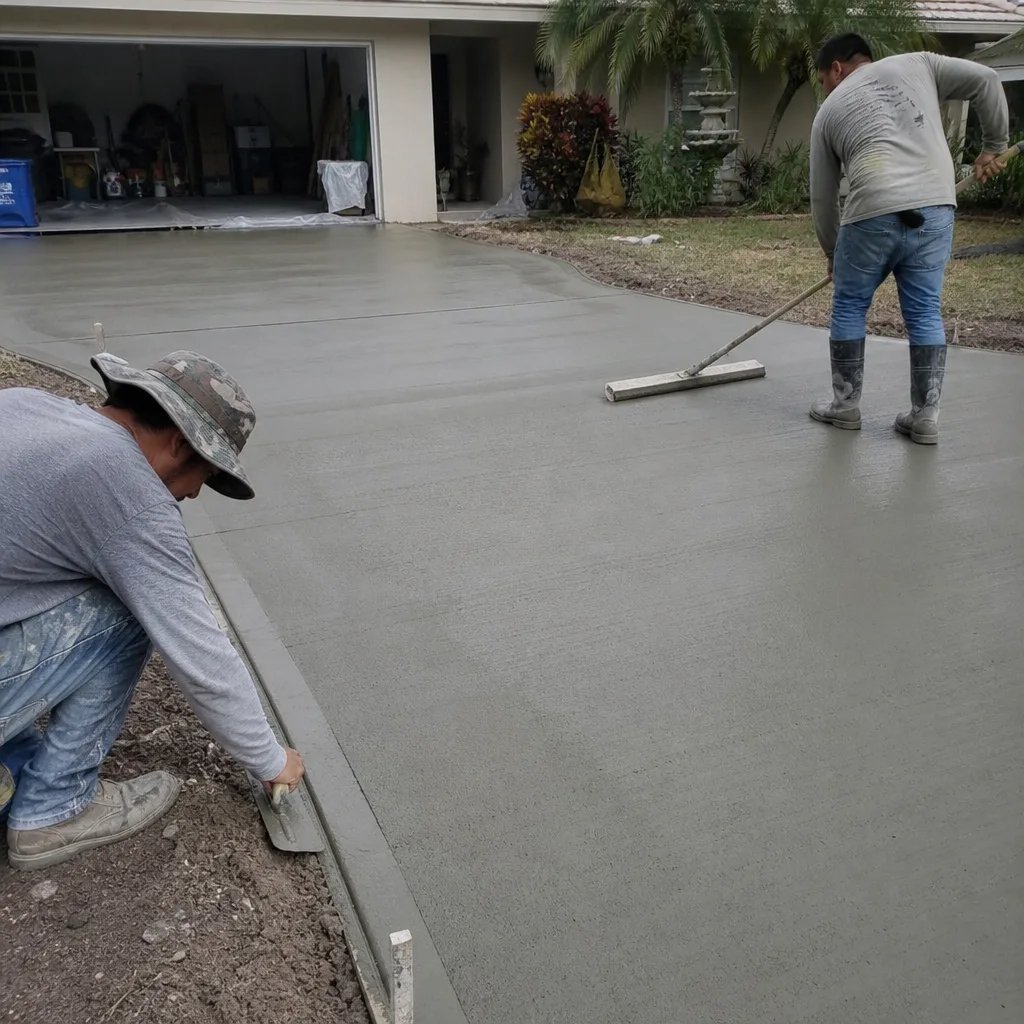
Why This Decision Looks Different in Miami Than Anywhere Else
Most comparison guides argue about curb appeal and cost per square foot. That’s a temperate-climate conversation. Here, the real question is which material survives a Cat 3 storm surge, dries fast enough to keep mold out of your garage, and doesn’t need a full replacement when the ground shifts underneath it. All three get tested in Miami, and usually within the same decade.
We’re in the High Velocity Hurricane Zone. Miami-Dade County runs the only product-approval system of its kind in the country, which means every exterior product carries a Miami-Dade NOA number, not just a Florida or national stamp. That single fact changes the paver-versus-concrete argument, and most homeowners never hear it until they’re already committed.
How Concrete and Pavers Fail Differently Under Miami Conditions
Concrete: monolithic slabs crack and heave
A poured concrete slab in an AE or VE flood zone takes water underneath it during storm surge. When the water recedes, the subgrade is scoured out and the slab is left unsupported. It heaves, cracks through the middle, and there’s rarely a salvageable section. You replace the whole thing. In our experience across Miami’s flood-sensitive neighborhoods, a single surge event often turns a four-figure driveway into a five-figure one.
Thermal cycling does the rest. Miami’s daily temperature swings plus months of subtropical heat push a monolithic slab to crack at its control joints faster than in temperate markets. Not always dramatically, but predictably. Each crack is a place water gets in, and water is the enemy here.
Pavers: segmented and repairable by design
Interlocking pavers fail as a system, not as a single piece. When the base shifts after a storm, we lift the affected pavers, re-grade the bedding sand, and relay the same pavers. The storm-recovery cost drops dramatically because you’re replacing labor and base material, not the finished surface. The same pavers go back down.
That segmented construction also handles thermal expansion without visible cracking. Each unit moves a hair; the joints absorb it. No cracks to chase, no crack-sealer maintenance schedule.
Drainage, Permits, and the Spec Most Homeowners Don’t Ask For
Miami-Dade’s stormwater rules get strict in flood-sensitive zones, and permeable paver systems can be engineered to meet those requirements in a way a sealed concrete slab simply cannot. That matters at permit review. A permeable paver design that manages on-site infiltration can simplify approval in areas where a solid slab triggers additional drainage engineering. We’ve watched that difference add weeks to concrete jobs and eliminate them on paver jobs.
The other spec most homeowners don’t know to ask for: Miami-Dade Product Approval. Certain concrete and limestone pavers carry NOA numbers for wind-borne debris resistance in specific applications. Groundwork Construction Co. of Miami sources through a curated portfolio of top-tier brands – the Driveway & Pavers side of our work leans on brands like Oldcastle and Belgard – and we provide documentation of Miami-Dade compliance for every product we install. Not whatever was on the supply-house floor that week. If a contractor can’t hand you the NOA number before you sign, that’s a signal.
What We Actually See on Miami Jobs
The housing stock here runs from 1920s Mediterranean Revival to CBS block homes to post-2000 Brickell high-rises, and the driveways on each tell a different story. In the older neighborhoods, unreinforced masonry and low-slope roofs mean water pooling near the driveway edge, and a poured slab sitting in that runoff for years develops hairline cracks that widen every wet season. Paver installations handle that same runoff because the joints drain.
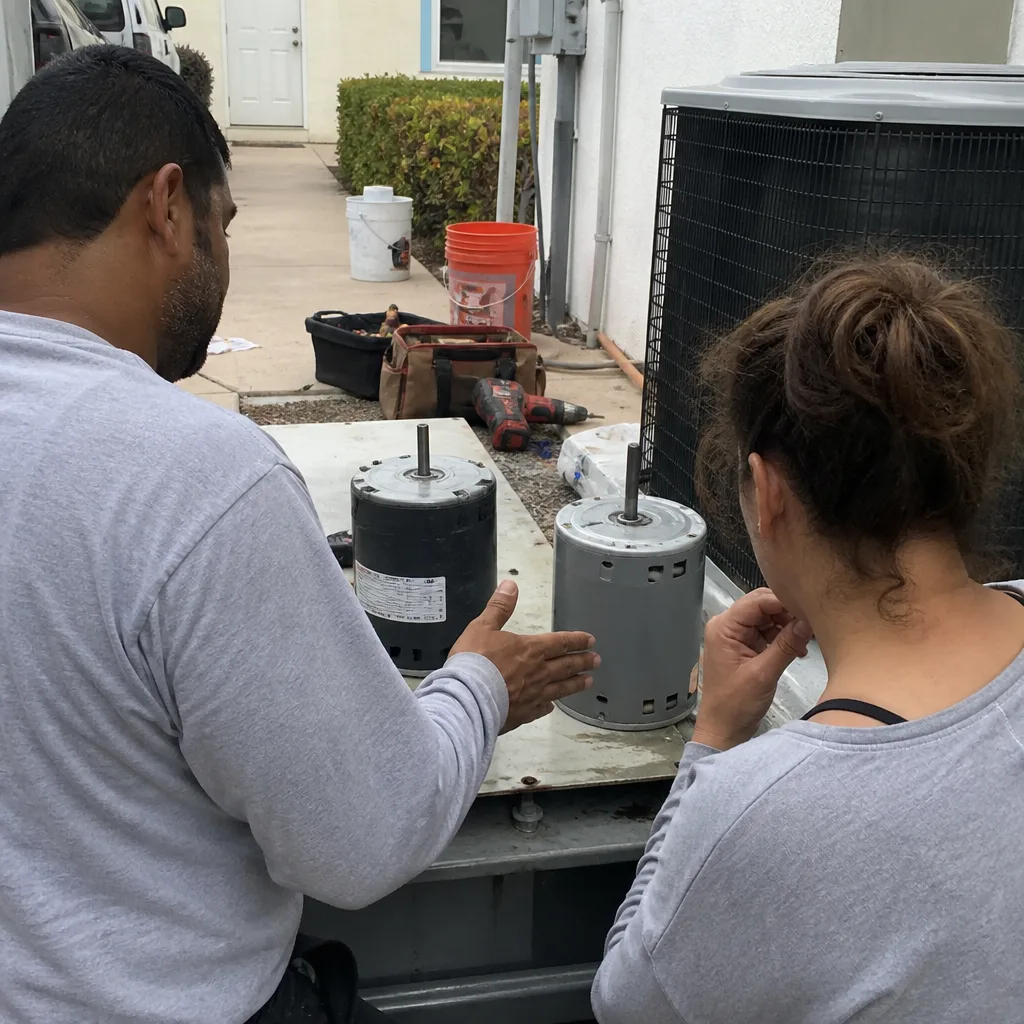
Salt air is the quieter issue. It chews through sealants and exposed concrete finishes faster than inland markets, so both materials need maintenance – but pavers let you reseal and relift a section without tearing out the whole driveway. We reseal paver driveways starting around $295-$825; a concrete driveway’s repair is often an all-or-nothing proposition.
Here’s the operator detail that doesn’t make it into comparison guides: the crack pattern of a Miami concrete driveway is a map of where water went during the last storm. We read it before we quote anything. A paver driveway doesn’t give us that map because it drains instead of cracking.
Side-by-Side: Pavers vs Concrete for a Miami Driveway
| Factor | Interlocking Pavers | Poured Concrete |
|---|---|---|
| Installed cost in Miami | $8,260-$21,240 | $5,310-$14,160 |
| Storm-surge response | Lift, re-grade base, relay same pavers | Full replacement in undermined sections |
| Thermal cracking | Joints absorb movement; no visible cracks | Cracks at control joints, widening over time |
| Drainage / stormwater | Permeable systems can meet county infiltration rules | Sealed slab needs separate drainage engineering |
| Miami-Dade NOA availability | Available on select pavers (Oldcastle, Belgard) | Varies by mix and application |
| Reseal maintenance | Periodic resealing ($295-$825) | Sealers wear faster in salt air |
| Repair scope | Section by section | Often all-or-nothing |
The Honest Recommendation
Choose pavers if your lot sits in an AE or VE flood zone, if you’ve already replaced a cracked slab once, or if you plan to stay in the home long enough to see a second storm season (which in Miami is essentially everyone). Choose concrete if your lot is high and dry, your budget is firm at the lower end, and you’re comfortable with the possibility of a full replacement down the road. Both are legitimate choices. The mistake we see is a homeowner picking concrete for the lower number without knowing the replacement math.
For either path, the base matters more than the surface. We check subgrade compaction, drainage fall, and edge restraint before we quote. Our technicians have up to 12 years of experience with pavers and concrete in this climate, and every driveway job carries our 730-Day Done Right Promise – if it’s not done right, we make it right. Upfront pricing means the number you see is the number you pay, and 0% financing for 18 months plus $1,000 off projects over $10,000 takes the sting out of the paver premium. When your driveway is done, our team handles the rest of the exterior scope too – windows, Driveway & Pavers in Miami, and full home additions from foundation to finish line.
FAQs
Repair is cheaper only when the damage is cosmetic and localized – a few cracks, not a heaving slab. Once storm surge scours the subgrade, patching is temporary and full replacement is usually the better money. A driveway replacement in Miami runs $5,900-$16,520. Call (833) 968-1198 and we’ll tell you which category your driveway falls into – estimates are free.
Yes, for surge and flood recovery, pavers hold up better because they’re repairable. A concrete slab undermined by water is typically a total loss; pavers are lifted, the base re-graded, and the same units go back. Wind is a different story – both need proper edge restraint and base compaction to stay put. Call (833) 968-1198 for a site-specific assessment.
Not always – NOA requirements depend on the product and application, and they’re most relevant for wind-borne debris and certain permeable systems. But you should ask any contractor for documentation of Miami-Dade compliance on the pavers they’re installing. We provide it on every product. Call (833) 968-1198 to see the spec sheets for the materials we’d use on your lot.
Yes. Permeable paver systems can be engineered to meet Miami-Dade stormwater management requirements in flood-sensitive zones, which can simplify permit approval compared to a sealed concrete slab. Design depends on your subgrade and lot drainage. Call (833) 968-1198 for a free design consult on your specific property.
If you’d rather have it looked at firsthand, Groundwork Construction Co. of Miami offers a no-pressure assessment in Miami – call (833) 968-1198 for a free estimate, live person on the line 24/7.
Written by the team at Groundwork Construction Co. of Miami, serving Miami, FL.