
 Kitchen remodeling
 Bathroom remodeling
 Home additions & ADU
 Roofing
 Windows & doors
 Driveway & pavers
 Fence
Free written scope consultation - allowances, timeline, and change-order rules on paper before a single trade is scheduled
Styles & brands we work with
- Kitchen remodeling
- Bathroom remodeling
- Home additions & ADU
- Roofing
- Windows & doors
- Driveway & pavers
- Fence
See the difference
 Before
 After
 Before
 After
 Before
 After
Roof Hail Damage Signs in Miami, FL: What’s Real Hail and What’s Something Else
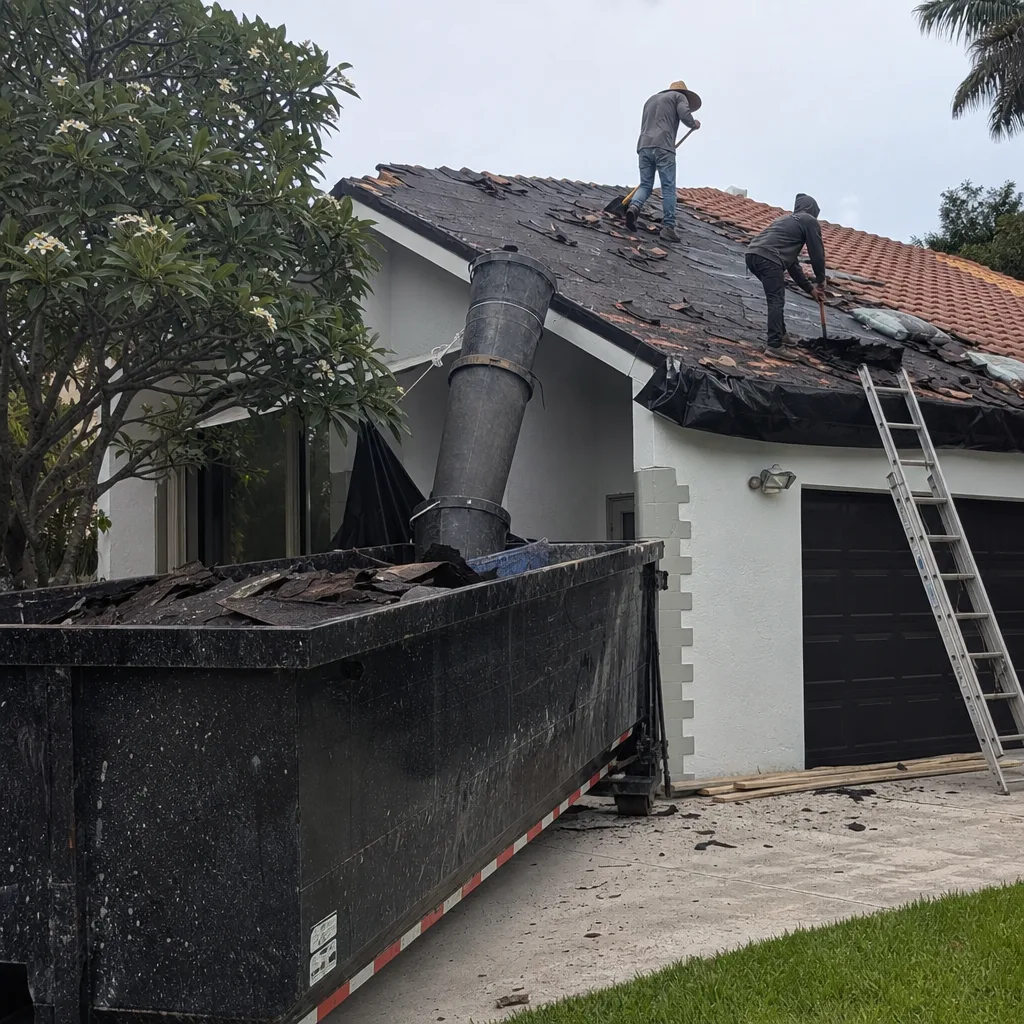
The reliable signs of true roof hail damage are soft-metal dimpling on gutters and flashing, random circular spots where granules have been knocked off exposing the mat, and shingles that feel soft or bruised under thumb pressure. In Miami, most of what homeowners think is hail damage turns out to be wind-scour granule loss, UV blistering, or tropical rain erosion. Getting that distinction right changes which claim you file, which contractor you call, and what the adjuster will actually approve. If you’d rather have a trained eye settle it, call Groundwork Construction Co. of Miami at (833) 968-1198 for a free inspection.
Why Hail Damage in Miami Is Rarely What It Looks Like
Miami averages fewer than 10 hail days a year, and most of those come off inland convective storms pushing east from the Everglades. Coastal neighborhoods from Brickell to Miami Beach almost never see hail. Western suburbs out toward Kendall, The Hammocks, and Homestead touch a different weather pattern entirely and pick up hail more often than the coast. That geography matters because if your roof is inland, weather records can back up a claim; if it’s toes-in-the-sand coastal, an adjuster is going to look harder at your story.
The misread hurts homeowners most because Miami’s sun and rain leave marks that look uncomfortably like hail strikes. A wind-scour patch of missing granules on a south-facing slope can send an inexperienced inspector straight toward a hail claim, which then gets denied or stalled. It shouldn’t have been a hail claim at all. It was a wind claim, or an age and UV claim, or plainly a roof that reached the end of its service life. Each has its own evidence, its own adjuster conversation, and its own repair scope.
This confusion gets worse because of the local building code. Miami-Dade sits in the High Velocity Hurricane Zone and is the only US county with its own product-approval system. Every roof covering here carries a Miami-Dade NOA number, not just a Florida state approval. When an adjuster sees an NOA-rated roof, they expect it to have handled wind-driven rain without surface damage. If you’re claiming hail, they’ll ask why an HVHZ roof that passes impact testing failed a hail event. That question almost always comes up, and having photographic proof of the pattern either answers it or ends the conversation.
What to Look For: True Hail vs. Miami’s Imposters
The next time you’re on your roof after a storm (and please, watch your step and stay off wet slopes), this is what separates a real hail signature from a Miami lookalike.
- Soft-metal dimpling is your best single indicator. Hail leaves visible dents and chalks on galvanized vents, gutters, ridge caps, and flashing. If those are clean and unmarked, the shingles likely took no hail either.
- Random circular granule loss from hail shows up as scattered round spots scattered across a slope with no direction. Wind-scour loss runs in directional streaks across the same side of the roof, following the wind pattern.
- Soft, bruised shingle substrate. Press the affected area with your thumb. Hail leaves a bruised, tender feel. Wind-scour loss feels just as firm as the surrounding shingle, only desurfaced.
- UV blistering looks raised, not sunken. Prolonged South Florida sun can create bubbles that push upward. Hail creates depressions. A raised bump is not hail.
- Rain accumulation tracks along slope lines. Heavy tropical rain carves thin, linear paths that follow the slope. These are common in Miami and not impact damage.
- Concrete tile cracks are easy to miss. A hail-cracked tile can stay in place and look intact from the ground. You need someone walking the field with their feet on it, checking each tile’s nose and field for hairline fractures, not scanning from a ladder edge.
| Sign | What it means | Likely claim direction |
|---|---|---|
| Round granule spots, soft under thumb | True hail impact | Hail / wind claim |
| Streaked, directional granule loss | Wind scour | Wind, or age-related wear |
| Raised surface bubbles | UV blistering | Not a storm claim |
| Thin linear surface marks along slope | Rain erosion | Not a storm claim |
| Dimpled gutters and flashing | Confirmed hail evidence | Strengthens any hail claim |
The Window and Flashing Complication Nobody Talks About
Miami’s mandatory impact-glass requirement creates a weird evidence gap. Hail that would shatter ordinary glass often does nothing to impact windows – the pane holds. But the aluminum frames, sills, and flashing around those windows take the strike hard, and that metal dimpling is often your most defensible hail evidence. When a homeowner says “my windows are fine, so there’s no hail damage,” they’re missing the point entirely. The glass is the wrong place to look. It’s the metal that tells the story.
We see this pattern often during post-storm assessments: a WindMar or similar impact window that’s completely intact, with visible chalky circular dents on the frame just above it. That’s a hail hit. When we pull up and see a mix of a well-maintained home with impact glazing and clean interior trim, the roof damage story doesn’t match a hail narrative. Uniformed, background-checked inspectors on every job keep that documentation clean. For the actual repair scope and options, our Roofing page lays out material choices; what belongs here is the diagnosis before any of that starts.
Getting a Defensible Damage Report
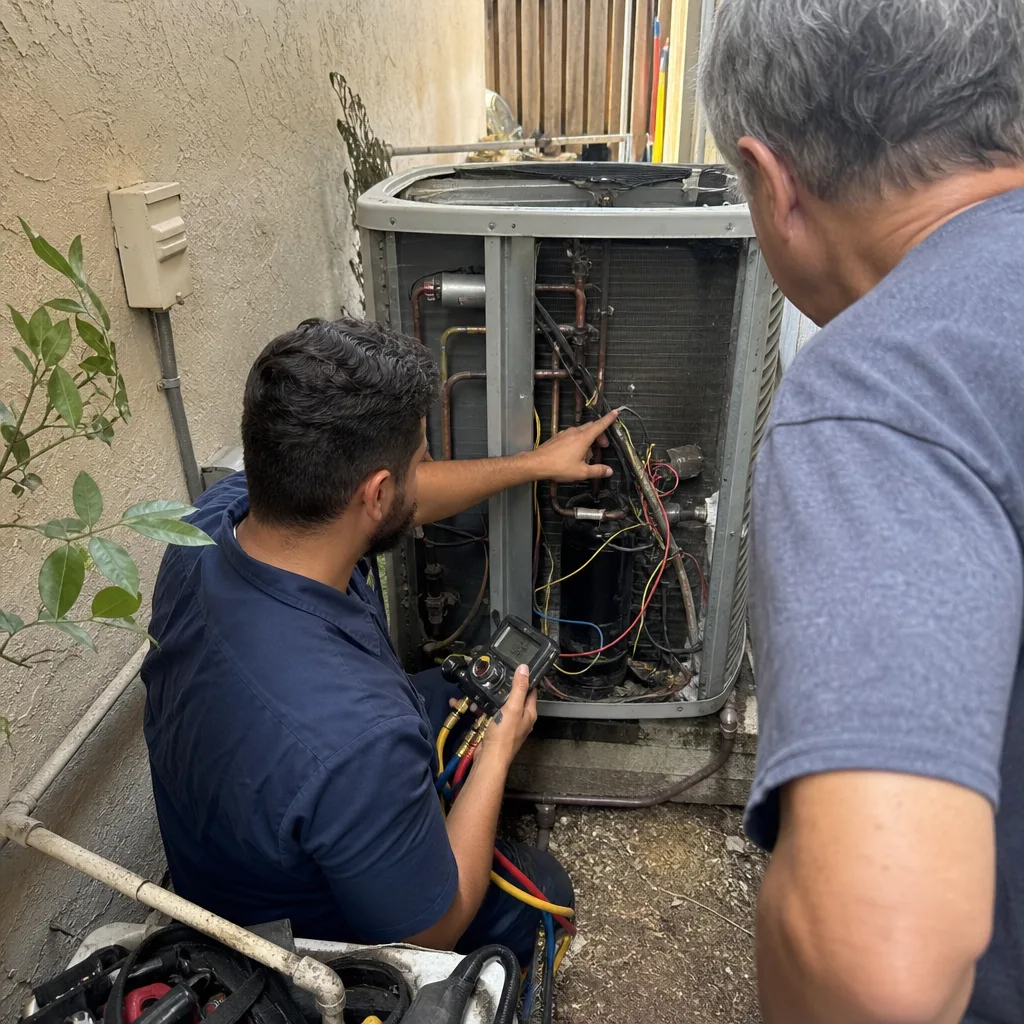
Verbally telling an adjuster “I see hail damage on my roof” doesn’t get you far. What moves a claim is a written, photographic report documenting each sign, its exact roof location, and its distinction from wind-scour or UV wear. That’s what a trained inspector produces. It separates you from the homeowner next door with a vague, denied claim (and in Miami, that neighbor is common).
Our inspection runs between $470 and $2,125 for a roof repair call, and the report is included when you hire us for the work. If it turns out you need a full replacement, Miami pricing runs $9,440 to $23,600, with tile roof repair for a hail-cracked field at $710 to $2,950. Upfront pricing means that number is the number you see and the number you pay.
Our technicians have up to 12 years of experience, and every project is backed by our 730-Day Done Right Promise. If it’s not done right, we make it right. Calls come into a live person 24/7, and all jobs get a background-checked, uniformed crew. Our estimate is free, and the Miami service area page lists where we work across the county.
FAQs
Yes. Hail often falls in small, isolated convective cells that never register at your address, and a neighbor a mile east might have seen nothing while your slope got hit directly. That’s why the physical signs matter more than your memory of the storm, and why a documented inspection is worth more than recollection. Call (833) 968-1198 to get one on the books.
A roof repair scope starts at $470 and reaches $2,125 depending on the repair. A full roof replacement runs $9,440 to $23,600, and tile repair for cracked tiles falls in the $710 to $2,950 range. Call (833) 968-1198 for an exact quote – estimates are free.
Because from the ground, both look like bare patches on a shingle, but the pattern gives it away once you’re up close. Wind-scour follows direction and creates streaks, while hail hits scatter in a random pattern and leave the substrate soft. Adjusters know this and will call out a wrong diagnosis, so getting the inspection done before you file saves weeks of back-and-forth. Call us and we’ll document what’s actually there.
Often yes, even if the tile looks intact, because a hairline fracture lets hurricane-season rain work into the underlayment and eventually into your framing. Miami termite pressure on wood framing is severe, and any persistent moisture makes it worse fast. A tile replaced now at $710 to $2,950 is far cheaper than roof-deck repairs down the line. Call (833) 968-1198 for an assessment.
When to Stop Guessing and Have It Looked At
If you’ve spotted random round granule loss, dimpled metal, or tiles that look suspiciously intact, don’t wait for a claim denial to clarify things. A written, photographed report gives you the version of the truth an adjuster will actually engage with. Groundwork Construction Co. of Miami offers a no-pressure assessment in Miami – call (833) 968-1198 and get a straight answer.
Written by the team at Groundwork Construction Co. of Miami, serving Miami, FL.