
 Windows & doors
 Kitchen remodeling
 Bathroom remodeling
 Home additions & ADU
 Roofing
 Driveway & pavers
 Fence
Free written scope consultation - allowances, timeline, and change-order rules on paper before a single trade is scheduled
Styles & brands we work with
- Kitchen remodeling
- Bathroom remodeling
- Home additions & ADU
- Roofing
- Windows & doors
- Driveway & pavers
- Fence
See the difference
 Before
 After
 Before
 After
 Before
 After
Signs You Need to Replace Your Windows in Miami, FL: The NOA Test Comes First
The single most important sign you need to replace windows in Miami is that they don’t carry a valid Miami-Dade Notice of Acceptance (NOA) number. Clear glass, tight seals, fresh paint: none of it matters if a window fails the NOA test, because it’s a code violation, an insurance liability, and a structural weak point once hurricane season opens. Below are the signals we look for, ranked by how much trouble they can cause once June rolls around. If you want a straight read on your home, call Groundwork Construction Co. of Miami at (833) 968-1198 for a free assessment.
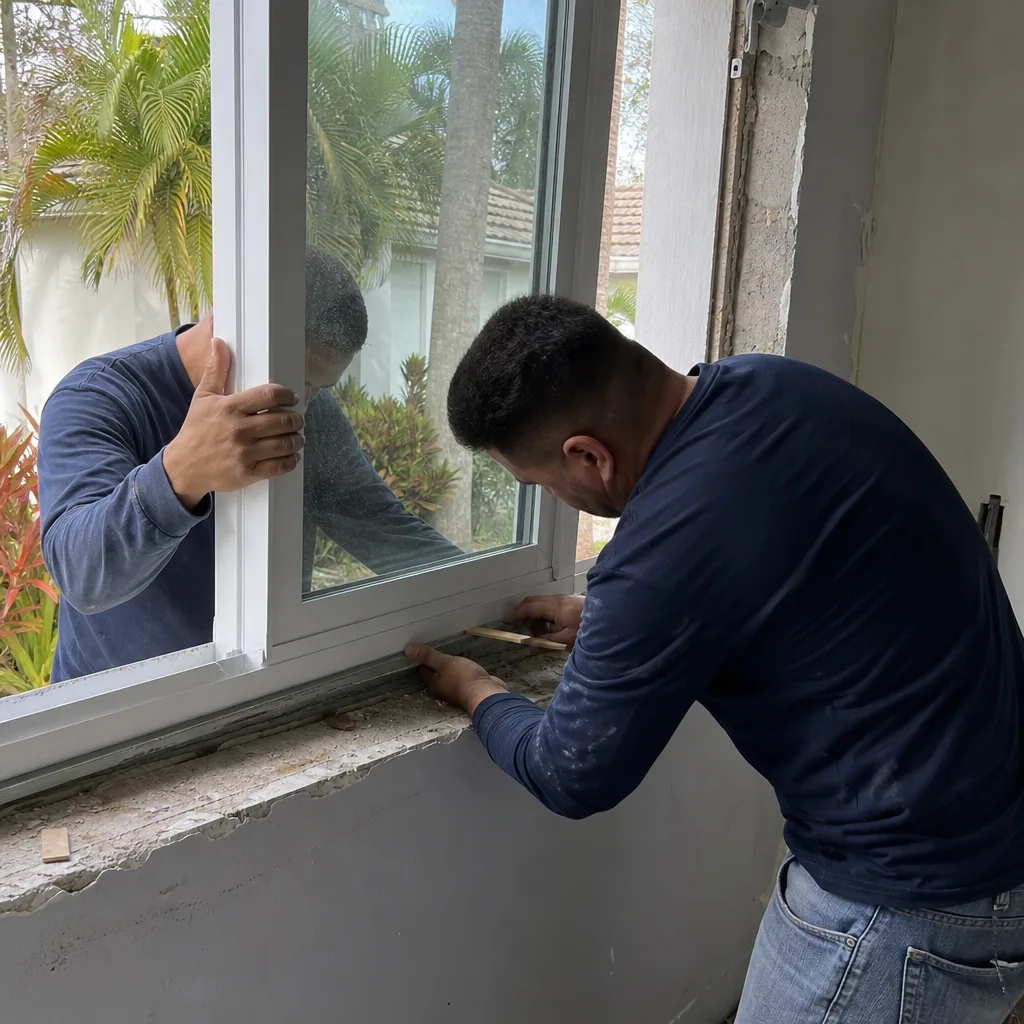
Start With the Tag, Not the Glass
Every window we pull in Miami earns its place through paperwork before anything else. Miami-Dade County runs the only product-approval system of its kind in the country, and every window, roof, and shutter has to carry a Miami-Dade NOA number. That’s the whole point of the High Velocity Hurricane Zone: your window is supposed to be documented as wind-resistant, not just installed. A Florida or national approval doesn’t cut it here.
How do you check a window for a Miami-Dade product approval number?
Look for the etched or labeled approval number on the window frame and the glass, usually a small tag or permanent mark, then cross-check it against your permit records at the county. If you can’t find the number on the frame or in your file, that’s the finding. Missing approval documentation is itself a replacement signal in Miami, because you can’t prove the window meets code. No paperwork means no proof, and no proof is a problem the moment you sell the house or reopen your insurance policy.
Doors get the same treatment. Therma-Tru door systems, entry units, patio sliders: if a unit doesn’t carry the approval, it belongs on the replacement list. Same rule, same reason.
Why does a missing NOA matter even when the window looks fine?
Because a clear, sealed window that fails code is still a liability. You can have windows that drain perfectly and never fog a day in their lives, and a buyer’s inspector will still flag them for missing product approval. We see this most on homes that had a “budget” window swap in the 1990s or 2000s, often in older Miami neighborhoods, where someone installed single-pane or non-impact units without pulling the right permit. The homeowner then inherits the problem silently. Hurricane season doesn’t care how nice the glass looks.
The Miami-Specific Physical Signs Nobody Else Warns You About
Most window articles were written for cold-climate homes: fog between panes, condensation on the glass, a draft at the sill. Those warnings matter, but they miss what actually kills windows in Miami. Our salt air, year-round humidity, and relentless UV cause failure modes you won’t find in an Ohio guide.
- White chalky oxidation on aluminum frames. Salt-laden air eats aluminum. The white powder on the frame isn’t a cleaning problem; it’s corrosion at the metal, and once it reaches the frame anchor, the window’s grip on the wall is compromised. That’s structural, not cosmetic.
- Cloudy or yellowed edges on laminated glass. Miami’s UV and subtropical humidity accelerate delamination in non-impact laminated glass. The cloudiness at the edges is the interlayer failing. This is a Miami failure mode, and it’s a direct sign your glass isn’t performing.
- Interior condensation in winter. In a cold climate this means a failed seal. In Miami it can mean a sealed unit that’s given up, but it can also just be a cold snap on a single-pane unit. Confirm the cause before you replace.
- Storm damage you can see. Cracked glass, bent frames, wind-blown debris damage. After a big event, don’t wait for Monday. Call us.
The 40-Year Recertification Clock
Miami-Dade requires buildings to be inspected for structural and electrical safety at 40 years, and 25 years for buildings near the coast. Homes that approach that deadline with original single-pane or non-impact windows are the ones most likely to be flagged in the recertification wave. We’re not talking about a repair order to your windows specifically; we’re talking about a documented inspection that will surface every non-conforming component, windows included. If your home is 35-plus years old and never had a window upgrade, treat replacement as a proactive compliance move, not an emergency. Get the NOA number, the impact glass, and the permit paperwork done before the deadline is on you.
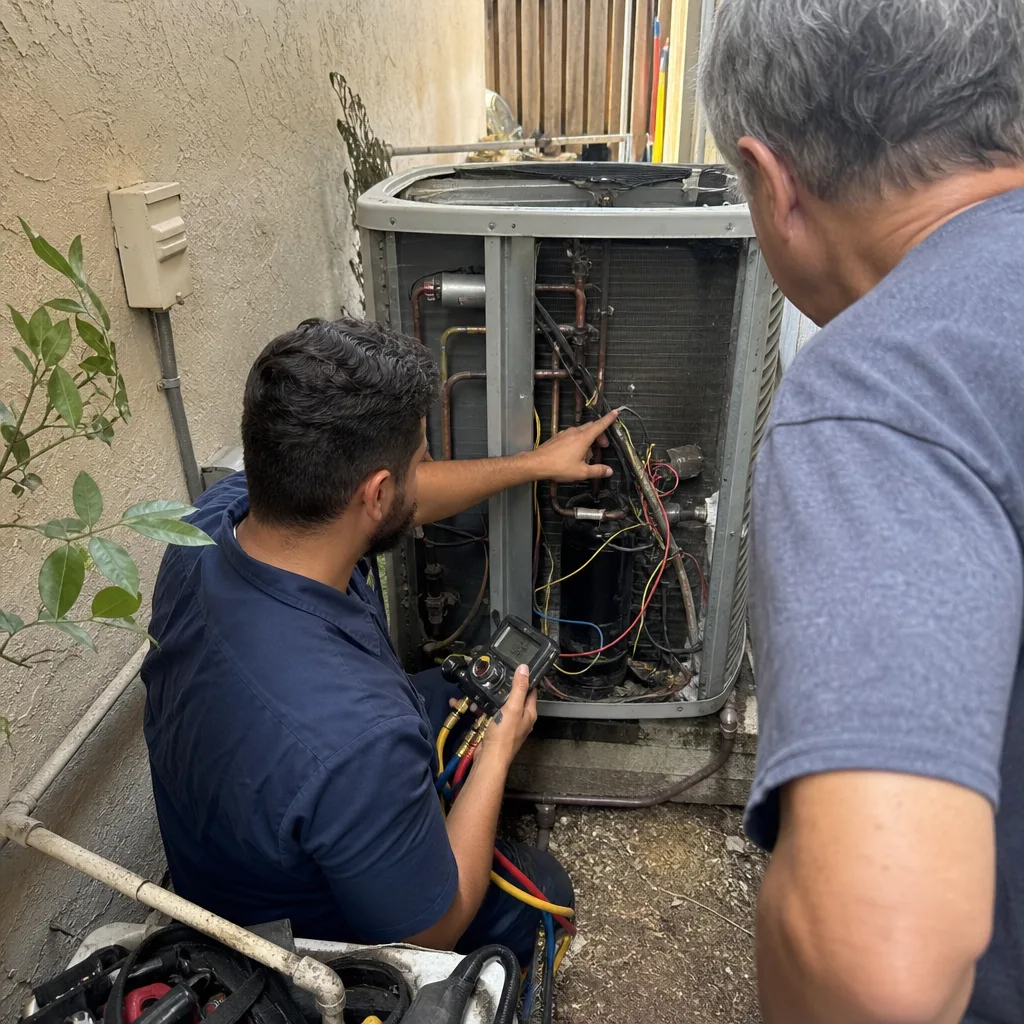
The same logic applies to older concrete-block and CBS homes in neighborhoods across Miami where original single-pane windows have survived decades. They can look fine and still be the wrong unit for this county. Our team at Groundwork Construction Co. of Miami writes the work up against the code first, then the budget.
What Window Replacement Costs in Miami
Here’s what the work actually runs in this market. Prices swing with opening count, frame material, impact rating, and whether we’re matching existing stucco or siding.
| Service | Typical Miami range |
|---|---|
| Window Replacement (standard) | $5,310-$17,700 |
| Impact Window Installation | $9,440-$29,500 |
| Impact Door or Entry System | Quoted with the window schedule |
We work with brands like ES Windows and ECO Window Systems because their impact lines carry the Miami-Dade approvals this county requires. Upfront pricing, no surprises: the number you see is the number you pay, and every job carries the 730-Day Done Right Promise. If it’s not done right, we make it right. That’s the standard whether you’re replacing two windows in a condo or every opening in a single-family home. Calls are answered by a live person 24/7, so if a window fails during a storm event, you reach a human that day. For a full walkthrough of the window and door side of our [Windows & Doors](/windows-doors/) work, that page covers the whole scope.
FAQs
Standard window replacement in Miami typically runs $5,310-$17,700, while impact window installation runs $9,440-$29,500 depending on opening count and frame material. Call (833) 968-1198 for an exact quote. Estimates are free and we’ll tell you whether your current windows can stay.
Yes, if you plan to sell, insure, or pass a recertification inspection, a window without a valid Miami-Dade product approval number will be flagged. It’s a code problem and an insurance liability. Call (833) 968-1198 and we’ll check your permit records against the frames before you spend anything.
We answer the phone 24/7 with a live person, so yes, you can reach us the same day a storm passes through. We’ll assess the damage and tell you what’s urgent. Call (833) 968-1198 for a free estimate or an emergency assessment.
The first sign is a missing or invalid Miami-Dade NOA number, followed by chalky white oxidation on aluminum frames and cloudy or yellowed edges on laminated glass. Those three together mean replacement, not repair. For a no-pressure look, call (833) 968-1198 today.
Get a Straight Answer on Your Windows
If you’d rather have it looked at, Groundwork Construction Co. of Miami offers a no-pressure assessment in Miami: we check the NOA numbers, the frames, and the glass, then tell you plainly what needs to go. Call (833) 968-1198 or start from our [home page](/) or our [Miami service area](/miami-fl/). Our technicians have up to 12 years of experience, and projects over $10,000 qualify for $1,000 off, plus 0% financing for 18 months.
Written by the team at Groundwork Construction Co. of Miami, serving Miami, FL.