
 Kitchen remodeling
 Bathroom remodeling
 Home additions & ADU
 Roofing
 Windows & doors
 Driveway & pavers
 Fence
Free written scope consultation - allowances, timeline, and change-order rules on paper before a single trade is scheduled
Styles & brands we work with
- Kitchen remodeling
- Bathroom remodeling
- Home additions & ADU
- Roofing
- Windows & doors
- Driveway & pavers
- Fence
See the difference
 Before
 After
 Before
 After
 Before
 After
How to Find a Roof Leak in Miami: CBS Construction Changes Everything
To find a roof leak in a Miami home, you have to stop looking at the ceiling stain and start looking at the roof penetration, because in concrete-block and stucco construction water travels sideways through block cores and mortar joints before it ever drops. The single most likely cause of a ceiling stain in Miami is a penetration failure (HVAC curb, pipe boot, step flashing) or a seam on a low-slope roof, not a hole anywhere near the drip. That’s why a visual walk of the roof misses most Miami leaks, and why professional moisture mapping beats a flashlight and a hose every time. If you’d rather have it looked at, call (833) 968-1198 for a free estimate.
Key Takeaways
- In CBS construction, water migrates laterally through block cores, so the stain on your ceiling is a poor map to the entry point.
- Flat and low-slope roofs (common on mid-century Miami homes) often have no attic to inspect from above.
- Salt air corrodes aluminum step flashing and caulk around HVAC penetrations years before the membrane itself fails.
- Wall cracks in stucco can look exactly like roof leaks from inside.
- Upfront pricing means the diagnostic inspection produces a written finding, not an open-ended guess.
Why the Stain on Your Ceiling Isn’t Where the Water Is Getting In
Miami’s CBS homes are built of hollow concrete block, and those block cores are essentially horizontal pipes. When a flashing detail at a parapet or a chimney fails, water enters the block wall and travels sideways through the cores and along mortar joints. It might come out as a drip three feet from the entry point, or it might surface in a completely different room. Chasing the stain itself is how homeowners end up paying for the wrong repair twice.
That lateral movement is why professional moisture mapping matters more in Miami than in a wood-framed house anywhere else. A contractor with the right equipment traces the actual path the water takes, from roof penetration to interior drip, instead of stopping at the first wet piece of drywall they see. Our technicians have up to 12 years of experience and every job starts with that diagnosis before any repair gets priced.
Finding Leaks on Miami’s Flat and Low-Slope Roofs
Many of the pre-1970s homes in Miami-Dade have flat or low-slope roofs, and this changes how you hunt for a leak entirely. On a built-up or modified bitumen roof, the leak source is usually one of four things: a seam failure, a low spot where water ponds and eventually eats through, a failed HVAC curb penetration, or a crack in the parapet wall running the perimeter.
The bigger problem is that a CBS slab-roof home often has no attic at all to crawl into. There’s no dry, dark space to look up and find the wet spot. That means the diagnosis happens from the roof surface and the interior ceiling only, which makes an experienced eye and moisture meter far more valuable than a ladder and a guess.
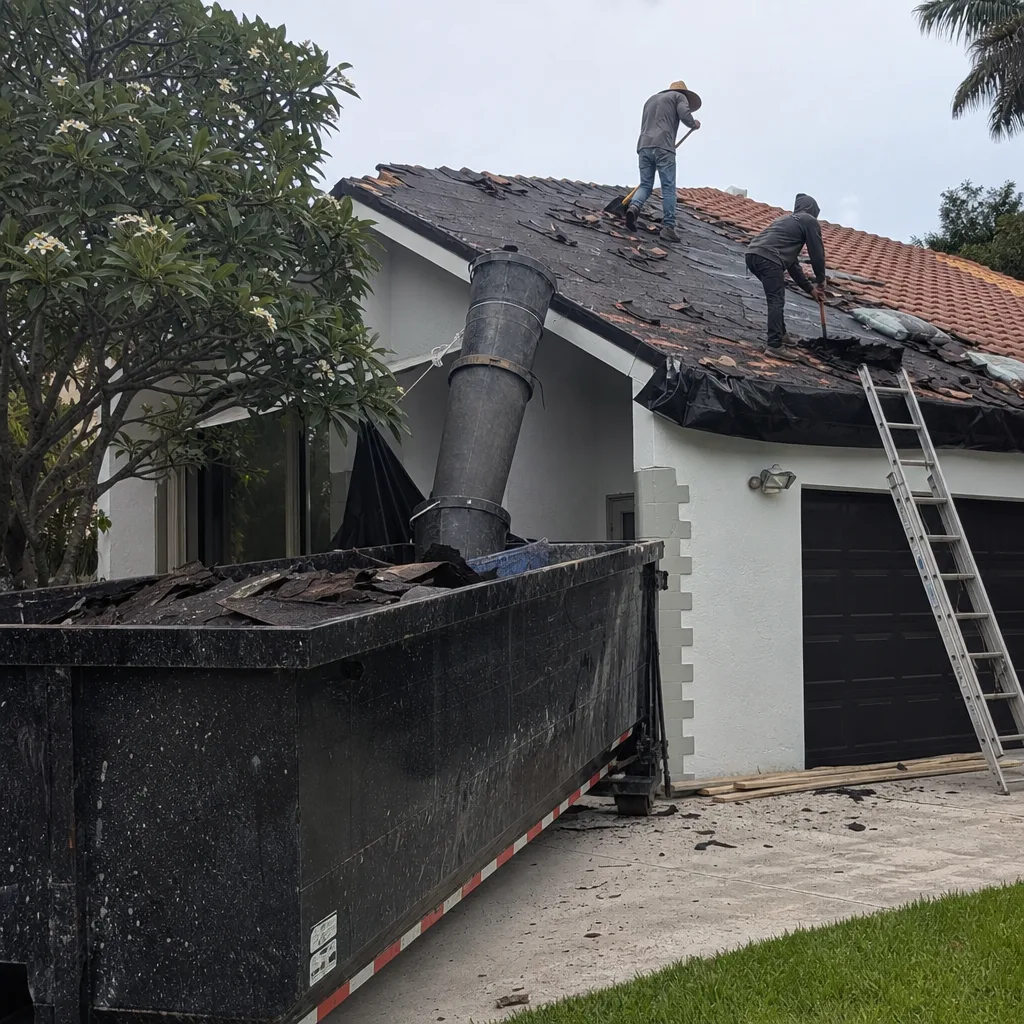
This is exactly where a moisture survey earns its keep. When we’re brought in for Roofing work on a flat roof, the leak search is a documented process, not a walk around with a hose.
Common Local Scenarios
- Salt-air flashing failure: In coastal neighborhoods from Key Biscayne to Miami Beach, salt-laden air eats aluminum step flashing and caulk around HVAC penetrations years before the field membrane shows any wear. Those are usually the last places homeowners look.
- Stucco crack mistaken for a roof leak: Miami’s exterior stucco cracks from thermal cycling and settles over decades. Water entering a wall crack near the roofline or parapet can surface as an interior “roof” leak, so a thorough diagnosis rules that out before any roofing work is priced.
- Ponding water on a low-slope roof: Subtropical rain and intense sun degrade sealants fast, and a low spot that holds water for 48 hours after a storm is where the failure will be.
- Hurricane-season penetrations: Miami’s June-through-November storm season drives wind-driven rain into every weak seam and curb detail, so a leak that only appears during storms usually traces back to a penetration.
- 40-Year Recertification wave: Miami-Dade requires structural and electrical inspections at the 40-year mark (25 years near the coast), and older roofs routinely need re-roofing along with the concrete restoration that recertification triggers.
Miami-Dade is also the only place in the US with its own product-approval system, the High Velocity Hurricane Zone and NOA numbers, so any repair involving flashing, penetration or membrane has to use materials approved for the zone. That’s a real constraint on how a leak gets fixed, not just how it gets found.
What a Real Roof Leak Diagnosis Costs in Miami
Diagnosing a leak and actually repairing it are two different line items, and it helps to know what each looks like before anyone climbs the ladder. These are the Miami market ranges we work from:
| Service | Typical Miami Range |
|---|---|
| Roof leak diagnosis / inspection | Often credited toward repair |
| Roof repair (minor flashing, boot, seal) | $470 - $2,125 |
| Tile roof repair | $710 - $2,950 |
| Roof replacement (full) | $9,440 - $23,600 |
| Metal roof installation | $17,700 - $47,200 |
Upfront pricing, no surprises: the number you see is the number you pay. That fits the way this leak search should work. The diagnostic inspection produces a written finding with a clear repair scope, so you’re not paying for someone to chase a drip and charge you for the wrong fix. Materials like GAF and CertainTeed shingle systems are part of the conversation when a repair turns into a replacement.
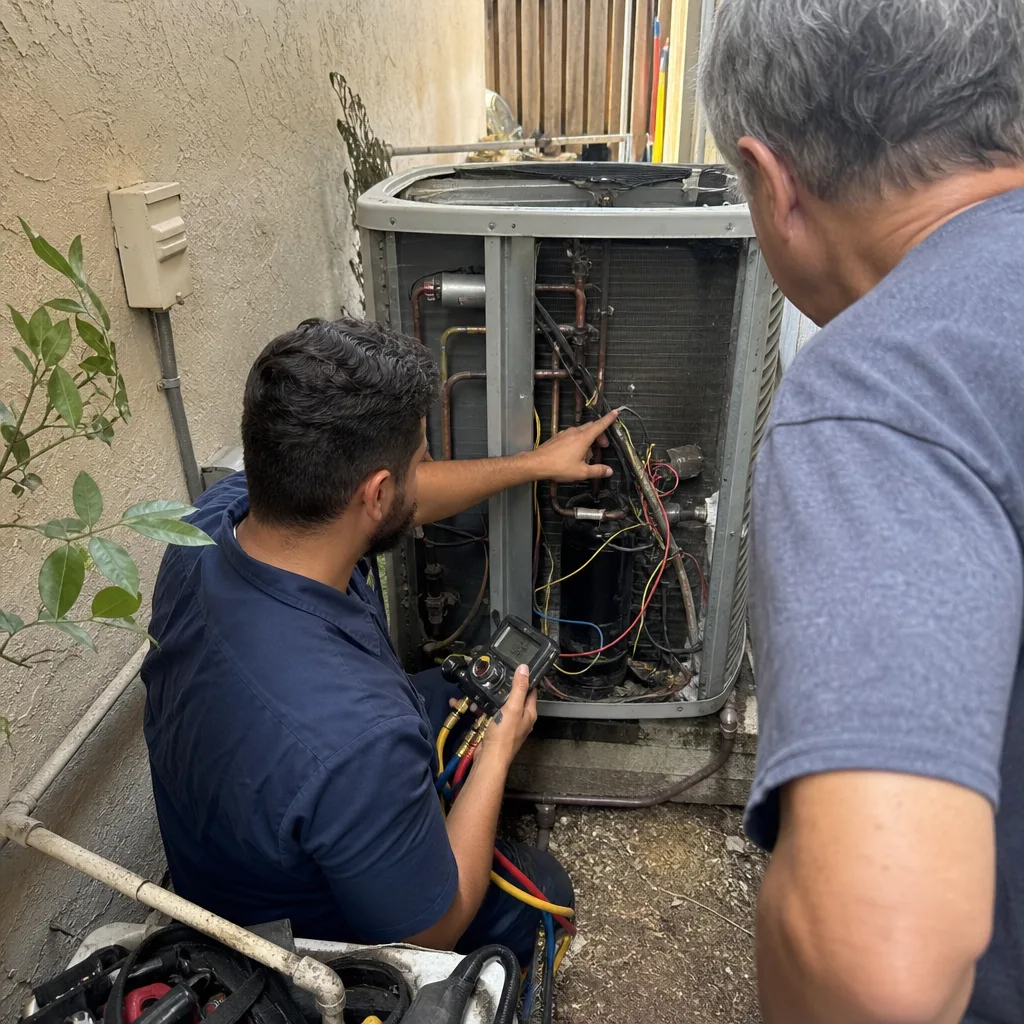
The 730-Day Done Right Promise backs the conclusion, not just the labor: if the repair diagnosis was wrong and water shows up again inside two years, we make it right. That’s one of the reasons we do the moisture mapping before quoting anything.
When to Stop Looking and Call a Professional
Some leaks are worth a careful look with the right tools. Others should go straight to a professional, and here’s where the line sits in a Miami CBS home. If water is tracking sideways through a block wall, if the roof is a flat low-slope system without an attic, or if the entry point is anywhere near a parapet or HVAC curb, you’re past what a hose test can find.
If you’ve got a stucco crack at the roofline that won’t stop letting water in, there’s a strong chance the “roof leak” is actually a wall issue and needs a different repair. Groundwork Construction Co. of Miami handles both under one scope.
There’s a compounding reason to act. Miami’s hurricanes and year-round humidity mean a small penetration leak gets into fascia, sheathing and framing quickly, and termite pressure on wood is severe enough that a wet soffit becomes a termite invitation. A repair that costs hundreds today can turn into a re-roof measured in thousands.
When you’re ready to stop chasing stains, you’ll find us across the Miami service area and beyond from our home base of operations. Reach out and a live person answers, 24/7.
FAQs
A roof leak diagnosis in Miami usually runs somewhere between a service-call fee and a few hundred dollars, and many contractors credit that fee toward the repair once you approve the scope. Because CBS construction can send water far from the entry point, plan on a proper moisture survey rather than a quick visual walk. Call (833) 968-1198 for an exact quote, and estimates are free.
Yes. In a concrete-block and stucco home, water travels laterally through block cores and mortar joints before it finds a way down, so a drip in one room can originate above a completely different room. That’s the core reason the stain on your ceiling isn’t a reliable map to the entry point, and it’s why moisture mapping is worth the time.
The fast test is whether water appears after wind-driven rain hits a wall rather than after rain hits the roof directly, which points to a stucco crack at the roofline or parapet. Miami’s exterior stucco cracks from thermal cycling and settles over decades, and those cracks can leak inside just like a roof penetration. A diagnosis that rules out wall entry before any roofing work is priced saves you from paying for the wrong repair.
Often, yes. Calls are answered by a live person 24/7, so you’re not leaving a message and waiting for Monday. If water is actively coming in, we can talk through it and get an inspection scheduled fast. Call (833) 968-1198.
Get the Leak Found and Fixed Right
If you’d rather have it looked at, Groundwork Construction Co. of Miami offers a no-pressure assessment in Miami, backed by the 730-Day Done Right Promise, background-checked technicians, and upfront pricing that puts the finding in writing. Call (833) 968-1198.
Written by the team at Groundwork Construction Co. of Miami, serving Miami, FL.