
 Kitchen remodeling
 Bathroom remodeling
 Home additions & ADU
 Roofing
 Windows & doors
 Driveway & pavers
 Fence
Free written scope consultation - allowances, timeline, and change-order rules on paper before a single trade is scheduled
Styles & brands we work with
- Kitchen remodeling
- Bathroom remodeling
- Home additions & ADU
- Roofing
- Windows & doors
- Driveway & pavers
- Fence
See the difference
 Before
 After
 Before
 After
 Before
 After
Metal Roof vs Shingles in Miami: The NOA Decides Before You Do
Choose metal unless your home is new construction or a low-wind inland lot with an existing engineered deck, because in Miami-Dade only products carrying a Miami-Dade NOA number are legal to install, and that filter removes most asphalt shingles before cost or curb appeal enters the conversation. Standing-seam metal systems pass High Velocity Hurricane Zone uplift rating testing far more reliably than field shingles. A metal roof installation in Miami runs $17,700-$47,200, while a standard shingle roof replacement sits at $9,440-$23,600. Call (833) 968-1198 for a free estimate and we’ll tell you which side of that line your roof falls on.
Key takeaways
- Miami-Dade’s NOA system is stricter than Florida statewide product approval – a shingle must hold its own Miami-Dade NOA to be legal here.
- Only a handful of shingle products clear that bar, while standing-seam metal panels are engineered for HVHZ wind uplift from the factory.
- Flat and low-slope roofs on Miami’s pre-1970s CBS homes don’t take shingles without a deck redesign, which tilts the trade-off toward metal.
- Metal costs more upfront but crosses the 40-Year Recertification timeline in better shape than shingles will.
Why Miami-Dade’s NOA Number Changes the Whole Comparison
Most roofing comparison guides are written for Ohio. Miami-Dade has its own product-approval system – the Notice of Approval, or NOA – and if a shingle doesn’t carry that number, your roofer legally cannot install it here, full stop. The NOA lives independently of Florida statewide approval, which is why you’ll see manufacturers with a valid state notice and no Miami-Dade counterpart. Miami-Dade County is the only place in the US with this separate product-approval layer, a direct response to the High Velocity Hurricane Zone our building stock sits inside.
What that means practically: when you weigh metal roof vs shingles in Miami, the comparison starts with which products are even on the table. We run a shortlist of shingle profiles with an active Miami-Dade NOA – almost always architectural-grade, not the three-tab product you see on out-of-state price guides. Standing-seam metal sits comfortably in the approved column because the panels are factory-engineered and tested for wind uplift at the pressures our HVHZ requires. That’s not a knock on shingles as a category. It’s a filter that decides half the argument for you before you ever get to style.
How Miami’s Housing Stock Tilts the Decision
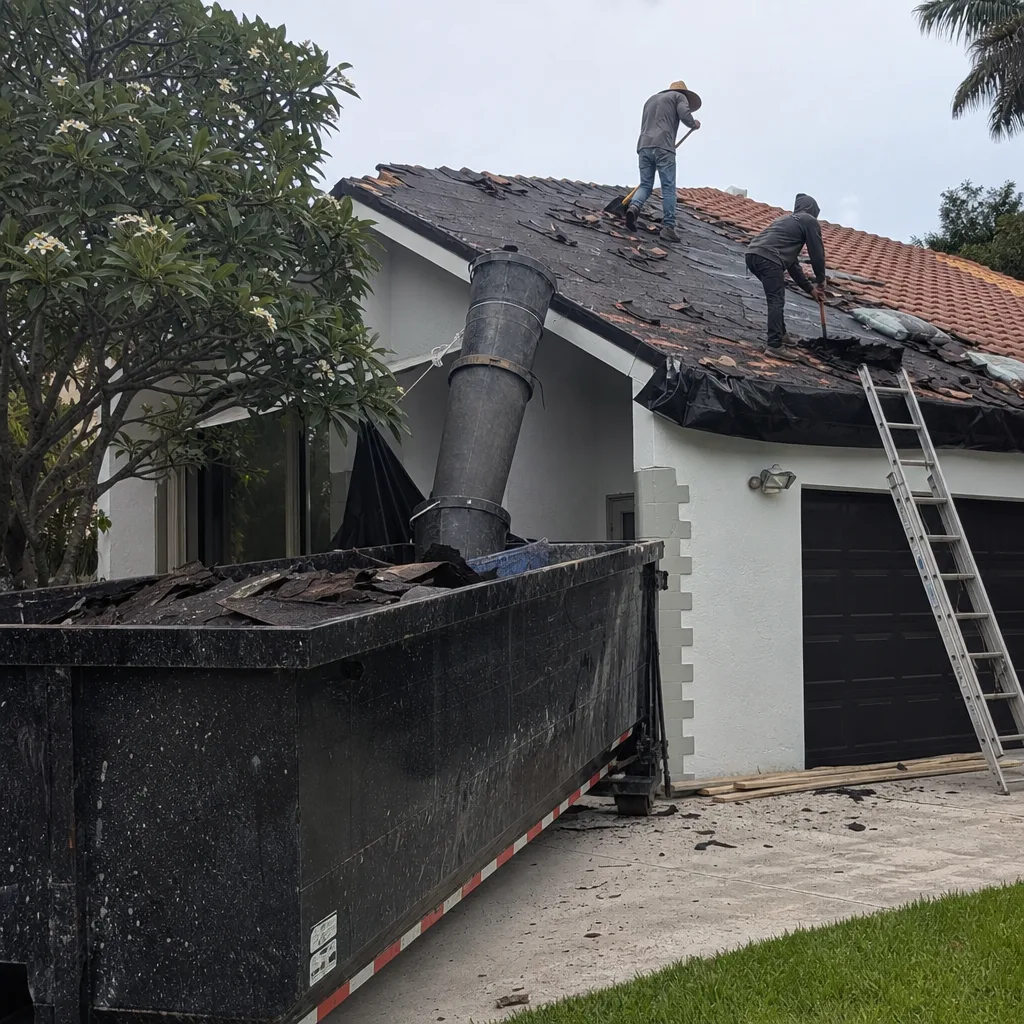
Flat and low-slope roofs dominate the pre-1970s concrete-block and CBS homes across neighborhoods like Little Havana, Coral Way, and Shenandoah. Traditional asphalt shingles need a pitched deck with minimum slope to shed water; flat roofs need a membrane or a metal standing-seam system. In those older homes, a shingle installation isn’t a swap – it’s a deck redesign, and that cost lands on top of the shingle price, which erases the savings that make shingles attractive elsewhere.
In Natomas… no, scratch that. Here in Miami, we see this play out by age and neighborhood. Walk through a 1950s CBS home near the roads off SW 8th Street and you’ll find a flat roof with a membrane at end of life, not a pitched shingle field. For those homes the metal roof vs shingles question collapses quickly: metal is a drop-in fit, shingles require building a slope that wasn’t there. The post-2000 condo boom along Brickell and Biscayne Boulevard is a different story – much of that work is impact glass and flat roof membrane systems, not pitched roofing at all, which is why we route those jobs through our Roofing team that handles low-slope assemblies.
Metal vs Shingles in Miami: Side-by-Side
| Factor | Standing-Seam Metal | Architectural Shingles (NOA-approved) |
|---|---|---|
| Miami-Dade NOA | Wide range of approved panels | Narrow – only select profiles clear |
| Typical installed cost in Miami | $17,700-$47,200 | $9,440-$23,600 (standard replacement) |
| Flat / low-slope homes | Direct fit | Deck redesign required |
| Salt-air corrosion | Concealed fasteners resist | Fasteners and overlaps at risk |
| Recertification timeline | Likely outlasts next cycle | Often due for replacement before |
| Repair cost in Miami | Higher per repair, fewer repairs | $470-$2,125 typical repair |
Budget matters, and we won’t pretend otherwise. A shingle roof up front costs meaningfully less in Miami. But the honest comparison is cost per year of service and how each holds up across a 40-Year Recertification cycle. Metal wins that math in most homes we look at, especially near the coast.
Salt Air, Concealed Fasteners, and Why Detail Matters Here
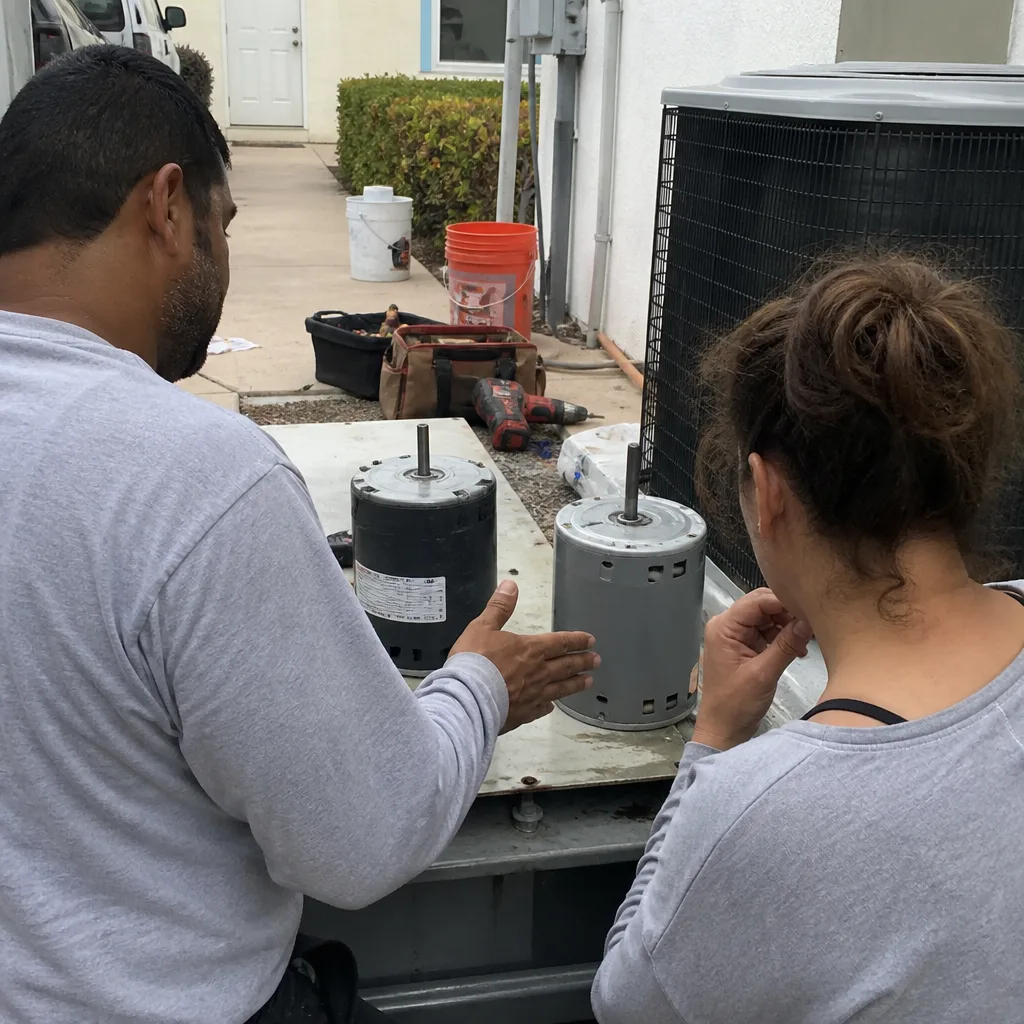
Salt-laden coastal air accelerates corrosion on exposed fasteners faster than any generic guide accounts for. We specify concealed-fastener metal systems for exactly that reason, and pair them with GAF and Owens Corning underlayments rated for coastal humidity. Exposed-screw panels are common and cheaper, but the washers degrade and the screws back out over time in our sun and salt. Concealed-fastener standing seam sidesteps that failure point entirely.
Common local scenarios we walk into
- A 1968 CBS home with a flat roof in Shenandoah: the membrane is at end of life, the homeowner is comparing shingles on a quote they got online. Shingles won’t legally install without a slope build-out, so metal wins on fit and cost.
- A 1985 home near the coast approaching its first 40-Year Recertification: metal installed today outlasts the recertification trigger, which combines structural and electrical inspection. Shingles will likely need replacement before the deadline forces a full inspection anyway.
- A pitched-roof home inland where the deck already meets slope: shingles are viable here and cost less upfront. We’ll tell you so.
What the 730-Day Done Right Promise Adds to the Comparison
A comparison article can’t back anything in writing after the crew leaves. We can. The 730-Day Done Right Promise is two years of workmanship coverage on every install – if the NOA-compliant system we put on your roof fails to perform, we make it right. That’s one of the longest residential workmanship guarantees in the space, and it applies whether you chose metal or an approved shingle system.
Our technicians have up to 12 years of experience, they arrive background-checked and in uniform, and calls are answered by a live person 24/7 – no voicemail, no waiting for Monday. Upfront pricing means the number on the estimate is the number you pay. We layer in 0% financing for 18 months and $1,000 off projects over $10,000, so a metal upgrade that was out of reach on the upfront number may not be on the financed one. Head to our home page for the full service lineup, or see our Miami service area for coverage details.
FAQs: Metal Roof vs Shingles in Miami
Usually yes, because in Miami the cost gap narrows once you factor in that most shingle installs on older flat roofs require a deck redesign, and metal lasts longer across recertification cycles. The upfront dollar difference is real – $17,700-$47,200 for metal vs $9,440-$23,600 for a standard shingle replacement – but the per-year math favors metal for most coastal and pre-1970s homes. Call (833) 968-1198 for an exact quote on your roof.
Only if the specific shingle product carries a Miami-Dade NOA number – Florida statewide approval isn’t enough. A roofer legally cannot install a shingle lacking that Miami-Dade Notice of Approval here, full stop. Only a small number of shingle profiles clear the bar, mostly architectural-grade. We’ll confirm the NOA on any product we quote; call (833) 968-1198 and we’ll check yours.
A metal roof installed today on a home built in 1985 will likely outlast the next recertification cycle, while shingles will probably need replacement before that deadline forces a full structural inspection. Miami-Dade requires buildings at 40 years – and 25 years near the coast – to pass a structural and electrical safety inspection, and the roof is part of what gets looked at. Metal buys you decades of margin. Call (833) 968-1198 to talk through your timeline.
Not the way exposed-screw panels wear, provided the system uses concealed fasteners and materials rated for coastal conditions. Salt-laden air is hard on exposed screws, washers, and cut edges, so we specify concealed-fastener metal with GAF and Owens Corning underlayments rated for humidity. That detail is the difference between a system that holds and one that fails early. Estimates are free – call (833) 968-1198.
If you’d rather have it looked at than keep comparing charts, Groundwork Construction Co. of Miami offers a no-pressure assessment in Miami – we’ll confirm your roof structure, pull the NOA status on the products that fit it, and hand you a straight number. Call (833) 968-1198.
Written by the team at Groundwork Construction Co. of Miami, serving Miami, FL.