
 Kitchen remodeling
 Bathroom remodeling
 Home additions & ADU
 Roofing
 Windows & doors
 Driveway & pavers
 Fence
Free written scope consultation - allowances, timeline, and change-order rules on paper before a single trade is scheduled
Styles & brands we work with
- Kitchen remodeling
- Bathroom remodeling
- Home additions & ADU
- Roofing
- Windows & doors
- Driveway & pavers
- Fence
See the difference
 Before
 After
 Before
 After
 Before
 After
Asphalt vs Architectural Shingles in Miami, FL: The Comparison Most Guides Get Wrong
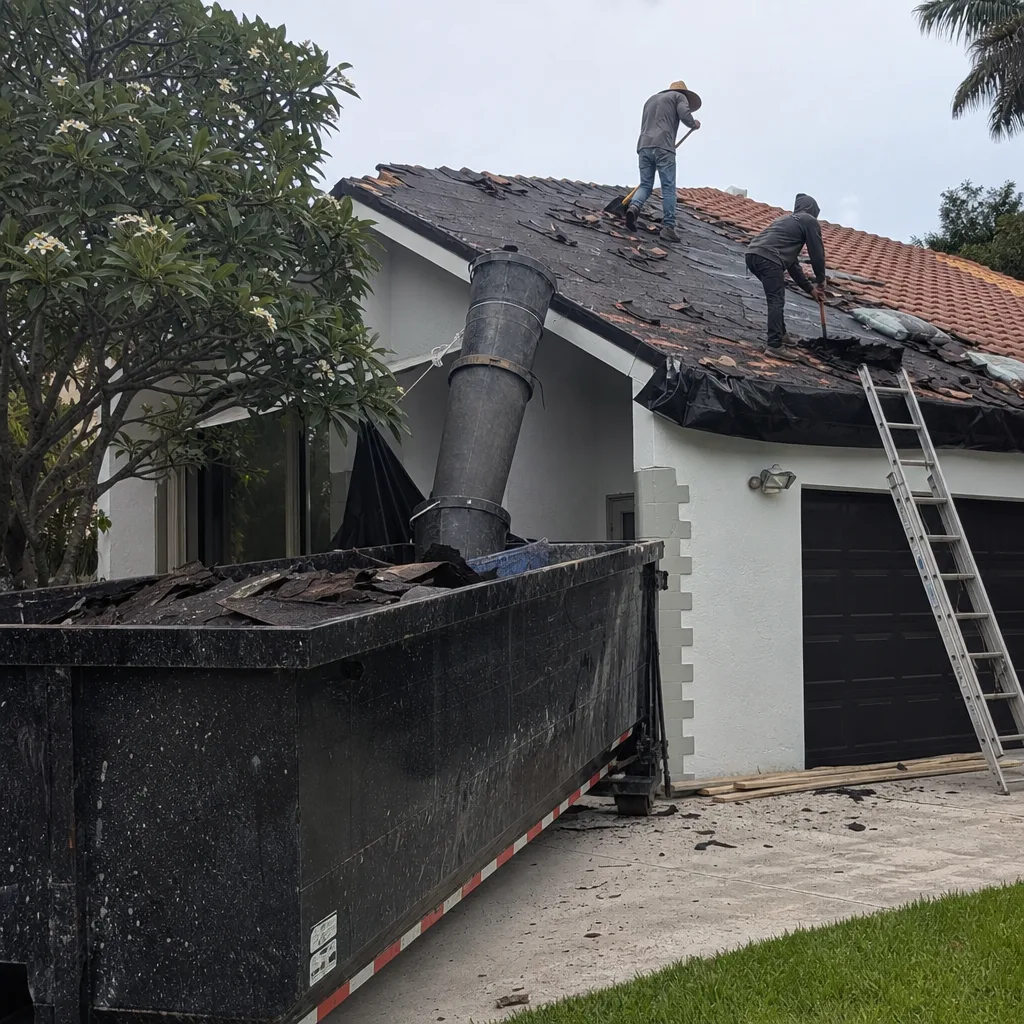
Choose architectural (dimensional) shingles over 3-tab asphalt every time in Miami, FL, because 3-tab shingles typically can’t clear the wind-uplift ratings Miami-Dade’s High Velocity Hurricane Zone requires of any roof covering. If your real choice is between architectural shingles and the tile and metal that dominate Miami roofs, architectural shingles are worth it only when specified to the letter of the NOA and installed with the correct nail pattern. We’re Groundwork Construction Co. of Miami, and we’ll give you that straight answer, then the honest reasoning behind it. For a free estimate, call (833) 968-1198.
Key Takeaways
- 3-tab asphalt shingles, usually rated to roughly 60-70 mph, are effectively off the table under Miami-Dade’s product-approval system.
- Architectural shingles can reach Miami-Dade NOA approval at 110-130 mph when installed to spec.
- Under coastal subtropical conditions, plan on 15-20 years for architectural shingles versus 40-plus for tile.
- Installation details, not the shingle itself, decide whether your roof meets code.
- Upfront pricing from Groundwork shows the full NOA-spec system, not a low-ball number that grows on inspection day.
Why the 3-tab comparison doesn’t survive a Miami-Dade inspection
Miami-Dade County is the only place in the US with its own product-approval (NOA) system. Every roof covering, window, and shutter here has to carry a Miami-Dade NOA number, not just a Florida or national approval. A product that can’t produce an NOA at the wind-uplift pressure your address requires simply isn’t allowed on the roof, full stop. Standard 3-tab asphalt shingles usually top out around 60-70 mph in wind-uplift testing. Under the HVHZ, that’s a fail, not a close call. So the decision narrows to a real one: architectural shingles, or the tile and metal that already define most Miami rooftops. That code fact alone settles the “3-tab vs. architectural” question. Once the new roof is on, it protects the rest of the house through the same storm season that tests everything else on our Miami service area pages.
What that means in practice is that a contractor quoting you 3-tab shingles on a Miami house either doesn’t understand the HVHZ or is hoping the inspection never happens. Both are reasons to keep looking.
What makes architectural shingles work in Miami when the install is right
Architectural shingles earn their place here through the two-layer lamination, which adds weight and resistance to wind-driven rain pushing into the field of the roof. But the shingle only performs at its rated uplift pressure if the installation follows the NOA spec: typically six nails per shingle in a specific placement pattern, not the four fasteners a low-bid crew may use to save time. That difference voids the NOA compliance even though the shingles themselves were fine.
Here’s the operator detail most estimates skip. The upcharge for the missing two nails per shingle is a few hundred dollars on a typical roof. The wind-mitigation credit on your insurance and the inspection approval are the rewards; a re-roof at year three is the penalty for skipping them. We read the NOA drawing for your particular product line and specify the nail count, the underlayment, and the drip edge right on the estimate so there’s no argument later. Groundwork’s work carries the 730-Day Done Right Promise, and that includes the installation details that decide whether your roof is actually code-compliant. When you’re comparing bids, ask each one what nail pattern they’re using on your shingles and see who knows.
Asphalt vs architectural shingles vs tile in Miami: the honest comparison
Here’s how the three realistic options line up for a Miami house:
| Factor | 3-tab asphalt | Architectural shingles | Tile |
|---|---|---|---|
| Wind-uplift rating | ~60-70 mph (usually fails HVHZ) | 110-130 mph with proper NOA install | High; proven track record in HVHZ |
| Miami-Dade NOA availability | Rarely | Yes, when specified correctly | Yes |
| Realistic lifespan here | 10-15 years (if allowed) | 15-20 years | 40-plus years |
| Weight per square | Light (~200-250 lbs) | Heavier (~350-450 lbs) | Much heavier; may need framing review |
| Algae staining risk | High without coating | Low with algae-resistant granules | Low |
| Typical installed range in Miami | Not permitted | $9,440-$23,600 (roof replacement) | Higher upfront; longer service life |
The trade-off in plain terms: architectural shingles cost less up front and weigh less, which matters on the older CBS and concrete-block homes that make up so much of the pre-1970s housing stock around Miami. Tile costs more and lasts much longer. Given the 40-Year Recertification cycle and the density of older homes, a Miami homeowner who chooses shingles may face a full re-roof before the next recertification inspection lands. That’s not a knock against shingles; it’s a planning fact you should price before you commit.
The algae problem most estimates never mention
Uncoated asphalt shingles in Miami’s humidity tend to grow Gloeocapsa magma algae staining within three to five years, streaking the roof black and making a five-year-old house look fifteen. Groundwork specifies algae-resistant shingle lines, including GAF’s Timberline series with copper-infused granules built into the shingle, and pairs that with the correct underlayment and drip edge. Specifying these details up front is the difference between a roof that looks new at year ten and one you’ll want to replace at year eight. Our Roofing team builds that full-system spec into the upfront price: the shingle, the underlayment, the drip edge, and the NOA nail pattern, all in one number. No surprises when the inspector arrives. “Built to last, backed in writing” isn’t a slogan on a spec sheet here; it’s the standard we hold the installation to.
For a project that pairs a new roof with new impact windows, we can quote the roofline and the glazing together, from foundation to finish line. Ask about material pairing for products like Therma-Tru doors or ES Windows if your project touches more than just the roof.
FAQs
Usually not under the HVHZ, because they typically can’t achieve the wind-uplift ratings required by Miami-Dade’s NOA system, so the roof would fail to meet code. If you’ve been quoted 3-tab, ask for the NOA number; on a Miami house, you won’t get one that qualifies. Call us at (833) 968-1198 for a straight answer on what your roof can legally carry.
A roof replacement in Miami runs roughly $9,440-$23,600 depending on square footage, pitch, and how much deck repair is needed. That range assumes the correct NOA-spec installation with the six-nail pattern, proper underlayment, and drip edge rather than a stripped-down bid. Call (833) 968-1198 for an exact quote on your address; estimates are free and we show you the full spec.
No, in Miami tile usually wins over the long run. Architectural shingles cost less up front, but under local sun and salt air they realistically deliver 15-20 years versus 40-plus for tile, and the 40-Year Recertification cycle often catches a shingle roof needing replacement first. A shorter-lived option can make sense when budget or framing weight rules out tile. Call (833) 968-1198 and we’ll price both honestly so you can compare side by side.
Often yes, since most residential shingle roofs are a multi-day job rather than a multi-week one, and we’ll tell you upfront what your roof and schedule realistically allow. Timing tightens as the June start approaches, so earlier is better. A live person answers our line 24/7 with no voicemail: (833) 968-1198.
If you’d rather have it looked at, Groundwork Construction Co. of Miami offers a no-pressure assessment in Miami, and we’ll price the correct NOA-spec roof so you’re not comparing a real number against a low bid. Call (833) 968-1198 for a free estimate and design consult.
Written by the team at Groundwork Construction Co. of Miami, serving Miami, FL.