
 Driveway & pavers
 Kitchen remodeling
 Bathroom remodeling
 Home additions & ADU
 Roofing
 Windows & doors
 Fence
Free written scope consultation - allowances, timeline, and change-order rules on paper before a single trade is scheduled
Styles & brands we work with
- Kitchen remodeling
- Bathroom remodeling
- Home additions & ADU
- Roofing
- Windows & doors
- Driveway & pavers
- Fence
See the difference
 Before
 After
 Before
 After
 Before
 After
Driveway Resurfacing vs Replacement in Miami, FL: Choose Replacement When the Slab Has Moved or the Base Has Eroded
Choose resurfacing only if the concrete is sound and the problem is strictly at the surface. Choose replacement in Miami when the slab has settled, when joints show vertical displacement, or when the subbase under it has washed out. A resurfacing quote feels like a deal until the new surface cracks along the same lines as the old one six months later. We’re Groundwork Construction Co. of Miami, and we’ve walked enough driveways in this city to know the problem usually sits below the slab, not on it. Call (833) 968-1198 for a no-cost assessment of which path your driveway actually needs.
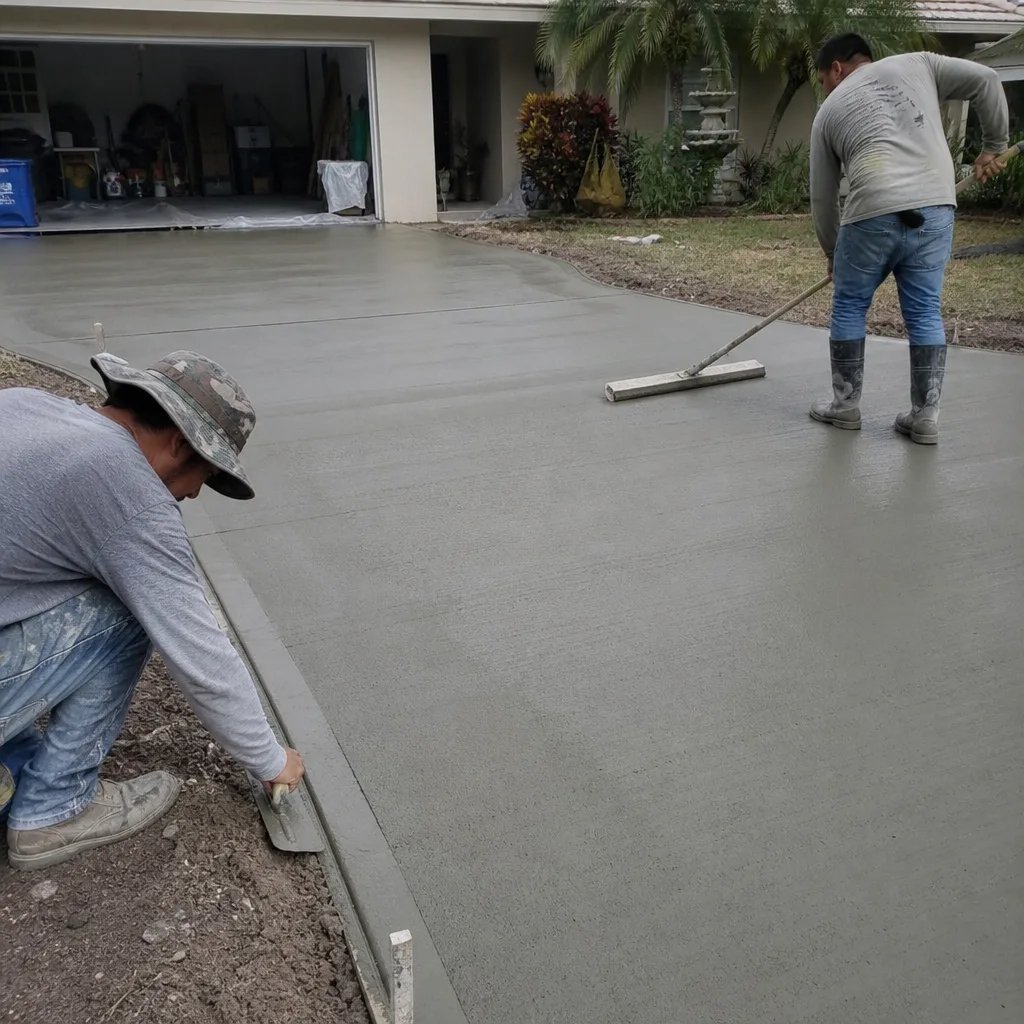
Miami makes this decision harder than most cities because surface blemishes often look cosmetic while the structure underneath is quietly failing. Salt air eats at the concrete skin, year-round humidity and heavy summer rain work the joints, and a high water table means the ground beneath a driveway is rarely as stable as it looks. Between the High Velocity Hurricane Zone rules that touch every exterior product and the 40-Year Recertification deadlines that hit older Miami-Dade buildings, exterior concrete here carries documentation weight most homeowners never think about until an inspector flags it.
Why Resurfacing Fails More Often in Miami Than Anywhere Else
Miami’s high water table is the whole story. When marl or limestone subbase erodes under a slab, the concrete loses support from underneath but keeps its original surface shape. You see hairline cracks. What you don’t see is the flex. A resurfacing overlay bonds to that moving slab and fails at the bond within one to two rainy seasons. We see this constantly in older Hialeah, Little Havana, and Miami Shores neighborhoods, where driveways from the 1950s through 1970s sit on subbases that have had sixty-plus years of subtropical rain working on them.
Salt-laden coastal air adds a second failure mode. Concrete exposed to it degrades at the surface through scaling and spalling, and that surface degradation can look catastrophic while the slab is fine. The reverse is just as common: a slab that looks intact but has voids underneath. The only way to tell which one you’re dealing with is to sound the slab and check for movement, and that diagnostic step is almost never explained when a resurfacing crew hands you a quote.
The Three Conditions That Make Resurfacing Viable in Miami
Resurfacing is a legitimate choice, but only under three specific conditions. If any one of them fails, you’re spending money twice.
- Surface-only scaling or minor cracking with no slab movement. The cracks stay put when you press on either side of them, and they haven’t widened over the last year.
- No evidence of subgrade erosion or voids. Tapping the slab with a hammer or heavy bar should produce a solid, consistent sound across the whole run. A hollow thud in one area means the concrete is bridging a void, and an overlay will not fix that.
- No pending flood-zone re-elevation requirement. If your property sits in a VE or AE flood zone and a re-elevation is on the table, the existing slab comes out anyway, which makes any resurfacing spend wasted.
How do I know if my driveway is moving or just cracked?
Check the joints first. If two adjacent slabs have shifted vertically relative to each other, even by a quarter inch, the base has moved and resurfacing will fail. Second, look at whether cracks run all the way through to the subbase. Third, sound the slab by dragging a heavy bar across it or tapping with a hammer and listening for hollow spots. If you find any of those three, replacement is the honest answer. We run that same test at no charge when we assess a driveway in Miami.
What the 40-Year Recertification Means for Your Driveway Decision
Miami-Dade requires buildings at 40 years, and 25 years near the coast, to pass a structural and electrical recertification inspection. That inspection wave hits older neighborhoods block by block, and when a structural inspector flags concrete condition or driveway drainage, a resurfacing overlay doesn’t satisfy anything. Only a compliant replacement does. The cheaper choice becomes the expensive one when you pay for an overlay and then pay again for the replacement a year later because the inspection demanded it.
If your building is approaching its recertification window in a neighborhood like Little Havana or Miami Shores, get the driveway assessed before the inspection is scheduled, not after. We can walk the driveway and tell you straight whether the concrete will pass, and we price both paths upfront so the number you see is the number you pay. That matters more when a deadline is behind the decision.
Resurfacing vs Replacement: A Side-by-Side Comparison
| Factor | Resurfacing | Full Replacement |
|---|---|---|
| Best for | Sound slab, surface cosmetic damage only | Settled slab, subgrade failure, flood re-elevation, or inspection flag |
| Miami price range | Typically a few hundred to just over $800 for a sealing or skim coat | $5,900-$16,520 for full replacement |
| Expected life in Miami | 1-3 years if the base is compromised; 5+ years if the slab is truly sound | 15-25+ years with proper base prep |
| Addresses voids or erosion | No | Yes, when the subbase is rebuilt |
| Satisfies 40-Year Recertification flags | No | Yes |
| Handles salt-air scaling | Temporarily | Yes, with the right mix and finish |
Pavers are the third path, and for many Miami homeowners they beat both. A properly set paver driveway flexes with minor ground movement instead of cracking against it, which suits our shifting subbases. Our Driveway & Pavers in Miami page walks through how Belgard pavers hold up here. For a deeper look at the full category, see our Driveway & Pavers service page.
Is it cheaper to resurface or replace a driveway in Miami?
Resurfacing is cheaper up front, but replacement is cheaper over ten years whenever the slab has moved or the base has eroded. A resurfacing job that fails in a rainy season means you pay for the overlay and the replacement. Concrete driveway installation in Miami runs $5,310-$14,160, and a full replacement runs $5,900-$16,520. If the slab is sound, sealing runs $295-$825 and is worth doing. Call (833) 968-1198 for an exact quote, and estimates are free.
A Decision Matrix You Can Apply Before Calling Anyone
Walk your driveway and score it on four points. You don’t need a contractor to do this part.
- Slab age. Under twenty years and the base may still be solid. Over forty and the subbase in most Miami neighborhoods has taken real water damage.
- Cracks per 10 linear feet. Count them. More than three on a run of ten feet points to movement, not surface wear.
- Vertical displacement at joints. Any lip you can feel with your foot means the slab has shifted. Resurfacing will follow the crack.
- Flood zone status. Check your property on the Miami-Dade flood map. A VE or AE designation combined with any of the above makes replacement the clear call.
Score high on age, cracks, and displacement, and you’re looking at replacement regardless of what an overlay would cost. On our Driveway & Pavers page you’ll find the full range of options, from concrete to pavers to asphalt, and how each behaves in Miami. For window or door work that also comes up in older Miami-Dade homes, our home page lists the trades we cover. We also handle roofs, kitchens, and additions across Miami, so if the driveway inspection turns up something else, we can quote it as part of one scope instead of five separate contractors.
Every Groundwork Construction Co. of Miami project carries the 730-Day Done Right Promise: if it’s not done right, we make it right. Our technicians have up to 12 years of experience, they’re background-checked and arrive in uniform, and we answer calls with a live person around the clock. Upfront pricing, no surprises, and 0% financing for 18 months means a full replacement doesn’t have to sit on a credit card.
FAQs
Sometimes, but only if the first overlay bonded and the slab beneath is still sound. A second overlay on top of a failed one adds dead load the base can’t carry. Sounding the slab tells you whether a second layer is safe or whether the whole thing should come out and be rebuilt on a proper base.
Expect one to three years if the base is compromised, and five or more if the slab is genuinely sound. Miami’s humidity, salt air, and heavy summer rain are hard on any thin overlay. A replacement with correct base prep lasts fifteen to twenty-five years or more. Call (833) 968-1198 for a free evaluation of which lifespan you’re realistically looking at.
Yes, if it’s designed in. That’s the detail most resurfacing jobs skip. Replacement lets us regrade the base and set the slope so water runs away from the garage, not toward it. Pooled water is what causes the subbase erosion that ruins driveways in the first place. We assess drainage as part of every driveway quote in Miami.
Replacing a driveway generally requires a permit if it affects the right-of-way, the curb, or drainage, and some Miami-Dade properties have flood-zone elevation rules that apply. Resurfacing usually doesn’t. We look at the permit and flood-zone side of any replacement before quoting, so the number you see accounts for the full scope, not just the concrete.
If you’d rather have it looked at, Groundwork Construction Co. of Miami offers a no-pressure assessment in Miami. We sound the slab, check the base, and give you a documented recommendation with upfront pricing for both paths, so you’re not sold a resurfacing when you need a replacement. Call (833) 968-1198 for a free estimate and design consult. Whatever the driveway needs, we’ll tell you straight and back it with the 730-Day Done Right Promise.
Written by the team at Groundwork Construction Co. of Miami, serving Miami, FL.