
 Kitchen remodeling
 Bathroom remodeling
 Home additions & ADU
 Roofing
 Windows & doors
 Driveway & pavers
 Fence
Free written scope consultation - allowances, timeline, and change-order rules on paper before a single trade is scheduled
Styles & brands we work with
- Kitchen remodeling
- Bathroom remodeling
- Home additions & ADU
- Roofing
- Windows & doors
- Driveway & pavers
- Fence
See the difference
 Before
 After
 Before
 After
 Before
 After
How Long Before You Can Drive on New Concrete in Miami, FL?
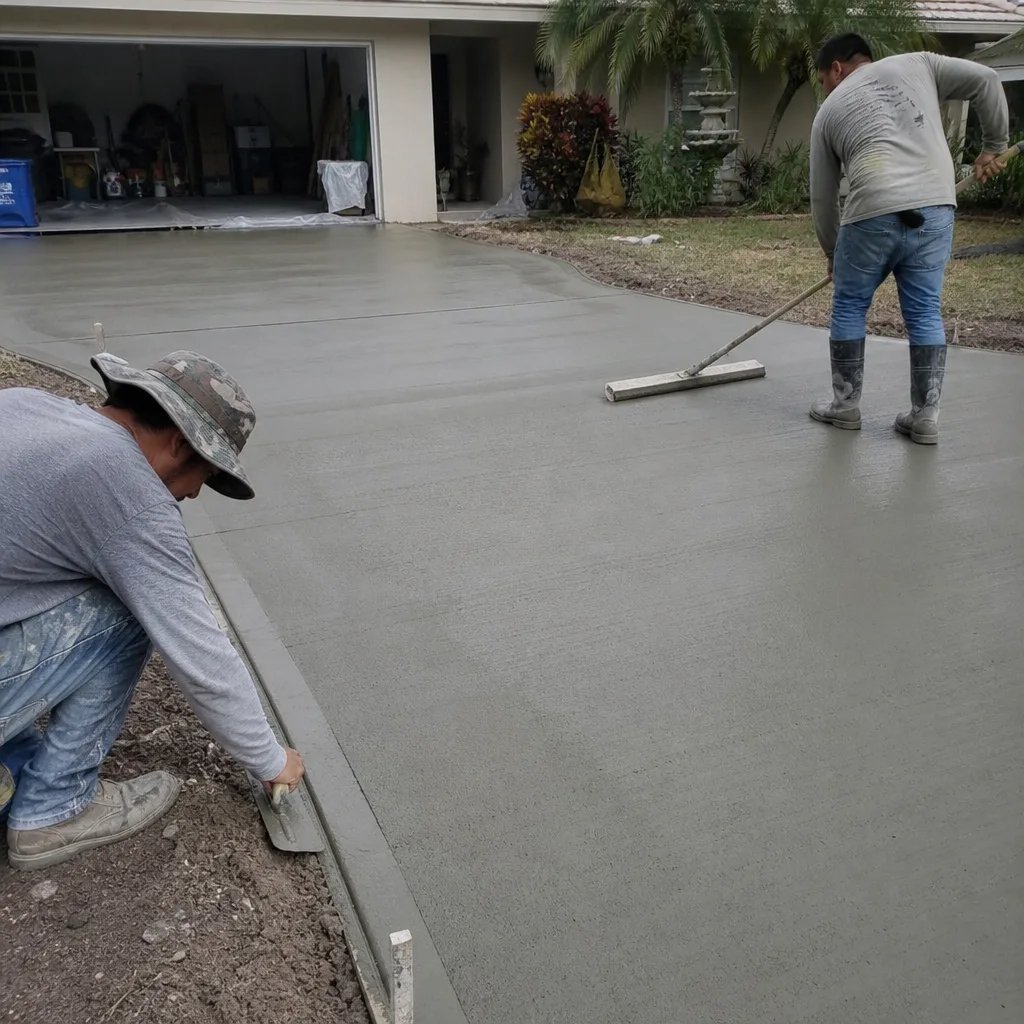
The short answer: keep cars off a new concrete driveway for at least 7 days, and expect 10 to 14 days during Miami’s June-November rainy season. Concrete feels rock-hard within 24 hours, but surface hardness and internal strength are two different things. Miami’s heat pushes the surface to set fast while the core is still gaining strength, so the calendar answer that works in a dry climate can get you into trouble here. Call (833) 968-1198 if you want a straight read on your own pour.
Why Miami Concrete Is a Different Cure Cycle Than the Rest of the Country
Most guides tell you 7 days for foot traffic and 28 days for full vehicle load, then stop. That advice was written for temperate climates. We pour driveways in Miami all year, and the timeline shifts with the season in ways that aren’t obvious unless you’ve watched a slab fail.
Summer ambient temperatures routinely push past 90°F. At that heat, the surface of fresh concrete can lose moisture to evaporation within the first 20 to 30 minutes after finishing. If a curing compound or wet burlap cover isn’t on it fast, the top layer dries before the mix has finished hydrating, and you get plastic shrinkage cracks. Those cracks don’t usually show up on day one. They show up two or three weeks later, right when you’re ready to park on it. Proper curing protects both the strength gain and the surface you’ll actually drive on.
The Humidity Problem Nobody Talks About
Here’s the counterintuitive part. You’d think a humid Miami August would keep concrete wet and happy. It does keep the surface from drying as fast, but high humidity also slows the internal hydration reaction. The paste needs to lose some moisture to pull the mix together and reach design strength. In peak summer humidity, a slab poured in Kendall or Cutler Bay may need 10 to 14 days before it’s ready for the weight of a full-size SUV, not the standard 7.
October is a different story. Lower humidity, more moderate temperatures, and less rain mean the same mix cures on a tighter, more predictable schedule. A driveway poured in Miami in February and a driveway poured in August are not the same job, even with identical plans and identical concrete.
Rainy-Season Pours: What Happens in the First 72 Hours
During the June-November wet season, rain management matters as much as the pour itself. Rain hitting fresh concrete in the first 24 to 72 hours disrupts the surface paste layer. The structure underneath can still be sound, but the surface loses hardness and can scale or dust down the road. That directly affects when you can walk on it, let alone drive on it.
We watch the forecast, not just the day of the pour. If a system is parked over Miami-Dade, we either reschedule or plan for covered curing. For properties where we can’t interrupt vehicle access (more on that below), a rain-delayed cure window can add days to the timeline.
What Actually Determines Your Drive-On Date
Every pour is a little different. These are the variables that move the date forward or back:
- Mix design and thickness: thicker slabs and higher-strength mixes take longer to reach full load capacity.
- Ambient temperature during the first 48 hours: hot, sunny days dry the surface fast; humid days slow the core.
- Curing method: wet burlap, curing compound, or plastic sheeting vs. nothing. This is the single biggest lever we control.
- Rain in the first 72 hours: surface damage from early rain can shave hardness even when the slab stays structurally sound.
- Vehicle weight: a compact car and a loaded work truck are not the same test.
As a rough guide, treat 7 days as the absolute minimum for a passenger vehicle in dry-season conditions, and budget 10 to 14 days for anything poured in deep summer humidity. Keep heavy trucks, moving vans, and delivery vehicles off for the full 28 days.
Phased Pours for Properties That Can’t Lose Access
A lot of Miami’s urban core neighborhoods have limited off-street parking. In Little Havana, Allapattah, and older parts of Miami Beach, losing the driveway for two weeks isn’t a minor inconvenience. It means parking on the street, dodging sweeps, and hoping the tow truck looks elsewhere.
For those properties, we phase the pour in sections so one lane stays accessible while the other cures. That’s a scheduling and sequencing decision made before the first truck arrives, not something you improvise. It’s part of how we plan Driveway & Pavers work across the county. If you’re weighing materials, our guide to Driveway & Pavers in Miami covers the paver vs. concrete tradeoffs directly.
What Could Go Wrong If You Drive Too Soon
Driving on a slab that’s still curing can cause hairline cracks that grow, surface scaling, or delamination where the top layer separates from the base. Some of that damage is cosmetic. Some of it shortens the life of the driveway by years. The tricky part is that a premature load and a bad cure can look identical two months later. That’s where the 730-Day Done Right Promise matters: if surface scaling, delamination, or early cracking shows up on a Groundwork pour, we come back and make it right without a debate about who did what. That’s the difference between a warranty that covers the calendar and one that covers the result.
What New Concrete Costs in Miami
Knowing the cure schedule helps you plan around the job. Here’s what the work runs in the Miami market:
| Service | Typical Miami Range |
|---|---|
| Concrete driveway installation | $5,310 – $14,160 |
| Paver driveway installation | $8,260 – $21,240 |
| Driveway replacement | $5,900 – $16,520 |
| Driveway sealing | $295 – $825 |
| Paver patio installation | $4,130 – $12,980 |
Those numbers are for standard residential scope. Upfront pricing means the quote you sign is the number you pay, and we offer $1,000 off projects over $10,000 plus 0% financing for 18 months if the timing works for you. A concrete driveway in Miami costs less than pavers up front, but pavers can be reset individually if one section cracks. We lay out both paths with real numbers before you decide.
FAQs
Yes, in most cases concrete is safe for light foot traffic after 24 to 48 hours, as long as the surface has set and no rain has disturbed it. Keep off it longer if the pour happened in heavy humidity or caught rain in the first day. Call us at (833) 968-1198 if you’re unsure whether your slab was affected.
Plan on at least 7 days in dry-season conditions and 10 to 14 days for a summer pour in Miami, when humidity slows the internal cure. Heavy trucks and moving vans should stay off for 28 days. We’ll give you a specific date for your pour based on the mix and the weather window.
No, but it can damage the surface layer if it hits within the first 24 to 72 hours. The slab stays structurally sound while the surface paste gets disrupted, which can lead to scaling or a chalky finish. If a storm caught your pour, have it examined before you load it, and call (833) 968-1198 for an assessment.
Most early cracking comes from curing problems, not from early traffic: rapid surface evaporation in Miami heat, missing curing compound, or a pour that dried too fast inside the first half hour. It can also come from a control-joint layout that doesn’t match the slab. Call us and we’ll tell you which one it looks like.
Get a Straight Answer on Your Driveway
If you’d rather have it looked at than guess, Groundwork Construction Co. of Miami offers a no-pressure assessment in Miami. Call (833) 968-1198, and we’ll check the cure, the surface, and the timeline before you drive on it. We answer the phone live, any hour.
Written by the team at Groundwork Construction Co. of Miami, serving Miami, FL.