
 Kitchen remodeling
 Bathroom remodeling
 Home additions & ADU
 Roofing
 Windows & doors
 Driveway & pavers
 Fence
Free written scope consultation - allowances, timeline, and change-order rules on paper before a single trade is scheduled
Styles & brands we work with
- Kitchen remodeling
- Bathroom remodeling
- Home additions & ADU
- Roofing
- Windows & doors
- Driveway & pavers
- Fence
See the difference
 Before
 After
 Before
 After
 Before
 After
Can You Build an ADU on Your Property in Miami, FL?
Maybe, but “legally allowed” and “practically buildable” are two different questions in Miami. Florida’s 2023 ADU preemption law stopped cities from banning accessory dwelling units outright, and that’s the easy part. What actually decides your parcel is flood zone, lot size, lot coverage, and whether your home’s electrical service and structural system can carry a second dwelling. Answer those four and you’ll know within a week whether your ADU is real. If you’d rather have the parcel read by someone who does this for a living, call (833) 968-1198 and we’ll walk you through what we see.
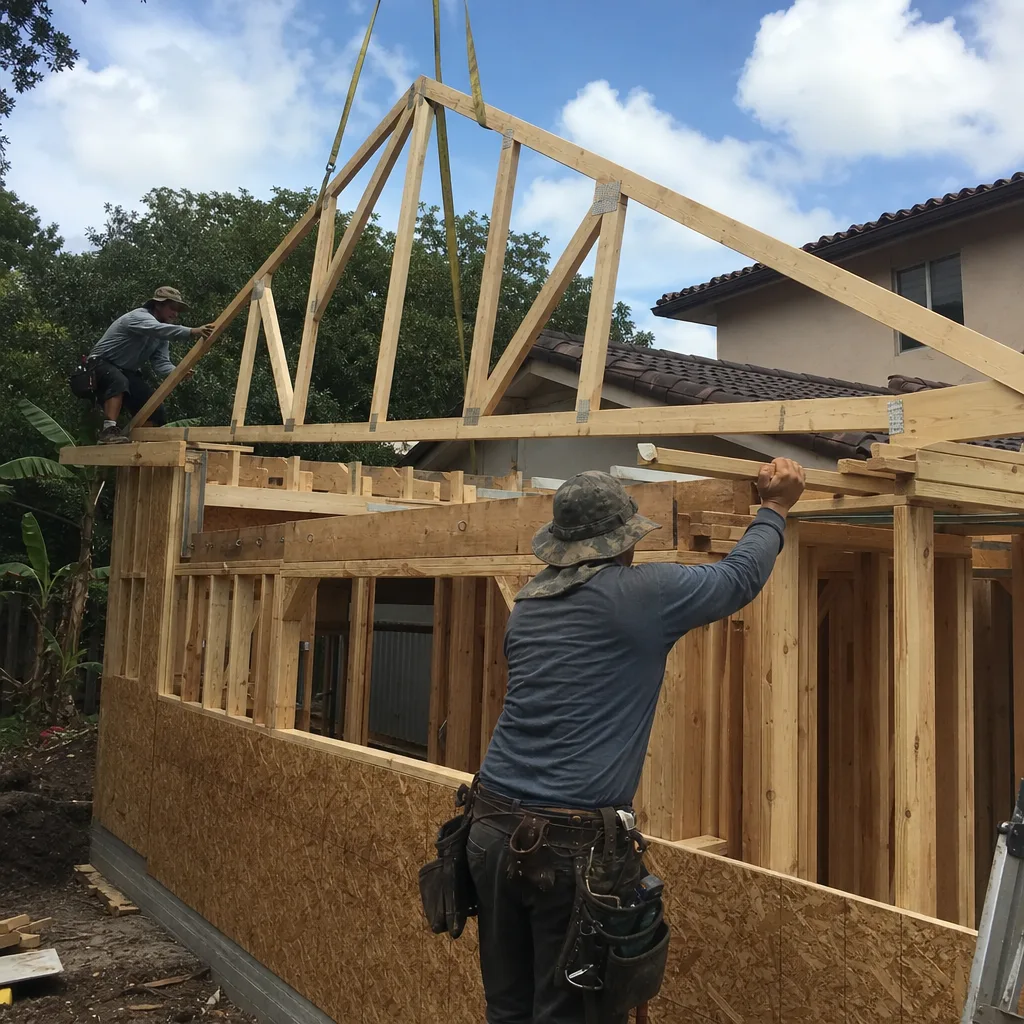
At Groundwork Construction Co. of Miami, we run this filter before anyone spends a dollar on drawings, because the drawings are where Miami homeowners lose money first. Here’s the checklist we use.
The Miami ADU Eligibility Filter, in Order of How Often It Kills a Project
The preemption law didn’t erase local land-use rules. It just removed the outright prohibition. Every municipality within Miami-Dade still sets its own minimum lot size, rear and side setbacks, and lot coverage caps, and those limits vary block to block in older neighborhoods. A 5,000-square-foot lot in a platted subdivision off Bird Road may clear the coverage test easily. The same size lot in a denser older pocket may not have a buildable envelope left once setbacks are applied.
We start with records, not opinions:
- Zoning confirmation. Single-family designation on the property appraiser record and the municipal zoning layer. A duplex or a legal nonconforming use changes the whole conversation.
- Lot size and coverage math. What’s the lot area, what’s the existing footprint, and what’s the maximum impervious coverage under your municipality’s code? Detached ADUs consume coverage; attached units sometimes don’t, which can flip feasibility.
- Setbacks on the existing structure. Plenty of pre-1970s homes in Miami have additions, carports, or converted garages that were built close to or over the line. If the existing home is already nonconforming, an ADU can trigger a review of the whole parcel.
- Flood zone designation. This is the one that changes budgets, not just layouts.
- Utility capacity. Electrical service size, water meter, and septic where applicable.
Why Flood Zone Is the Line Between an ADU and a Money Pit in Miami
Two parcels on the same street can have wildly different ADU costs because one sits in an AE zone and the other sits in VE. VE zones run along Biscayne Bay and across the Miami Beach barrier island, and FEMA rules there require new structures to be elevated above base flood elevation, with foundations and anchoring designed for velocity wave action. An ADU in a VE zone isn’t a cottage in the backyard. It’s an elevated structure with breakaway walls and a much larger structural budget.
In practice, this is the single most common reason a Miami homeowner’s ADU budget jumps. A detached unit that looks straightforward on paper can land well past the typical Miami-Dade ADU range of $106,200 to $259,600 once elevation, anchoring, and HVHZ product approvals are added. And HVHZ matters everywhere in Miami-Dade, not just on the coast: this county runs the only local product-approval system in the country, so every window, door, and roof assembly in your ADU needs a Miami-Dade NOA number, not just a state or national rating.
We’ve seen VE-zone feasibility questions resolved in an afternoon with the flood map and the property record in front of us, and we’ve seen them drag for months when a homeowner ordered drawings first. If you’re anywhere near the water, start with the flood map.
Will Your Older Miami Home Support a Second Unit?
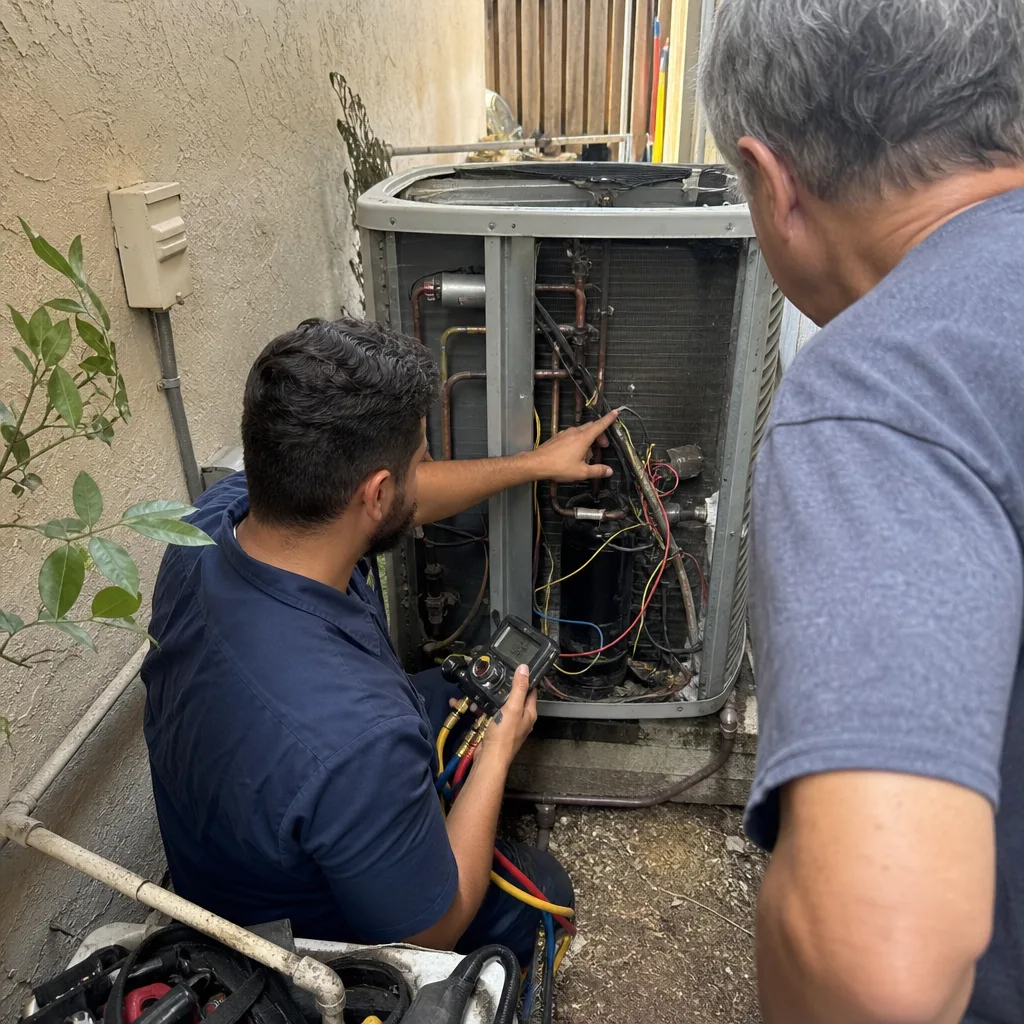
Maybe not without upgrades, and that’s a cost line most homeowners don’t budget for. Miami’s housing stock is heavy on pre-1970s concrete-block and CBS homes, many with unreinforced masonry walls, flat or low-slope roofs, and electrical service sized for a smaller household than the one living there now. Adding a second dwelling increases demand on the main service panel, the water meter, and, in older unsewered pockets, the septic system.
Miami-Dade can require utility upgrades before it issues permits, so the sequence matters: size the service, confirm the meter and lateral, and in septic areas get a drain-field evaluation before you commit to a location. A detached ADU placed over a failing drain field is a very expensive lesson.
On the structural side, we check the main home’s foundation and wall system too. A CBS home from 1954 is a perfectly good building. It just isn’t the same starting point as a post-2000 masonry home. Where reinforcement or wind-mitigation work is needed, we fold it into the same scope rather than handing you a surprise change order later. Our technicians have up to 12 years of experience, and the site assessment is done by a project manager who reads the zoning record and flood map with you.
What Miami’s Preemption Law Doesn’t Fix: Condos and Deed-Restricted Townhomes
If you own a condo, or a townhome in an association with deed restrictions, the preemption law does nothing for you. State law cannot override a recorded declaration. You cannot add an ADU to a condo unit, full stop. Townhome associations in Miami frequently carry covenants limiting accessory structures, second kitchens, or separate dwelling units, and those covenants run with the deed.
We pull the declaration and any recorded restrictions during the assessment. If an HOA restriction is the blocker, we tell you before you spend on anything. If the restriction is silent, we help you get a written HOA acknowledgment so the permit doesn’t stall at the finish line.
What Does an ADU Cost in Miami, and How Do the Numbers Compare?
An ADU in Miami-Dade generally runs from $106,200 to $259,600 depending on whether it’s attached, detached, elevated, or a garage conversion. A garage conversion at $35,400 to $94,400 is the lower-cost path when the existing structure already meets the structural and flood requirements, and a full home addition runs $53,100 to $153,400 if you’re weighing a second story or a rear extension instead.
| Scope | Typical Miami-Dade Range |
|---|---|
| ADU construction (detached or attached unit) | $106,200 - $259,600 |
| Garage conversion to living unit | $35,400 - $94,400 |
| Home addition | $53,100 - $153,400 |
| Electrical service upgrade and utility work | Quoted with the project; varies by service size and meter |
| VE-zone elevation and anchoring | Quoted with the project; driven by base flood elevation |
Pricing is upfront and the number you see is the number you pay. Every ADU we build is covered by the 730-Day Done Right Promise, and projects over $10,000 take $1,000 off with 0% financing for 18 months available. When you’re comparing scopes, our Home Additions & ADU page shows the full build breakdown, and the broader Home Additions & ADU in Miami page covers what’s typical for Miami parcels specifically.
FAQs
Often yes, but the cost and the structure change substantially. VE zones along Biscayne Bay and the Miami Beach barrier island require elevation above base flood elevation plus velocity-flow foundation design, which pushes an ADU well beyond a standard build. AE-zone properties are usually workable with standard elevation and anchoring. We read the flood map against your parcel before drawings so the answer is specific to your lot.
There’s no single number, because minimum lot size and lot coverage rules are set municipality by municipality within Miami-Dade. What matters more than raw square footage is the buildable envelope left after setbacks and existing footprints. A smaller lot with a compact house can clear the math while a larger lot with a wide existing addition cannot. We run that coverage calculation during the site assessment.
Yes. An ADU requires a building permit through your municipality, and in Miami-Dade that means HVHZ product approvals, structural plans, flood-zone compliance documentation, and inspection sign-off through to certificate of occupancy. The permit is where the utility upgrade requirements get enforced, which is why we sequence the electrical and meter review before design.
A garage conversion is usually cheaper, at $35,400 to $94,400 versus $106,200 to $259,600 for a full ADU, but only if the existing garage meets structural and flood requirements. If the slab, walls, or roof need bringing up to HVHZ standards, the gap narrows. Get both scoped before you decide, not after.
Start With the Parcel, Not the Drawings
Groundwork Construction Co. of Miami offers a no-commitment site assessment where a uniformed, background-checked project manager reviews your parcel, zoning record, flood map, and utility capacity before you spend money on design. Calls are answered by a live person, 24/7, and the estimate is free. If you’d rather have it looked at, Groundwork Construction Co. of Miami offers a no-pressure assessment in Miami at (833) 968-1198.
If you’re earlier in the process and still working out how the pieces fit together, our home page is the place to start.
Written by the team at Groundwork Construction Co. of Miami, serving Miami, FL.