
 Kitchen remodeling
 Bathroom remodeling
 Home additions & ADU
 Roofing
 Windows & doors
 Driveway & pavers
 Fence
Free written scope consultation - allowances, timeline, and change-order rules on paper before a single trade is scheduled
Styles & brands we work with
- Kitchen remodeling
- Bathroom remodeling
- Home additions & ADU
- Roofing
- Windows & doors
- Driveway & pavers
- Fence
See the difference
 Before
 After
 Before
 After
 Before
 After
Garage Conversion vs New ADU in Miami: Which One Actually Costs Less?
Choose a garage conversion unless your garage was built before 2002, is wood-framed, or sits on a low-slope roof that’s already near the end of its life. In Miami, the conventional “conversion is always cheaper” advice only survives HVHZ structural scrutiny on newer, concrete-block garages. On older stock, the wind-load upgrades can erase the savings. If you’d rather have a real number than a rule of thumb, Groundwork Construction Co. of Miami walks both paths with itemized upfront pricing. Call (833) 968-1198.
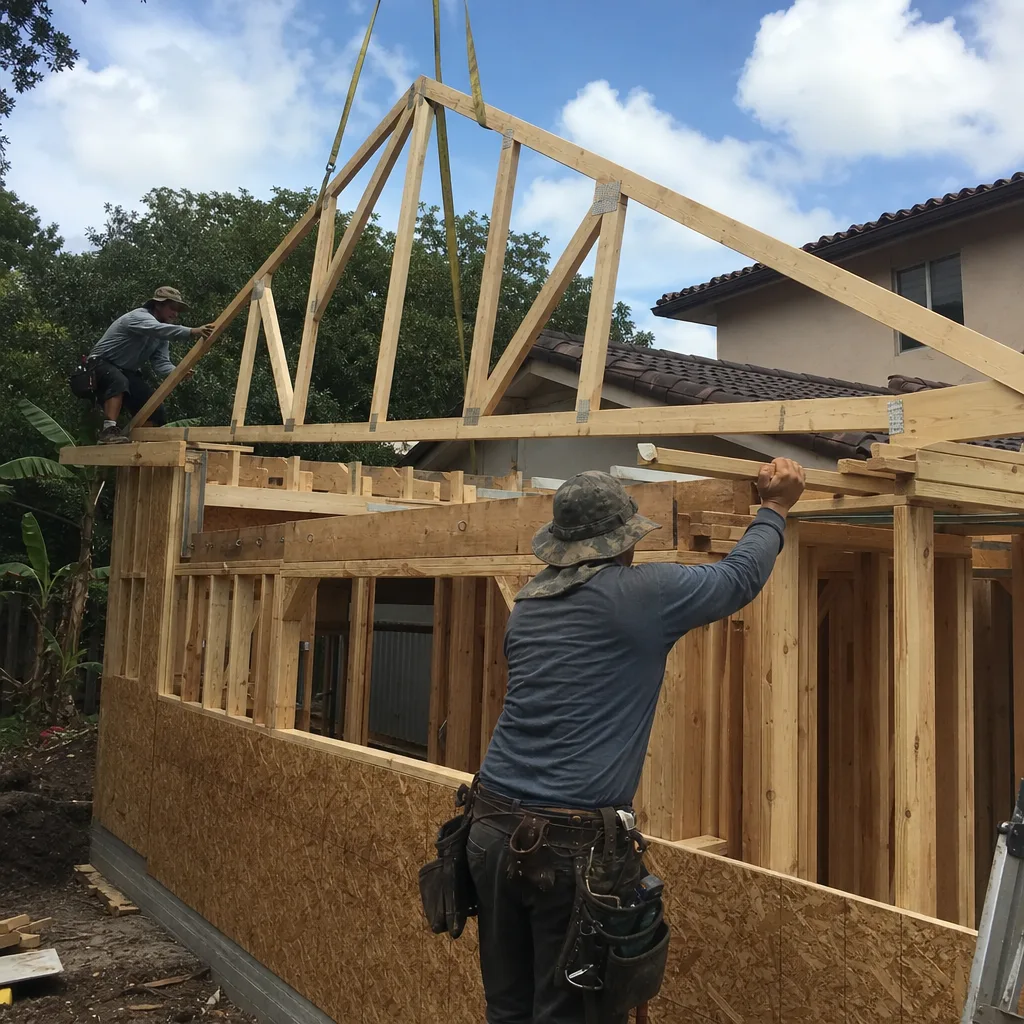
Most of what you’ll read online was written for markets where a garage is just a garage. Miami isn’t that market. The High Velocity Hurricane Zone changes the math at the foundation, not the finishes. Here’s the honest decision framework, built from what we actually see on slabs and roof decks across the county.
Why Miami Makes This Comparison Harder Than It Looks
Miami-Dade is the only place in the country with its own product-approval system. Every roof, window, and shutter here has to carry a Miami-Dade NOA number, not just a Florida or national approval. That’s the environment your garage already lives in, and it sets the cost floor for anything you do to it.
Now look at the housing stock. Much of the county’s older residential base is pre-1970s CBS construction (concrete block and stucco), a lot of it with flat or low-slope roofs. Those homes were built to older wind codes. When you convert that attached garage into conditioned living space, you change how the structure performs, and the building department will want the roof-to-wall connections, roof deck attachment, and openings brought up to current design pressure requirements near 180 mph. That review is where conversions get expensive in a way the online calculators never mention.
Layer on subtropical salt air, year-round humidity, and a June through November hurricane season, and every exterior assembly matters more. Sealants, underlayments, and finishes degrade fast here. Termite pressure on wood framing is severe. A conversion that ignores those realities is a maintenance bill waiting to happen. Groundwork’s home page lays out the full scope of what we handle from foundation to finish line.
The HVHZ Structural Threshold: The Number That Decides It
Here’s the practical line: a Miami garage built after 2002, in concrete block, with a sound roof system and adequate ceiling height, is usually a strong conversion candidate. A garage built before 2002 often isn’t, once you do the real math.
Bringing a pre-2002 garage up to current wind-load requirements, specifically the roof deck attachment, wall connections, and opening protection, can add $20,000 to $40,000 to a project that looked simple from the street. That’s the HVHZ upgrade math, and it’s why the thesis flips. A conversion that reads as a $45,000 job on paper can land well north of $80,000 once the structural work is scoped, permitted, and inspected.
None of that is a reason to walk away. It’s a reason to know which garage you own before you commit. Our Home Additions & ADU team scopes both options against the actual structure, not a generic assumption.
At a glance: conversion vs. new detached ADU in Miami
| Factor | Garage Conversion | New Detached ADU |
|---|---|---|
| Typical Miami range | $35,400-$94,400 | $106,200-$259,600 |
| HVHZ structural upgrades | Adds $20,000-$40,000 if the garage is pre-2002 | Built to current code from day one |
| New footprint | None | New, subject to current setbacks |
| Impact fees | Typically don’t apply | Generally apply to new square footage |
| Setback / variance risk | Higher if the garage is legally non-conforming | Lower if sited in a compliant location |
| Best fit | Post-2002 CBS garage, sound roof, good ceiling height | Wood-framed, pre-1980, or low-slope roof needing full replacement |
If your garage is wood-framed, dates to before 1980, or carries a low-slope roof that’s due for replacement anyway, a new detached ADU often runs only 10% to 20% more than a full-done conversion. It’s built to current code from scratch, with no inherited deficiencies and no surprises hiding under the drywall.
When Conversion Wins, and When It Doesn’t
Conversion wins on speed and simplicity when the structure supports it. No new footprint means no impact fees on new square footage, and the permit path is usually shorter because you’re not adding a building. On a post-2002 CBS garage with a solid roof system and enough ceiling height to feel like a room, this is the cleaner road. Expect that path toward the lower half of the $35,400-$94,400 conversion range.
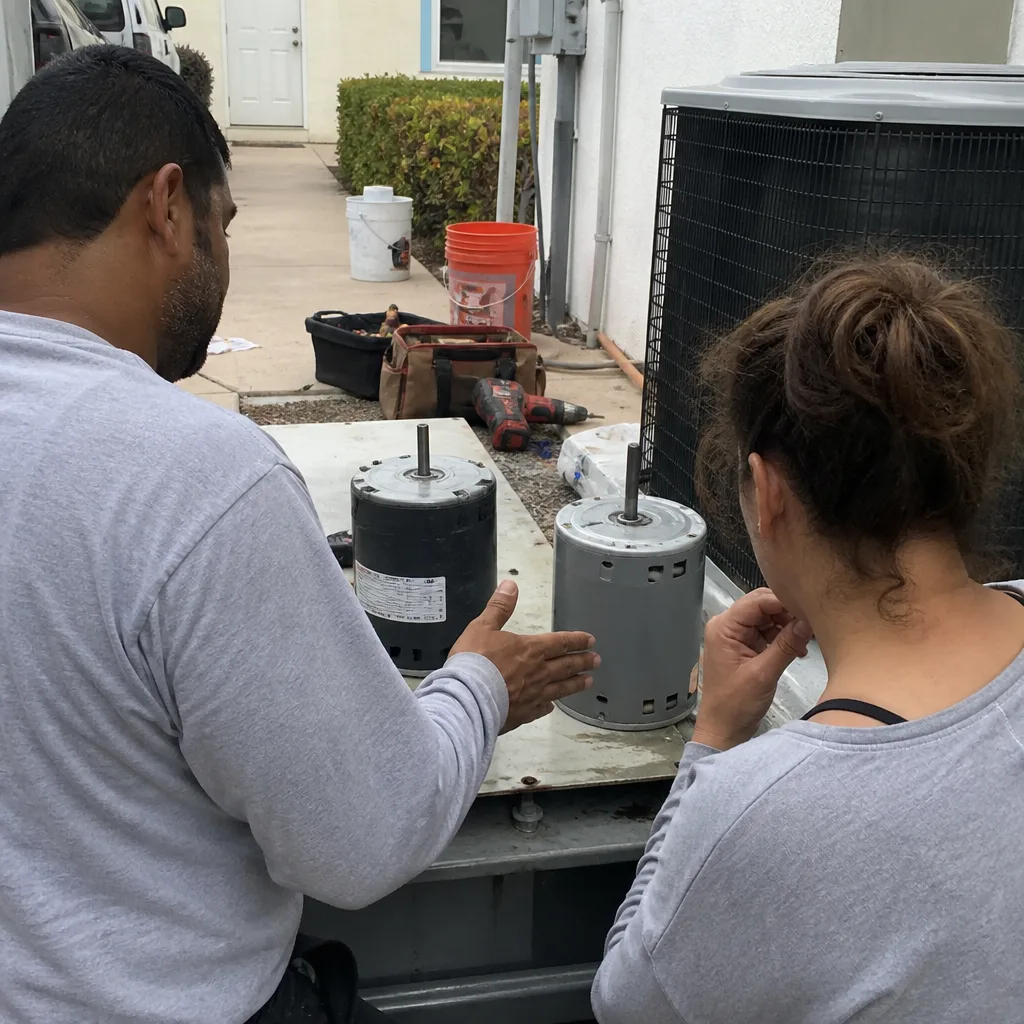
New construction wins when the garage is a liability dressed up as an asset. Wood framing, a pre-1980 build date, or a low-slope roof that needs full replacement all point the same direction. You’d be paying for structural rehabilitation on top of the conversion, and you’d still own a repurposed garage at the end. A detached ADU gives you a better building for a modest premium.
Then there’s the setback variable, which trips up more projects than people expect. A new detached ADU has to meet current setback rules, and those rules may not line up with where your existing garage actually sits. Converting a legally non-conforming garage can trigger a variance. Building new in a compliant spot often doesn’t.
- Conversion checklist: post-2002 build, concrete block, sound roof deck, adequate ceiling height, garage in a conforming location.
- Lean-new checklist: wood framing, pre-1980, low-slope roof due for replacement, or a garage sitting in a spot current setbacks wouldn’t allow today.
- The non-negotiable here: wind-load connections, opening protection, and a Miami-Dade NOA number on every product going onto the exterior envelope.
Either path can be finished with the same quality materials. We work with a curated set of brand partners, and on kitchens and baths that means names like Kohler and Moen holding up in a humid, salt-laden climate. The point isn’t the logo. It’s that the components hold up in Miami conditions and the paperwork clears NOA review.
What Drives Cost on Either Path in Miami?
Two things, mostly: how much structural work the building department makes you do, and how you finish the space. The line items below show the market ranges we quote in Miami, and they’re the same numbers whether we’re pricing a conversion or a new build.
| Item | Miami Range |
|---|---|
| Garage Conversion (all-in) | $35,400-$94,400 |
| ADU Construction (all-in) | $106,200-$259,600 |
| Home Addition | $53,100-$153,400 |
| Impact Window Installation | $9,440-$29,500 |
| Kitchen Remodel (in the new unit) | $16,520-$53,100 |
| Bathroom Remodel (in the new unit) | $10,620-$33,040 |
Impact windows are the line most homeowners under-budget. In the HVHZ they’re practically a given for any conditioned living space, and the opening protection package alone can swing a project by five figures. We price it as a line item, not a surprise.
The operator detail that matters: the difference between a quote and a final invoice is usually the stuff nobody scoped on the front end. Our upfront pricing is built so the number you see is the number you pay, and the Home Additions & ADU page covers how the permit and structural review actually runs. Whichever path you choose, the 730-Day Done Right Promise covers the workmanship. If it’s not done right, we make it right.
FAQs
It’s cheaper to convert a garage in Miami when the garage was built after 2002, is concrete block, and has a sound roof system, because you avoid impact fees and a shorter permit path. On a pre-2002, wood-framed, or low-slope-roof garage, the $20,000-$40,000 in HVHZ structural upgrades often makes a new detached ADU only 10%-20% more expensive. Call (833) 968-1198 for an itemized comparison of your specific garage.
A garage conversion in Miami typically runs $35,400-$94,400, with the final number driven by structural upgrades and your finish level. Pre-2002 garages can add $20,000-$40,000 to bring roof deck attachment, wall connections, and openings to current wind-load standards. Estimates are free, and we itemize every line so you’re not guessing.
Often yes, and a new detached ADU is frequently the cleaner option when your existing garage sits in a non-conforming location. Converting that garage may require a variance, while siting a new ADU in a compliant spot usually avoids one. The answer depends on your lot and zoning, so call (833) 968-1198 and we’ll check your address against current Miami-Dade rules.
Practically speaking, yes. The HVHZ requires opening protection in the form of impact-rated products carrying a Miami-Dade NOA number, and any conditioned living space in a conversion or new ADU will need it. Impact window installation in Miami runs $9,440-$29,500 depending on count and size. We scope it upfront so it never shows up as a surprise add-on.
Get Both Paths Priced Before You Commit
If you’d rather have it looked at, Groundwork Construction Co. of Miami offers a no-pressure assessment in Miami - call (833) 968-1198. We’ll scope the conversion and the new-build option side by side, with upfront pricing and the 730-Day Done Right Promise on either. Our technicians have up to 12 years of experience, and calls are answered by a live person, 24/7.
Written by the team at Groundwork Construction Co. of Miami, serving Miami, FL.