
Last updated November 17, 2026
 Bathroom remodeling
 Kitchen remodeling
 Home additions & ADU
 Roofing
 Windows & doors
 Driveway & pavers
 Fence
Free written scope consultation - allowances, timeline, and change-order rules on paper before a single trade is scheduled
Bathroom Remodeling Warning Signs Every Homeowner Should Know
Most homeowners think the danger in a bathroom remodel is picking the wrong tile. It isn’t. In our experience across Miami, the projects that blow up – budget overruns, mold behind new walls, a contractor who stops answering his phone – almost always showed clear warning signs before a single tile was set. The problem is that nobody told the homeowner what those signs look like. This guide fixes that. We’ll walk you through the exact red flags that show up before you hire, during construction, and in the first 90 days after, plus the contract language that separates a contractor protecting you from one protecting himself.
Quick Answer
The biggest bathroom remodeling warning signs are vague written scopes with no line-item specifics, bids delivered suspiciously fast without a site visit, cash-only payment requests, and no mention of permits. Mid-project, watch for skipped waterproofing membrane steps, unexplained subcontractor swaps, and material substitutions that show up without a signed change order. Any of these is a reason to slow down before you sign or before work continues.
Styles & brands we work with
- Kitchen remodeling
- Bathroom remodeling
- Home additions & ADU
- Roofing
- Windows & doors
- Driveway & pavers
- Fence
Table of Contents
- Pre-Hire Warning Signs: What You See Before You Sign
- Why a Suspiciously Fast Bid Is a Red Flag
- The Contract Language That Protects the Contractor, Not You
- Mid-Construction Warning Signs You Can’t Ignore
- Waterproofing: The Hidden Step That Decides Everything
- Material Bait-and-Switch: How to Verify What You Paid For
- Post-Completion Signs of a Bad Job Within 90 Days
- Warranty Terms That Reveal a Weak Workmanship Guarantee
Pre-Hire Warning Signs: What You See Before You Sign
The most telling warning signs appear before demo day, and they’re behavioral. A contractor’s habits in the bidding phase tell you how they’ll run the job. Here’s what we tell every homeowner to watch for in Miami when they’re collecting bids on a bathroom renovation.
- Vague written scope: A one-page estimate that says “Demo, tile, plumb, install fixtures” and a lump-sum number. It gives you no line items for tile, waterproofing, plumbing rough-in, or fixture brands. When scope is vague, change orders are inevitable – and expensive.
- Cash-only requests: Cash-only, Venmo-only, or requests for full payment upfront leave you with no paper trail and no leverage. Reputable Miami contractors bill through checks, cards, or financing and tie payments to milestones.
- No mention of permits: A bathroom remodel that touches plumbing, electrical, or structural walls requires a permit in Miami-Dade County. If your contractor says “we don’t need permits for this” or “we’ll skip the county,” that’s the sign that the contractor plans to cut corners everywhere else.
- Pressure to sign today: “This price is only good until Friday.” A real estimate stands for at least two weeks. False urgency hides the fact that they haven’t done the math.
- No physical address or verifiable license: Ask for the contractor’s state license number and verify it. Ask for proof of insurance. A contractor without either has nothing to lose if the job goes wrong.
We’ve seen homeowners in neighborhoods like Coral Way and Little Havana hand over thousands in cash to a “referral from a friend” before the license was verified. When the crew disappeared with the deposit, there was no company to call. The license check takes ten minutes. The lesson lasts years.
Why a Suspiciously Fast Bid Is a Red Flag
A bid that arrives the same afternoon you called, without setting foot inside the bathroom, is not efficiency – it’s a guess. A legitimate bathroom estimate in Miami requires seeing the existing plumbing, checking whether the wall behind the tile is drywall or concrete block, and confirming how the drain is routed. Without a sit-in, the number is fiction.
Here’s what a professional bid process looks like, in numbered order:
- The site visit. The contractor walks the bathroom, opens the vanity, checks the shutoff valves, notes the wall substrate, and measures. This takes 20 to 45 minutes.
- Scope confirmation. You confirm the layout, whether walls are moving, what stays and what goes. The scope is written down and signed before pricing.
- Line-item pricing. Tile, cement board, waterproofing membrane, plumbing rough-in, fixture allowance, labor, permits, and debris haul. Every line has a number attached.
- A written proposal delivered in 2 to 5 business days. That window reflects real estimating, not a drive-by guess.
- Permit and inspection plan. The proposal names who pulls the permit (a licensed contractor) and which inspections will be called.
If your bid skips steps one through four and jumps straight to a number on the back of a business card, that contractor is not protecting the project. The pattern repeats itself – and the homeowner pays for the shortcuts with a mid-project scope change. For the same reason, an all-in bid for a large project (kitchens, additions) requires even more upfront scrutiny, the same discipline we apply to Home Additions & ADU in Miami.
The Contract Language That Protects the Contractor, Not You
Every renovation contract you sign should protect both sides. When you read your next one, watch closely – these clauses are usually written to shield the contractor, not the homeowner.
- “Owner responsible for permits.” If the contract shifts the permit burden onto you, the homeowner, the contractor escapes both responsibility and inspection accountability. In Miami-Dade, the licensed contractor should pull the permit. Strike it.
- “Substitutions at contractor’s discretion.” This is the clause that lets a company swap out your Cambria quartz for a builder-grade slab when your back is turned. Strike it, or require a signed written approval before any substitution.
- “Additional costs may apply for unforeseen conditions.” Vague enough to turn a $5,000 overrun into a $15,000 surprise. Reputable contractors price in a contingency line and disclose what “unforeseen” means.
- Warranty limited to “materials only.” A materials-only warranty leaves you exposed on the labor – which is where the highest costs hit (waterproofing, plumbing, tile-setting). Demand a workmanship warranty with real duration.
- No completion date. Contracts without a written start date and completion date mean the schedule is a suggestion. A legally enforceable schedule protects the homeowner when the crew moves to another job.
- Arbitration-only clauses that limit recovery. Some contracts bury language that limits damages to the contract price, which blocks you from recovering for secondary damage – like water damage to the rest of your home.
Read the substitution and warranty sections carefully. Those are the two clauses that determine whether a project that goes sideways actually gets fixed. If the language is unclear, ask for a rewrite before signing. A contractor who pushes back hard on changing substitution language has just told you they were planning to substitute.
Mid-Construction Warning Signs You Can’t Ignore
Once walls come down, warning signs let you catch problems before the walls go back up. Here are the mid-construction red flags we’ve seen in Miami jobs – if any of them pop up, ask questions the same day.
Unexplained Subcontractor Swaps
The crew that shows up on day five is not the crew from the first meeting. And their name isn’t on the contract. When a contractor swaps in a last-minute, unvetted crew (no background check, no uniform, no insurance documentation) the quality shifts the same day. Ask: who’s on this property, and are they covered on your policy? A licensed contractor answers directly.
Waterproofing Skipped or Vague
This is the warning sign that costs the most to fix later. Proper bathroom waterproofing in Florida layering: liquid membrane or sheet membrane bonded to the substrate, cement board backing, and seams taped. If you see the crew laying tile over bare drywall or standard green board with no membrane, stop the job. Ask to see the waterproofing steps documented (photos of the exposed prep are normal and expected).
Delays Without Proactive Communication
Materials get delayed. Inspections get re-scheduled. That’s normal. What isn’t normal is finding out on Friday that the job has been stalled since Wednesday, from a neighbor – not from the contractor. A weekly written update is standard on a well-run job. No update means no accountability.
Disappearing Permit
You signed the contract expecting the permit pulled. If the contractor keeps dodging questions on permit status, or says inspections don’t apply to your project, that’s a code compliance concern in Miami and a serious red flag. Unpermitted work may cause problems when you sell the home.
No Site Photos of Progress
We photograph every waterproofing step and every rough-in on our own jobs, and every reputable contractor should. The photos are your proof that the job inside the walls was done right. A contractor who refuses photos is a contractor who doesn’t want evidence.
Waterproofing: The Hidden Step That Decides Everything
Here’s what most homeowners don’t realize: every quality decision in a bathroom walkthrough is happening outside the wall, while the actual deciding factor – the waterproofing layer – sits hidden behind tile and never gets a second thought until it fails. In Miami’s humidity, the waterproofing is the whole job. Everything else is cosmetic on top.
What a properly built bathroom shower assembly looks like, in order from the studs outward:
- Studs and vapor barrier. A moisture-resistant barrier is installed over the framing, lapped so water runs down and out.
- Cement backer board. Applied over the barrier with seams set per the manufacturer’s spec – not standard drywall or generic green board.
- Seams and corners sealed. The joints are taped and finished with a waterproof sealant, and inside corners get the same treatment.
- Liquid or sheet membrane. A continuous waterproof layer is bonded to the substrate. This layer is what keeps water out of the walls. Damaged at any point, and the whole assembly fails.
- Flood testing before closing. A careful contractor pre-tests the shower pan and the membrane before tile goes on. Not every crew does. Ask if they do.
- Tile, grout, and sealant. With movement joints at the corners and where framing meets tile (grout alone doesn’t flex).
In our experience, the failure isn’t in the materials – it’s in the process. A crew gets rushed on a Friday, skips the membrane behind the shower bench or where the tub meets the wall, and that corner is the first place water gets in. In Miami neighborhoods like Hialeah and Kendall, we’ve seen these exact failures show up as soft drywall within a year. The manufacturer’s instructions on the membrane data sheet are the only checklist that matters. If your crew can’t produce the manufacturer’s spec sheet and say where they get it, that’s your warning.
Material Bait-and-Switch: How to Verify What You Paid For
This is the quiet one, because the difference between the quoted tile and the swapped tile is often invisible until you compare boxes in the garage. Here’s how to catch a material bait-and-switch in Miami before the crew installs the wrong thing.
- Demand brand and model on every line item. “Porcelain tile” is not a spec. “Porcelain tile, 12×24, [manufacturer] [model number], [color]” is a spec. The same is true for faucets, shower valves, vanities, and toilets.
- Match the delivery to the order. When materials arrive, check the boxes against the spec sheet. Fixtures in particular: KraftMaid vanities, Kohler fixtures, and branded hardware carry visible model numbers on the factory packaging. If the box doesn’t have the right label, the job doesn’t go forward.
- Photograph everything before installation. Take photos of the boxes and the spec sheet side by side. If a substitution does happen, you’ll have proof.
- Make substitutions require a signed change order. If the contractor wants to swap a product, the swap happens on paper with your signature and a stated credit or charge. No verbal swaps.
- Confirm allowances in the contract. A tile allowance of $6 per square foot means the contractor’s obligation ends at $6 – anything above that goes to you, sometimes with a markup. Know your allowance before demo starts.
Beyond fixtures, the same substitution pattern plays out in the shell materials: a James Hardie siding quote that installs as a lesser fiber board, or a premium vanity swapped for a builder-grade one. The fix is always the same – put the brand and model on the written line and hold the contractor to it.
Post-Completion Signs of a Bad Job Within 90 Days
If the waterproofing was done right, the first 90 days should be quiet. If it wasn’t, these are the signs that show up – and each one is a valid complaint to raise in writing while the warranty is active.
- Efflorescence. A white, chalky powder on tile or grout lines, especially near the shower, is a sign of moisture migrating through the assembly. It often means water is getting behind the tile surface. Don’t clean it twice and ignore it – trace it.
- Grout cracking at the seams. Hairline cracks at inside corners, where the shower wall meets the floor, and where the tub meets the surround. Grout doesn’t flex in those spots, but tile assemblies do. Cracking at seams in the first 90 days suggests missing movement joints or movement in the substrate.
- Soft drywall near the tub or shower. Press on it gently. Spongy texture behind paint means water is getting into the wall from the wet side. This is the most urgent sign of all – it means waterproofing failed, and the fix is invasive.
- Mildew returning on the grout or caulk. A little is normal in Florida humidity; recurring mildew that survives cleaning in a specific zone is where water is sitting.
- Bubbling paint or peeling caulk along the base of the wall tile. A classic sign of moisture behind the assembly.
- Musty odor in the bathroom that wasn’t there before. If the smell persists with ventilation and no visible leak, water is trapped in the wall cavity or under the floor.
The 90-day window matters. Problems that show up early are almost always process failures (a skipped layer, an unsealed seam) – the exact failures the warranty should cover. Catch them before the window closes and the evidence is fresh.
Warranty Terms That Reveal a Weak Workmanship Guarantee
Warranty language is where the weakest contractors hide the most. Read the warranty before you sign the contract – the terms you don’t like are the terms you’ll live with when the shower leaks.
A warranty that doesn’t protect you will usually have these characteristics:
- Short workmanship window. A one-year labor warranty puts the cost of a failed waterproofing job back on you. A two-year guarantee with real coverage on labor and materials is the floor of what a serious contractor should offer – and it should be in writing.
- “Materials only” coverage. Materials warranties don’t pay for the labor to remove and replace a failed shower assembly – and the labor is where the money goes.
- Callbacks billed as new services. If the warranty language says “service calls are billable” or “re-inspection fee applies,” you’re not covered. You’re being charged to re-open the problem.
- Void if not maintained. Some warranties have maintenance carve-outs (“void if homeowner fails to maintain caulk annually”) that let the contractor escape a claim. Real workmanship warranties don’t hinge on homeowner maintenance.
- No written response time. A strong warranty says when the contractor will respond to a claim. A weak one says “at our earliest convenience.”
Our own response to that problem is the 730-Day Done Right Promise – a two-year written workmanship guarantee on every project, including bathroom remodels. If it isn’t done right, we make it right. Read every warranty you get offered against that standard – the difference tells you which contractor is protecting you and which is protecting the job. As a full-scope firm, we also keep the same discipline on trades around the home – the Groundwork Construction Co. of Miami home page shows the full range of services.
Common Mistakes to Avoid
These mistakes repeat across bathroom remodels in Miami. Each of them is avoidable – and each is expensive.
- Signing a one-page, lump-sum estimate. A vague scope guarantees change orders. Require line-item pricing for tile, waterproofing, plumbing, fixtures, and labor before signing.
- Skipping the permit to save time. In Miami-Dade, an unpermitted bathroom remodel can block a home sale and hide code violations. The permit is not optional, and the contractor should pull it.
- Paying with cash to avoid the paper trail. If the payment isn’t documented, you have no proof of what you paid for or who promised it. Pay by check or card, tied to milestones.
- Accepting a “substitution” without a signed change order. When the quoted tile or vanity is swapped in the truck, the change is invisible on the invoice. Put the brand and model on every line and require written approvals.
- Not watching for the missing waterproofing membrane. Walking past the exposed cement board without asking “where’s the membrane?” is the costliest miss in the whole process. Photos of the waterproof layer before tile goes on are your insurance.
- Relying on a handshake for the schedule. Without a written start and completion date, delays have no consequence and crews rotate to other jobs. The schedule goes in the contract with a paper trail.
- Ignoring a cheap one-year warranty. A short workmanship window shifts hidden risk back to you. Compare warranty terms before you compare bids – the warranty is often the real bid.
See the difference
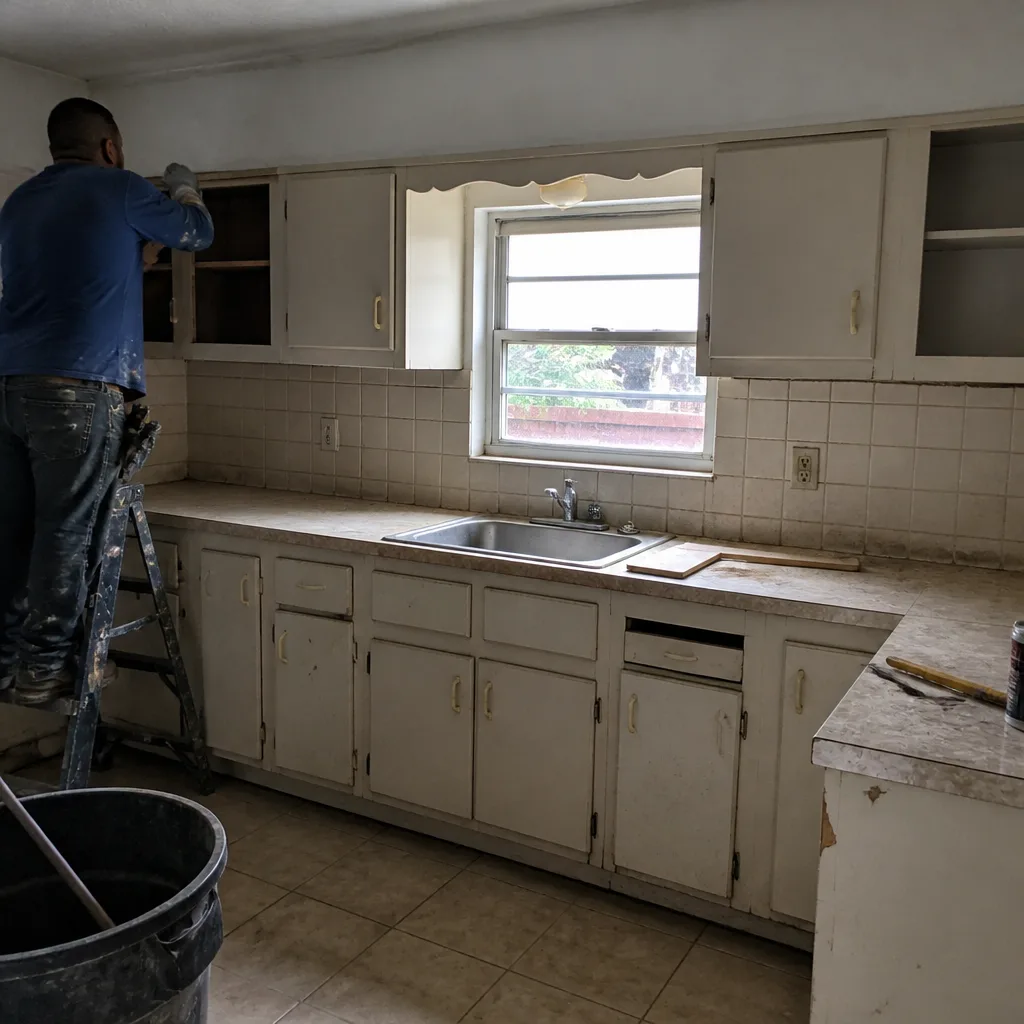 Before
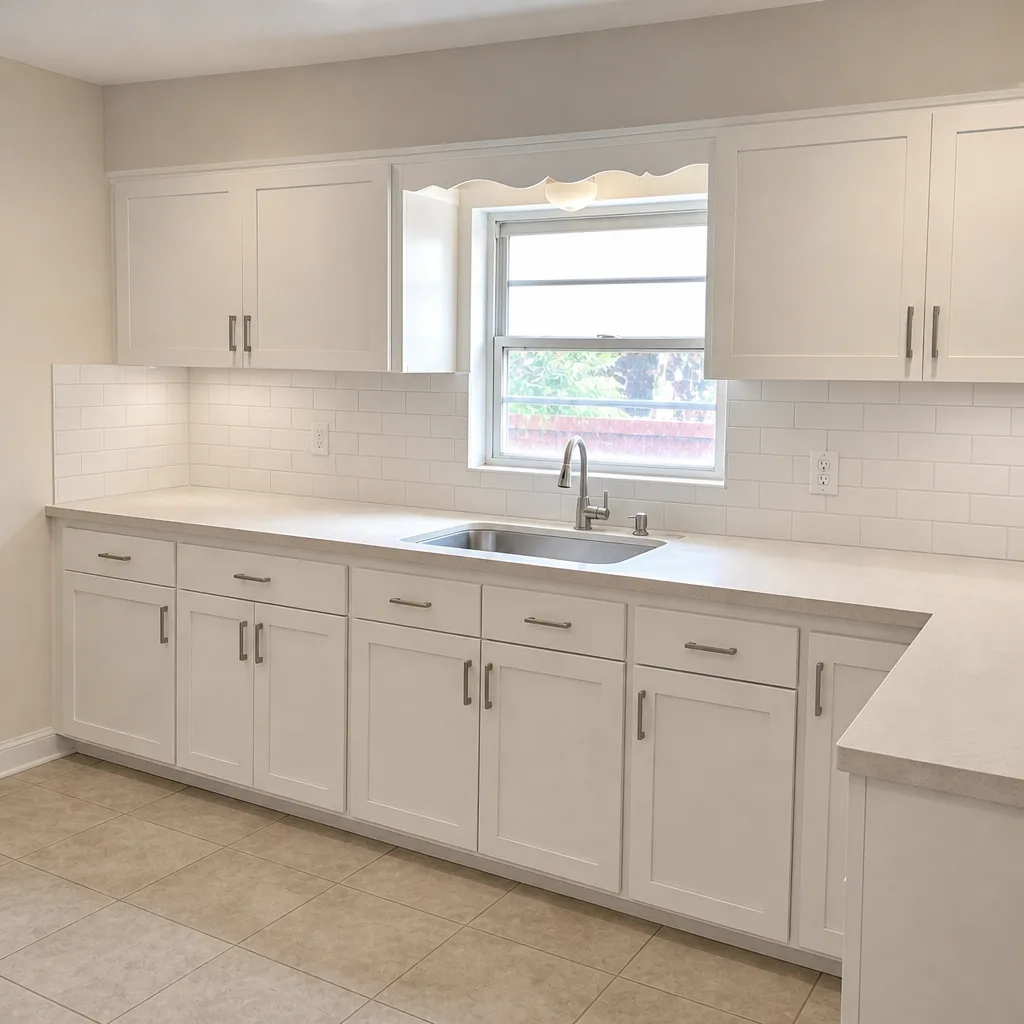 After
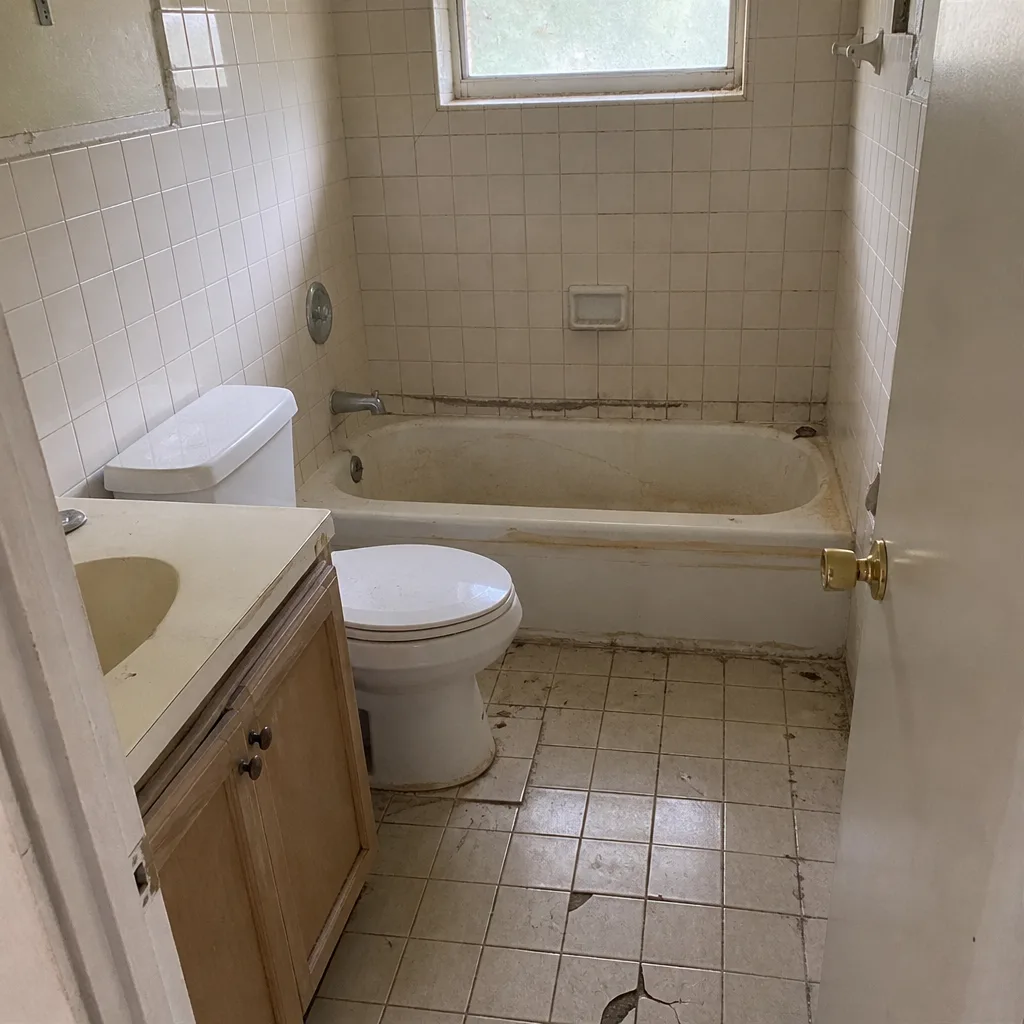 Before
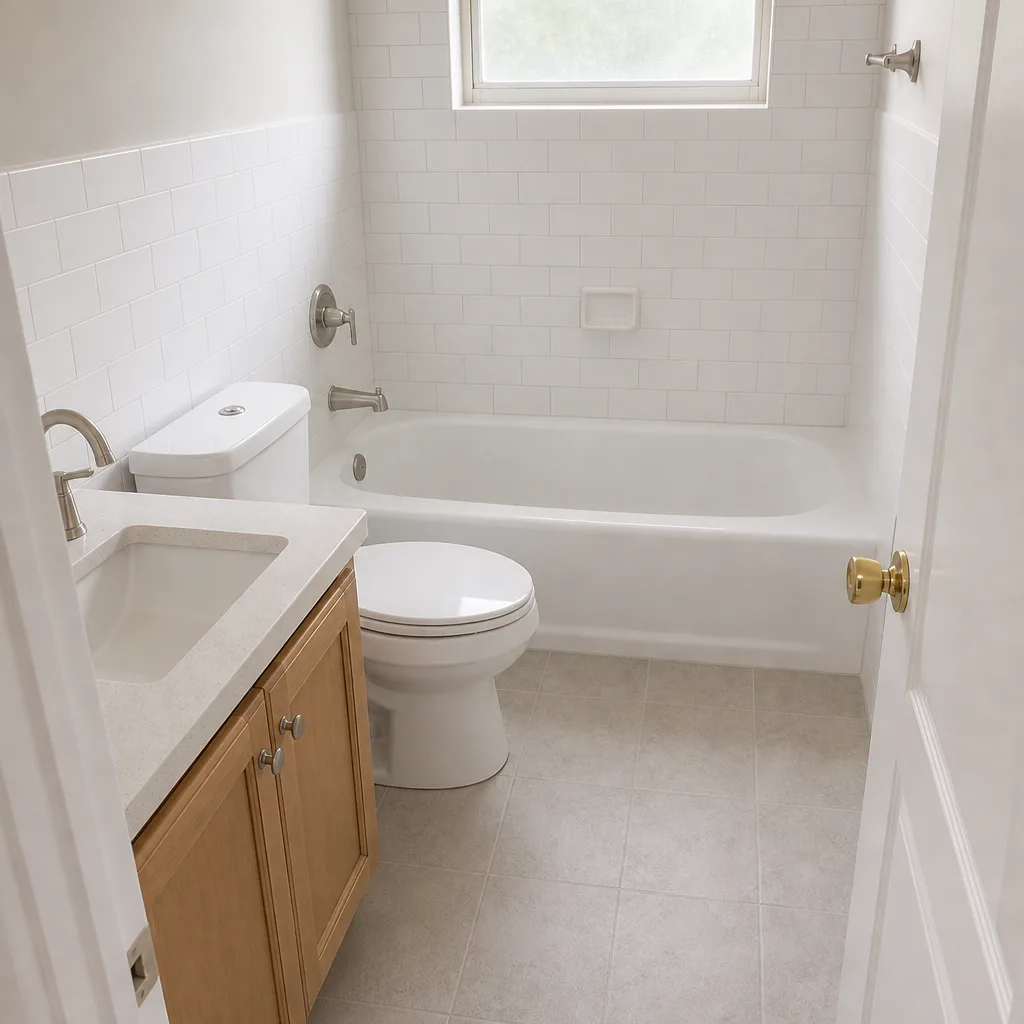 After
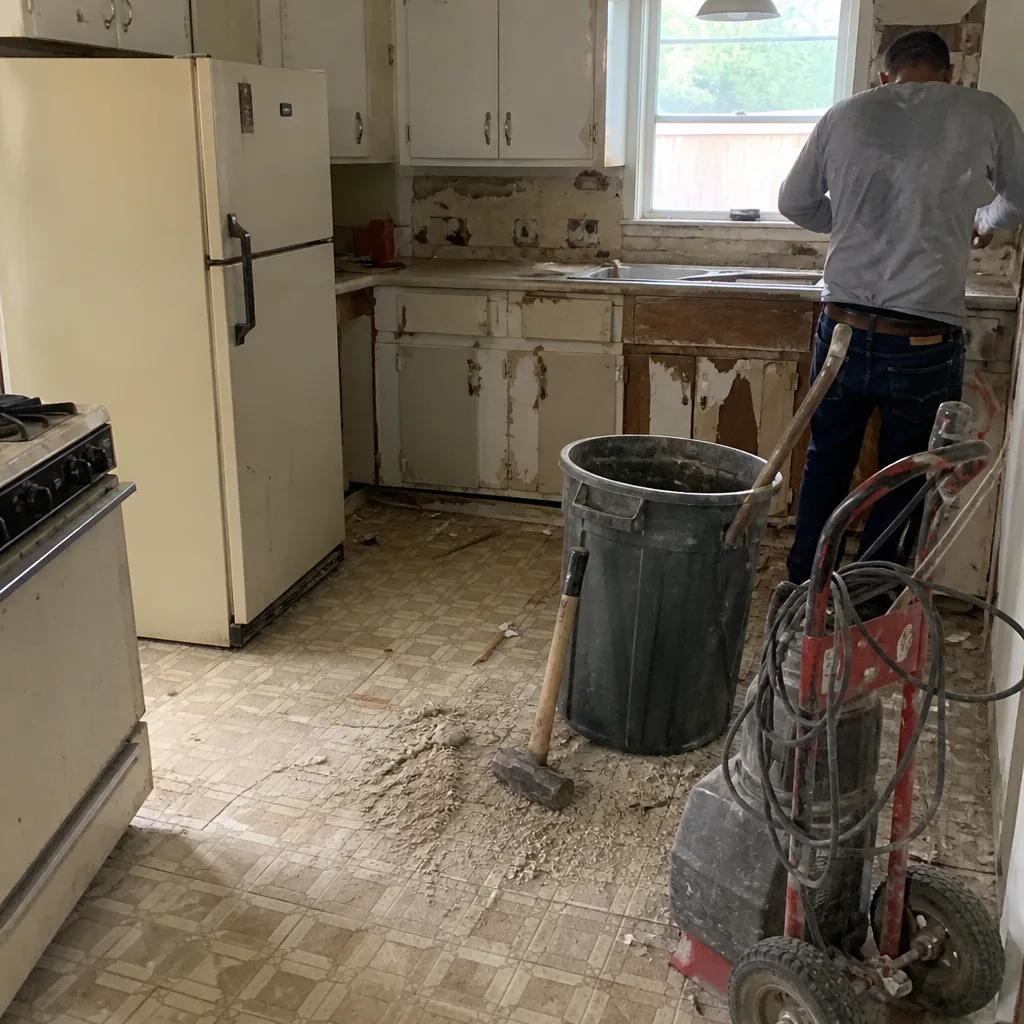 Before
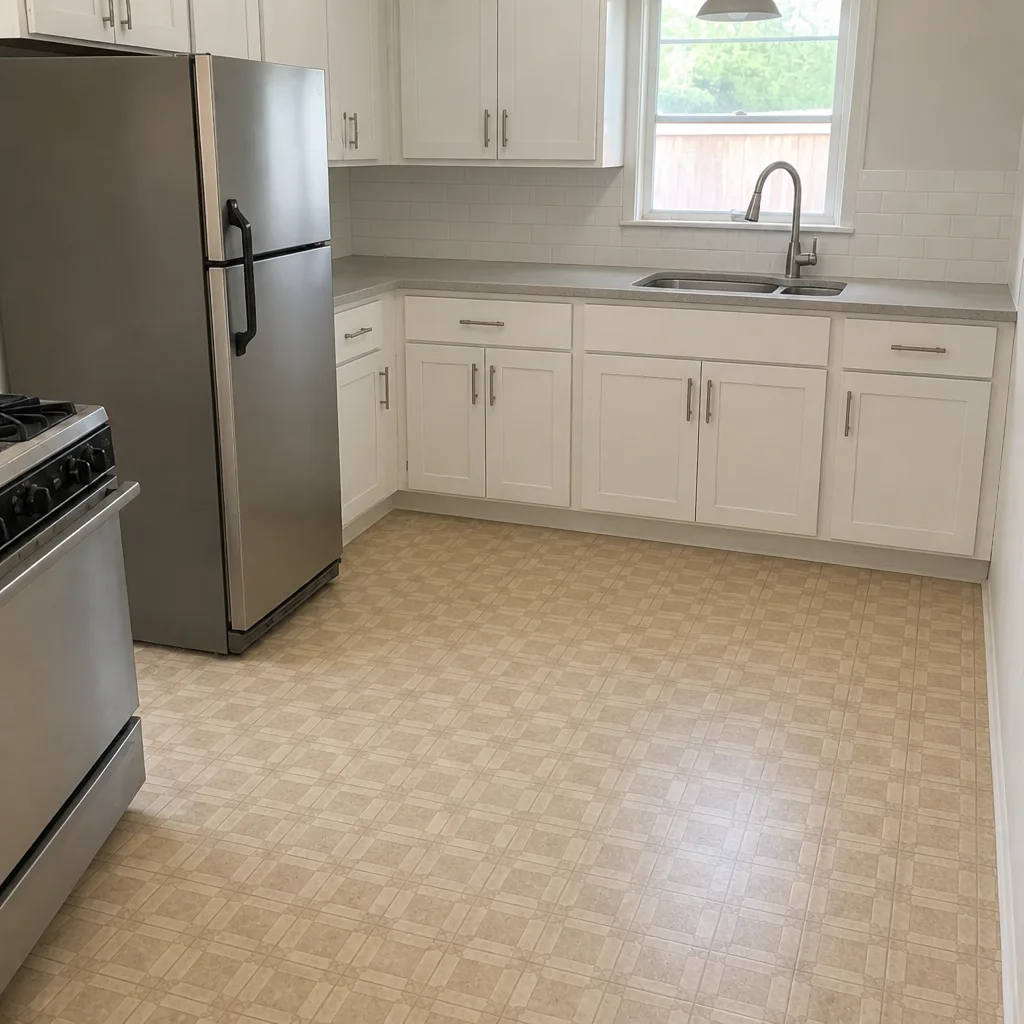 After
When to Call a Professional
If your current project is already underway and you suspect any of the signs above – a missing waterproofing layer, a crew that showed up unannounced, a permit that never got pulled – call us now and let a licensed contractor inspect the job site before tile goes over the problem. If you’re planning a bathroom remodel in Miami and haven’t hired yet, the same rule applies: get a written, line-item estimate with the permit and warranty spelled out before anyone touches your home. We offer free estimates in Miami – call the Groundwork Construction Co. of Miami team at (833) 968-1198 to schedule yours.
Frequently Asked Questions
A vague written scope with a lump-sum number and no site visit is the single biggest pre-hire red flag. It means the contractor didn’t measure, didn’t check the plumbing, and priced the job on a guess – which means change orders and overruns are almost guaranteed. Call (833) 968-1198 for a free estimate with the scope priced line by line.
Waterproofing done wrong shows up within 90 days, not years. Watch for white chalky powder (efflorescence) on the grout, hairline cracks at the seams, soft drywall next to the tub, and recurring mildew that survives cleaning in the same spot. Any of these after a recent remodel means water is getting behind the tile and the fix needs a licensed contractor. Call (833) 968-1198 for a free inspection.
Yes, if your bathroom remodel moves plumbing, electrical, or structural walls, a permit is required in Miami-Dade County and inspections are part of the process. A licensed contractor should pull the permit and schedule the inspections – if your contractor tells you “we don’t need one for this,” that’s a warning sign. Call (833) 968-1198 for a free estimate and a permit plan.
A standard full bathroom remodel in Miami runs 4 to 6 weeks for a well-run job – longer if structural changes are involved. A timeline in the contract with a written start and finish date, plus a weekly written update, is the difference between a managed project and an open-ended one. Call (833) 968-1198 for a free estimate with a written schedule.
Bad workmanship warranties are short (often one year), cover materials only, bill callbacks as “new services,” and include a vague “at our convenience” response time. A real warranty states a two-year duration, covers labor and materials, and puts a written response window in the language. Call (833) 968-1198 for a free estimate and our 730-Day Done Right Promise in writing.
A bid that arrives same-day without walking the bathroom means the contractor priced a guess, not your job. Real bathroom estimating needs a site visit, a confirmed scope, and line-item pricing – typically delivered in 2 to 5 business days. If it comes back faster than that, ask what was measured – the answer is usually “nothing.” Call (833) 968-1198 for a real estimate.
The Bottom Line
Bathroom remodeling warning signs are mostly quiet – a vague line in a contract, a missing membrane step, a substituted fixture, a warranty that covers the wrong thing. Catch them early and the project goes the way it should. Skip them and you’re paying for the fix twice, often on the same tile. The three questions that matter most: Did the contractor see the job before pricing it? Is the permit in the contract? And does the warranty cover labor for two years in writing? Use the rest of this guide as your checklist for the answers. When you’re ready, call (833) 968-1198 to schedule a free estimate with Groundwork Construction Co. of Miami – no-hassle upfront pricing, the 730-Day Done Right Promise in writing, and a live person on the phone, 24/7.
Written by the team at Groundwork Construction Co. of Miami.