
 Kitchen remodeling
 Bathroom remodeling
 Home additions & ADU
 Roofing
 Windows & doors
 Driveway & pavers
 Fence
Free written scope consultation - allowances, timeline, and change-order rules on paper before a single trade is scheduled
Styles & brands we work with
- Kitchen remodeling
- Bathroom remodeling
- Home additions & ADU
- Roofing
- Windows & doors
- Driveway & pavers
- Fence
See the difference
 Before
 After
 Before
 After
 Before
 After
ADU Permit Requirements in Miami, FL: What Actually Gets Approved
An ADU permit in Miami is approved only when your submission satisfies two parallel systems at once: the City of Miami building permit with its zoning, egress, and energy-code plan set, and Miami-Dade County’s product approval system, where every exterior product in the High Velocity Hurricane Zone needs a valid NOA number on the drawings. Miss the NOA documentation and the job stops flat, no matter how good the plans look. Call (833) 968-1198 and we’ll walk your property through both.
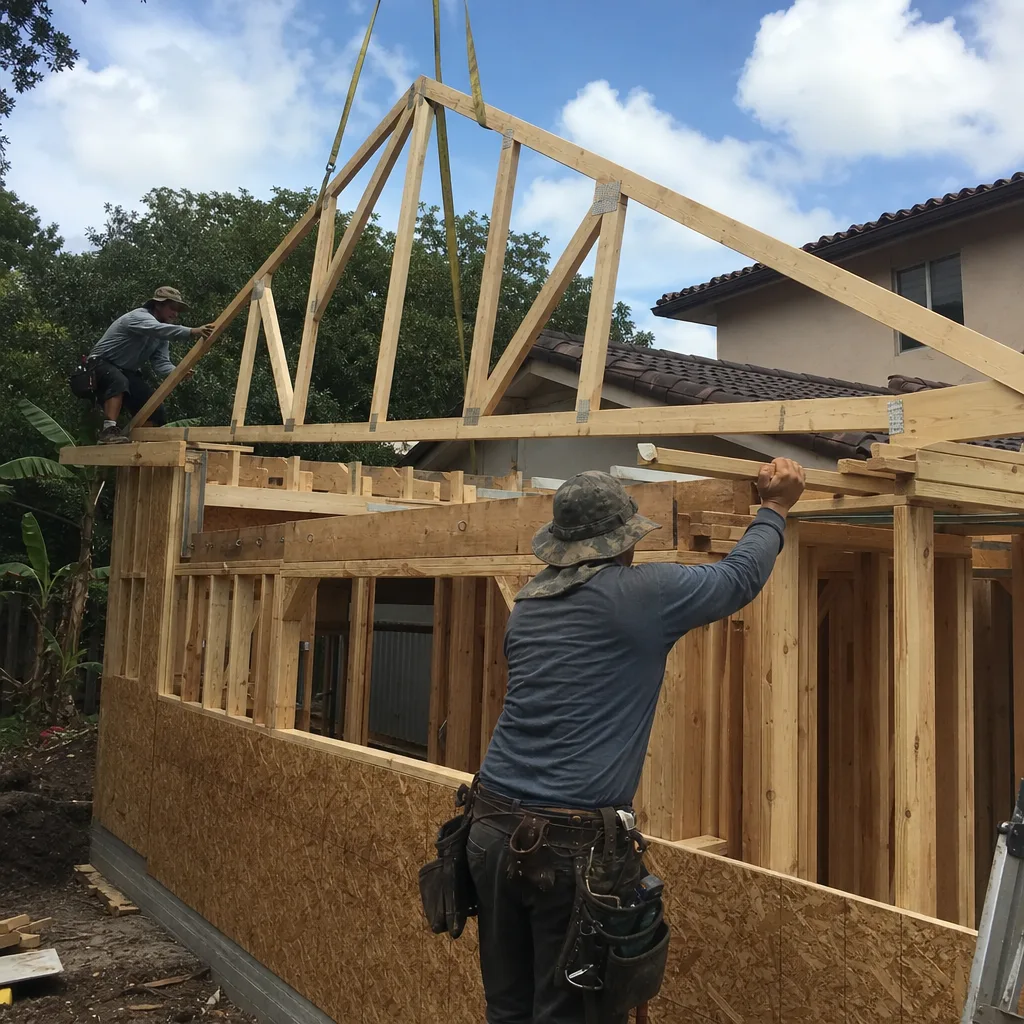
Miami is subtropical, salt-heavy, and inside the only county in the country that runs its own product-approval library. That combination changes what a permit reviewer wants to see on an ADU far more than it does in, say, Orlando or Tampa.
Here’s the honest picture of what submitting an ADU here involves, and where jobs most often lose weeks.
The Miami-Dade ADU Submission Checklist, Line by Line
A complete ADU package in Miami generally needs these pieces before it goes into the Miami-Dade Building Code (MDBC) portal:
- Site plan with setbacks and lot coverage. Show the ADU footprint, distances to property lines, impervious surface totals, and where utilities connect.
- Floor plan with egress compliance. Sleeping rooms need proper egress windows, and the plan must show door and window sizes clearly.
- NOA numbers for every HVHZ-regulated component. Windows, doors, roofing materials, shutters, and fasteners each carry a Miami-Dade Notice of Acceptance. The number goes on the drawings and in the product schedule.
- FBC Energy compliance forms. Florida Building Code Energy calculations, including envelope, glazing, and insulation values.
- Flood-zone elevation certificate if the lot sits in AE or VE. The finished floor elevation has to be documented, not estimated.
- Electrical and plumbing sub-permits pulled separately if the ADU is a distinct dwelling unit.
That last item trips up more homeowners than any other. A detached or attached ADU with its own cooking and sleeping space usually needs its own electrical sub-panel and often a separate water meter application. Those are separate permits, separate fees, and separate inspections on different days. Builders who lump everything into one pull end up stalled at final inspection.
City Permit vs. Miami-Dade NOA: Two Systems, Both Required
This is the misunderstanding we correct most often. The City of Miami can approve your plans. That approval does not verify that a window or roof panel is HVHZ-compliant. Product approval is a county function, and the NOA library is where it lives.
A window from a national manufacturer may carry a Florida statewide approval and still fail here. In Miami, the product needs a Miami-Dade NOA number. Brands like ES Windows and CWS are common on approved ADU drawings for exactly that reason: their documentation is ready and their numbers are searchable in the county library.
In older neighborhoods, say around Little Havana or Allapattah, the pre-1970s concrete-block and CBS housing stock adds another layer. An ADU on a lot with a 40-year-old structure may pull the parent building into 40-Year Recertification territory, requiring structural and electrical inspection before the ADU closes out. That’s a real cost and a real timeline item, and it belongs in your budget conversation on day one.
We handle this full permit stack in-house. Our project managers work the MDBC portal daily, know which NOA numbers apply to which assemblies, and manage the inspection sequence so you aren’t the one chasing a reviewer across three city departments. The broader build itself is covered on our Home Additions & ADU page, and this piece stays focused on the permit path.
What Does an ADU Project Cost in Miami?
Permit costs are a fraction of the build. Expect the full ADU project, from foundation to finish, to land roughly in this range for Miami:
| Project Type | Typical Range |
|---|---|
| ADU Construction (full) | $106,200 – $259,600 |
| Home Addition | $53,100 – $153,400 |
| Garage Conversion | $35,400 – $94,400 |
Those numbers track to ADU and addition scale. Permit fees, impact fees, and utility connection charges are separate line items on top. We quote them upfront, in writing, before a single form gets filed.
A garage conversion to a JADU is often the smarter first step when budget is tight. It sidesteps some of the structural work a new detached build requires, and the paver driveway and hardscape work around it can be staged later if you’d rather spread out spending.
JADU Owner-Occupancy: The Recording Step Everyone Forgets
If you’re building a Junior ADU, the owner-occupancy affidavit has to be recorded with Miami-Dade’s Official Records before the Certificate of Occupancy is issued. Not after. Before.
This isn’t a form you sign and hand to the inspector. It’s a recorded instrument that becomes part of your property’s permanent public record. Skip it and your final inspection stalls while you scramble to schedule a recording appointment. We build the recording step into the project timeline from the start so the CO doesn’t slip by weeks.
How Long Does ADU Permit Approval Take in Miami?
Plan review typically runs longer here than in counties without the NOA layer. A clean, complete submission moves faster. A submission with missing product approvals or an incomplete energy form restarts the clock every time it’s kicked back.
The single biggest time saver is getting your NOA numbers finalized before plans go in, not after a reviewer flags them. That’s the difference between a smooth review and a six-week loop. And because Miami sits inside hurricane season from June through November, exterior finish schedules can shift with weather. Impact glazing and roofing get installed when the window opens, so plan review timing matters more than it would in a dry climate.
Rather than become an amateur permit runner, most homeowners hand us the entire stack and get back to their lives. We keep the file moving and tell you what’s next.
Why Groundwork Construction Co. of Miami
We work under the 730-Day Done Right Promise: if it’s not done right, we make it right. That’s one of the longest workmanship guarantees in residential construction, and it covers the ADU build itself, not just the paperwork.
Calls are answered by a live person 24/7. Our technicians are background-checked and arrive in uniform, and they carry up to 12 years of experience into your job. Every project starts with upfront pricing and a free estimate and design consult, and we offer 0% financing for 18 months along with $1,000 off projects over $10,000. That makes a full ADU build financially workable without surprises buried in a bid.
FAQs
Yes, for every HVHZ-regulated exterior component. Windows, doors, roofing, shutters, and structural fasteners all need a valid Miami-Dade Notice of Acceptance number on the plans. A Florida or national approval alone will not clear a Miami review. Missing NOA numbers is the most common cause of an automatic rejection. Call (833) 968-1198 and we’ll confirm which numbers your specific design needs.
Often yes, but it depends on how the unit is set up and what the city determines at plan review. A JADU connected to your existing utility service frequently avoids a separate meter application, while a fully separate dwelling unit may require one. That’s a separate permit, fee, and inspection either way. We’ll tell you which path your property falls into during the estimate.
It can, especially on older lots with pre-1970s concrete-block or CBS structures. If the parent building is at or past its recertification threshold, the county may require structural and electrical inspection before the ADU closes out. Buildings near the coast hit that deadline at 25 years instead of 40. We flag this early so it doesn’t blindside your budget.
Permit and impact fees vary by square footage and scope, so we quote them as their own line rather than folding them into the build number. The construction itself typically runs $106,200 to $259,600 for a Miami ADU, depending on whether it’s a detached build or a conversion. Call (833) 968-1198 for a free estimate that itemizes both.
Ready to Start the Paperwork With Someone Who Knows It?
If you’d rather have your ADU permit path laid out by a team that handles this every week, Groundwork Construction Co. of Miami offers a no-pressure assessment in Miami. We’ll walk the lot, check the NOA needs, and map the inspection sequence before you file anything. Call (833) 968-1198 for a free estimate. Start with our home page if you want the full picture of how we work.
Written by the team at Groundwork Construction Co. of Miami, serving Miami, FL.