
 Windows & doors
 Kitchen remodeling
 Bathroom remodeling
 Home additions & ADU
 Roofing
 Driveway & pavers
 Fence
Free written scope consultation - allowances, timeline, and change-order rules on paper before a single trade is scheduled
Styles & brands we work with
- Kitchen remodeling
- Bathroom remodeling
- Home additions & ADU
- Roofing
- Windows & doors
- Driveway & pavers
- Fence
See the difference
 Before
 After
 Before
 After
 Before
 After
How Custom Windows Are Made for Miami Homes: Engineered for 180 mph, Not Just an Odd Opening
Custom windows in Miami are made by laminating impact glass with a polyvinyl butyral (PVB) or SGP interlayer to a specified thickness, building the insulated glass unit with a certified spacer system, extruding aluminum frames to Miami-Dade wind-load wall thickness, then testing the exact assembly to large-missile and cyclic-pressure protocols before it can receive a Miami-Dade Notice of Acceptance (NOA) number. In Miami-Dade, that approval path is not optional and it is not a formality: without an NOA number, an inspector cannot sign off. A custom window here is engineered from the factory floor up, not selected from a catalog. Call Groundwork Construction Co. of Miami at (833) 968-1198 for a free project estimate on your custom window build.
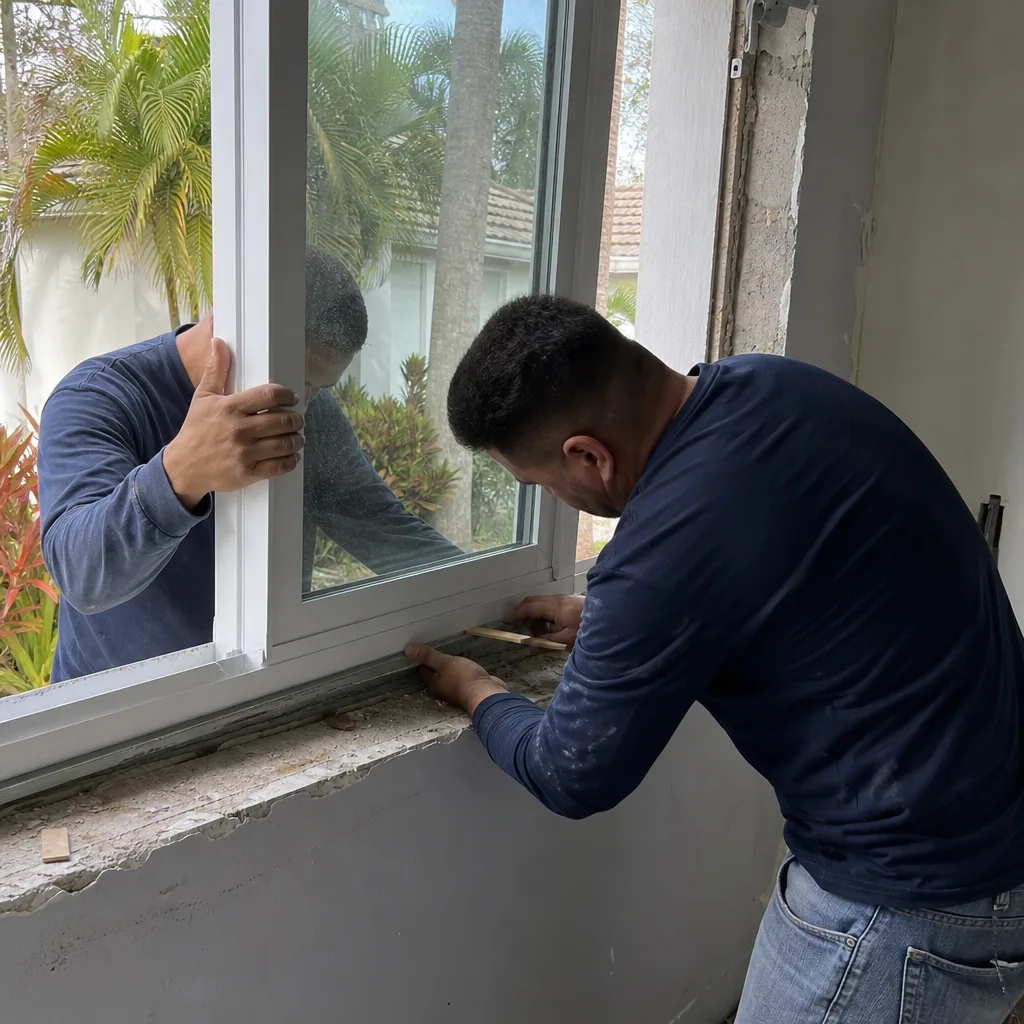
The reason this matters more here than almost anywhere else in the country: Miami-Dade County runs the only product-approval system of its kind in the US. Every impact window, every shutter, every roof assembly carries an NOA number, not just a Florida or national approval. Custom windows for a 1920s Mediterranean Revival in Coral Gables or a MiMo building on Biscayne Boulevard get made inside that system. Here’s how that actually plays out in the factory.
Why Miami’s Custom Window Manufacturing Is Different From Standard Custom Fabrication
Most “custom window” work in the US means custom-to-dimension: the manufacturer builds to your rough opening and you pick a finish. Miami is custom-to-NOA-spec. The dimensions are only the starting point. Every layer of the build, from the interlayer thickness to the extrusion wall, has to line up with a tested, approved product configuration or the window is not legal to install.
We see this often on the older concrete-block and CBS housing stock scattered through neighborhoods like Little Havana and Westchester. A homeowner wants a slightly taller opening to match a 1960s renovation. The manufacturer can’t just stretch the frame. If the approved NOA configuration doesn’t cover a 78-inch unit, somebody has to either pick a different approved size or the whole assembly gets re-engineered and retested. That conversation happens before a single window is ordered.
The glass: PVB vs. SGP interlayer construction
Impact glass for Miami is a laminated assembly. Two glass panes bonded to a plastic interlayer. The interlayer thickness and material are what absorb a 9-pound 2×4 flying at 50 feet per second without cracking through. Standard PVB interlayers work up to a certain design pressure. SGP (SentryGlas Plus) is stiffer, holds the pane together longer after impact, and gets spec’d on higher-exposure installations, particularly near the coast from Miami Beach down to Key Biscayne where design pressures spike.
Every custom window’s glass is built as an insulated glass unit (IGU) using a certified spacer system. The spacer separates the panes and holds the argon or air gap that gives you the thermal performance. Certified matters because the IGU has to hold up in subtropical humidity for decades, not months. Cheap or uncertified spacers fog fast, and once an IGU fogs, you’re replacing the whole unit, not cleaning it.
The frame: wall thickness and corner-joining that standard residential windows don’t require
Aluminum extrusions for Miami-approved impact windows meet minimum wall thickness specs that run heavier than a standard residential frame. That extra thickness is what resists deflection under cyclic pressure. Corner-joining methods also differ: approved impact lines use mechanically staked or crimped corners with structural silicone, not the screw-joined corners you’d get on a builder-grade vinyl. This is the layer most homeowners don’t see, and it’s where “custom size” in Miami actually means custom-to-NOA.
The hardware and anchoring engineering
Every NOA-approved window carries a documented hardware specification: specific screw patterns, embedment depths, anchor spacing, and hardware torque ratings tied to the design pressure of the installation. This isn’t a field decision. The product approval lists exactly what fastener goes into what substrate at what spacing. Not “just screw it down at the corners.” A sub who goes off-script on anchors can void the NOA and fail inspection.
This is also why we treat installation as engineering, not carpentry. Our technicians have up to 12 years of experience with these assemblies, and every job is measured against the specific NOA on the paperwork before the first screw goes in.
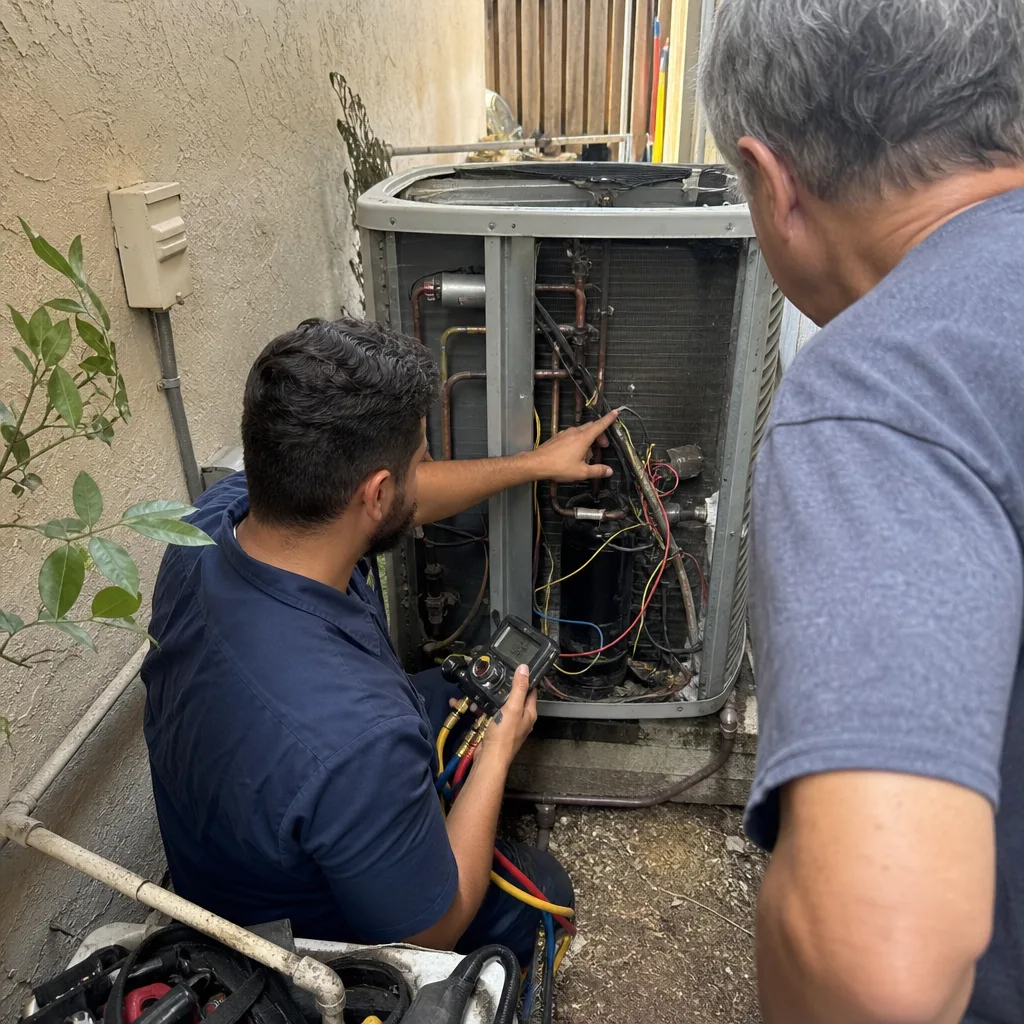
The Testing Protocol Every Miami Custom Window Has to Pass
The Florida Building Code requires High Velocity Hurricane Zone (HVHZ) products to clear two tests before they earn an NOA:
- Large-missile impact test – a 9-pound 2×4 shot at roughly 50 feet per second at three points on the assembly. The window does not have to stay intact; it does have to stay in the opening.
- Cyclic wind pressure test – thousands of pressure cycles simulating a hurricane’s pulsing loads, applied after the missile impact, to verify the damaged unit stays in place under continuing wind pressure.
- Actual-configuration testing – the test has to be run on the specific product configuration being sold. You can’t approximate with a proxy. A different frame size, a different interlayer, a different anchor pattern means a different test.
The reason this matters as a homeowner buying custom windows: if a manufacturer offers a size that isn’t covered by a live NOA for that exact configuration, your permit gets held up in review. That’s the single biggest cause of custom window delays we see on Miami jobs. When we spec the manufacturer before we spec the window, that risk goes away.
Where Groundwork Construction Co. of Miami Fits In
We specify Andersen and Marvin custom lines for Miami projects precisely because both manufacturers maintain active Miami-Dade NOA approvals across their custom product configurations. That means when a homeowner needs a non-standard size for a 1920s Mediterranean Revival in the Roads or a MiMo building in the MiMo District, there’s already a tested, approved path. No custom-engineering gamble. No permit roulette.
That’s part of the full-scope story for Windows & Doors at Groundwork. We build the window selection around the NOA, install to the documented anchor spec, and back the whole assembly with the 730-Day Done Right Promise. If it’s not done right, we make it right. Upfront pricing you see before work starts, 0% financing for 18 months, and $1,000 off projects over $10,000 round out the offer. Every window job runs against the same playbook we’ve used across our Miami service area since we opened the doors back in 2014.
What a Miami custom window project typically runs
| Scope | Typical Miami Range |
|---|---|
| Impact window installation (custom aluminum, HVHZ-rated) | $9,440 – $29,500 |
| Standard window replacement | $5,310 – $17,700 |
| Full kitchen remodel (paired with window replacement) | $16,520 – $53,100 |
| Home addition (new window openings) | $53,100 – $153,400 |
If you’re weighing custom windows against standard replacements, the ranges overlap more than people assume. The difference is what the paperwork says at inspection. Call us for an exact quote on your specific openings; estimates are free.
FAQs
Typical lead time for a Miami-Dade NOA-approved custom window runs 6 to 12 weeks from order to delivery, depending on the manufacturer and whether the configuration is already covered under the NOA or needs engineering review. If the size falls inside an approved configuration, the timeline is predictable. If it doesn’t, add weeks for the manufacturer to confirm a path. Call (833) 968-1198 and we can walk through your openings before you order.
No. Miami-Dade requires every impact window to carry a Miami-Dade NOA number for the specific configuration being installed. A Florida statewide product approval or a national test report is not a substitute. Inspectors check the NOA number against the product label at the job site. This is why choosing manufacturer first matters here.
Repair is almost always cheaper when the frame and anchors are intact and only the glass is damaged or fogged, typically a fraction of a full replacement. Replace the whole unit when the frame is compromised or the anchors are corroded. On salt-exposed homes along the coast, anchor corrosion is a real issue worth checking at every inspection. Call us for an on-site assessment.
SGP interlayers hold glass together longer under sustained cyclic pressure and are usually specified on higher-exposure coastal installations, while PVB is standard for many inland Miami-Dade applications. Your design pressure and exposure category determine which one gets spec’d. We match the interlayer to the NOA on file, not to preference.
Ready to Talk About Your Custom Window Project?
If you’d rather have your openings looked at by someone who knows Miami-Dade’s NOA system inside and out, Groundwork Construction Co. of Miami offers a no-pressure assessment anywhere in Miami. Bring your plans, your questions, or just a tape measure and a phone. Our team answers live, 24/7. Call (833) 968-1198 for a free estimate.
Written by the team at Groundwork Construction Co. of Miami, serving Miami, FL.