
 Fence
 Kitchen remodeling
 Bathroom remodeling
 Home additions & ADU
 Roofing
 Windows & doors
 Driveway & pavers
Free written scope consultation - allowances, timeline, and change-order rules on paper before a single trade is scheduled
Styles & brands we work with
- Kitchen remodeling
- Bathroom remodeling
- Home additions & ADU
- Roofing
- Windows & doors
- Driveway & pavers
- Fence
See the difference
 Before
 After
 Before
 After
 Before
 After
How to Fix a Leaning Fence Post in Miami, FL: Diagnose the Real Cause First
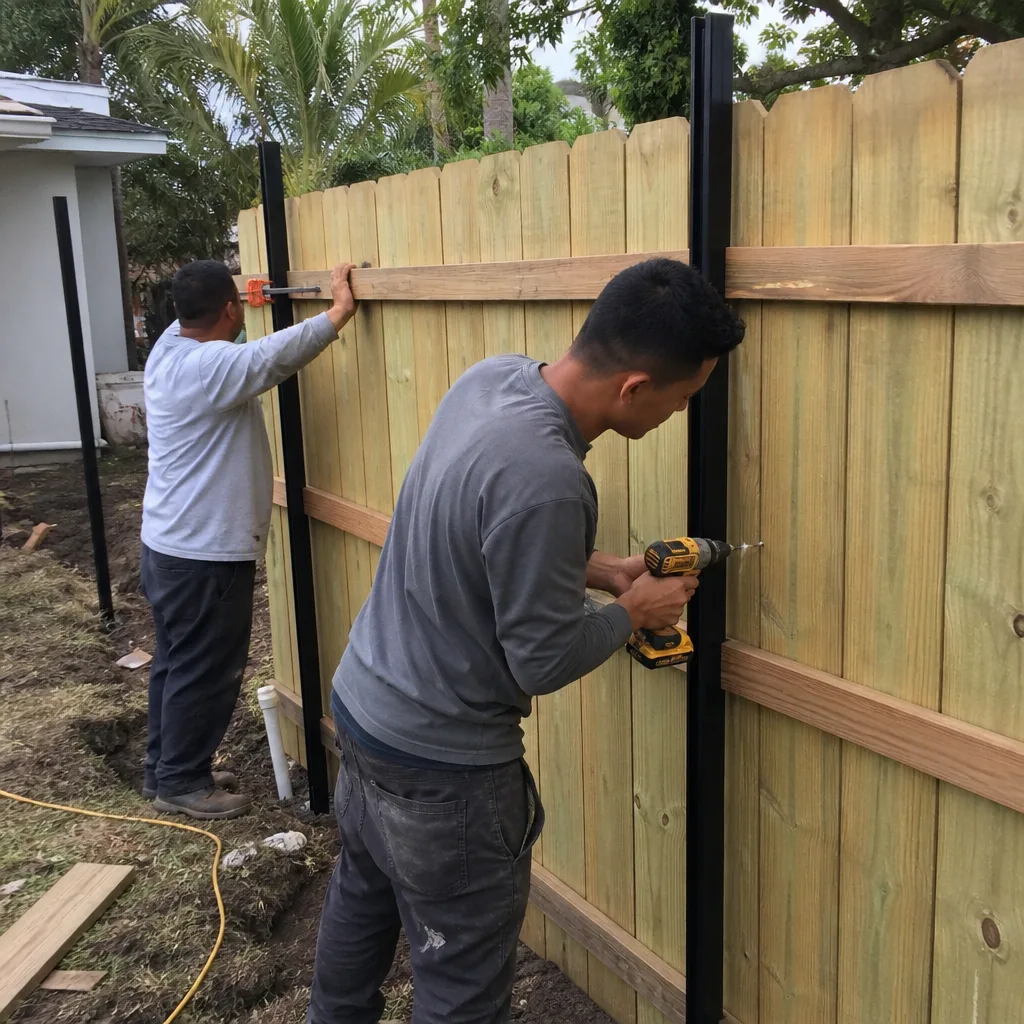
The short answer: find out whether the post itself has rotted at or below grade or the concrete footing has physically shifted, because the fix is completely different for each. If your post started leaning after a heavy rain and your yard sits in an AE flood zone, re-tamping it with gravel is a temporary fix at best. Saturated fill soil around a Miami post footing doesn’t grip the way northern clay soil does, so the repair that holds here is a deeper, belled footing set below the water-affected layer. We’re Groundwork Construction Co. of Miami, and we’ve walked plenty of homeowners through this exact diagnosis. Call (833) 968-1198 if you’d rather have it assessed in person.
Why Miami Posts Lean Differently Than Posts Anywhere Else
Most online guides assume soft, even soil and a post that just worked itself loose. Miami gives you two causes those guides never mention, and both need a different repair.
Root pressure. In older neighborhoods like Coral Gables and Coconut Grove, mature Royal Palms, Ficus hedges, and Strangler Fig send roots laterally through the soil and press directly against concrete footings. When a footing gets shoved sideways, the post above it tilts, and no amount of re-tamping fixes it. Pull the post, cut back or root-barrier the offending root, and reset the footing.
Soil-saturation lean. In flood-zone lots across Hialeah and North Miami, tropical rain events saturate the sandy fill around a footing until it loses bearing capacity. The post drifts and the soil never re-grips the way dense clay would. This is where a lot of DIY gravel-and-tamp jobs fail within a season, usually right after the next big storm.
That’s the diagnosis problem in a nutshell: same symptom, three different root causes, and picking the wrong repair wastes a weekend and leaves you with the same lean by October.
How Do You Tell If the Post Is Rotting or the Footing Shifted?
Dig down 6 to 8 inches around the base and look at the wood itself. Miami’s year-round humidity and severe termite pressure make the below-grade section the most common failure point on any wood post; the surface can look fine while the buried section is soft and punky. Probe it with a screwdriver. If it sinks in easily, the post is compromised and no footing repair will save it. If the wood is solid and the whole assembly has tilted as a unit, the footing has moved, and that’s a footing job. Read the failure point before you buy a single bag of concrete.
A few things to check before you decide:
- Is the lean uniform from the ground up, or does the post bend above grade? Uniform means footing; a bend means compromised wood.
- Is there cracking or a gap where the concrete meets the soil? That points to displacement, not rot.
- Did the lean appear right after a storm? Saturation lean is the likely culprit in a flood-zone lot.
- Are there roots or a mature tree within a few feet? Root pressure is the probable cause in older neighborhoods.
What Footing Depth Actually Holds in Miami’s Sandy Soil?
The one-third post-depth rule you’ll find in most guides assumes clay-dominant soil, and it doesn’t hold up in Miami’s sandy loam. The professional standard here is a minimum 24-inch footing depth with a belled concrete base, wider at the bottom than the top, so the footing resists both uplift and lateral movement in loose, porous soil. A straight-sided hole in sand gives you a post that works loose again the first wet season.
If you’ve got more than a couple of posts to redo, or any structural footing work to do, the permit picture matters. In Miami-Dade, replacing more than a small number of posts can trigger a fence permit, and structural footing work in a FEMA flood zone without proper documentation can affect your flood insurance standing. It’s worth confirming before a crew breaks ground. The hurricane-zone rules here are strict for a reason, and footing work that gets documented correctly the first time saves headaches later.
Repair or Replace? What It Costs in Miami
Here’s the market range homeowners in Miami actually see for fence repair and reset work, and what a full section replacement runs when the damage goes beyond one post. Pricing is upfront, so the number you see is the number you pay.
| Scope | Typical Miami Range |
|---|---|
| Single post reset / footing repair | Lower end of the range below |
| Fence repair and re-set (multi-post) | $4,130 – $10,620 |
| Full vinyl fence replacement | $4,130 – $10,620 |
| Aluminum fence installation | $4,720 – $11,800 |
For a single leaning post, a targeted reset is the economical call. Once you’re looking at a section with compromised wood, termite damage, or a footing that’s truly gone, replacing that run is usually the smarter spend. Our technicians have up to 12 years of experience reading exactly this call, and every job backs the work with the 730-Day Done Right Promise, so a repair that doesn’t hold gets made right. If you’re weighing the two, our Fence Installation team can quote both options side by side. For the full scope of what we handle, see Fence Installation in Miami.
What to Expect From a Written Assessment
Before a single hole is dug, Groundwork sends background-checked, uniformed technicians who give you a written assessment. That means you know upfront whether you’re fixing a post or replacing a section before you commit to either. No guesswork, no surprises on the invoice. Calls are answered by a live person 24/7, and standing promotions include a free project estimate and design consult plus $1,000 off projects over $10,000, with 0% financing for 18 months on larger work.
FAQs
For a single post with a known, simple cause, a careful homeowner can often reset it. Call a pro when the footing has shifted, when roots are involved, or when the post is rotted below grade, because those need real structural work and, in a Miami-Dade flood zone, possible permitting. Call (833) 968-1198 for a free assessment if you’re unsure which case you have.
Saturated fill soil loses its grip on the footing, and the post drifts, especially in flood-zone lots in areas like Hialeah and North Miami. That’s a footing problem, not a post problem, and re-tamping with gravel only buys time. A properly belled 24-inch footing set below the saturated layer is the fix. Call (833) 968-1198 for an exact quote.
It can. Replacing more than a small number of posts may trigger a fence permit, and structural footing work in a FEMA flood zone without documentation can affect your flood insurance standing, so confirm before work begins. We’ll tell you upfront what your scope needs. Call (833) 968-1198 for a free estimate.
A single-post reset sits at the low end, while multi-post fence repair and re-setting runs about $4,130 to $10,620 in this market. A full vinyl or aluminum replacement carries its own range. Call (833) 968-1198 for an exact quote, and estimates are free.
If you’d rather have it looked at than wrestle with it yourself, Groundwork Construction Co. of Miami offers a no-pressure assessment in Miami. Call (833) 968-1198 and we’ll tell you whether it’s a post or a section, in writing, before anything gets dug.
Written by the team at Groundwork Construction Co. of Miami, serving Miami, FL.