
 Fence
 Kitchen remodeling
 Bathroom remodeling
 Home additions & ADU
 Roofing
 Windows & doors
 Driveway & pavers
Free written scope consultation - allowances, timeline, and change-order rules on paper before a single trade is scheduled
Styles & brands we work with
- Kitchen remodeling
- Bathroom remodeling
- Home additions & ADU
- Roofing
- Windows & doors
- Driveway & pavers
- Fence
See the difference
 Before
 After
 Before
 After
 Before
 After
How Long Does a Wood Fence Last in Miami? Usually 5-8 Years, Not 20
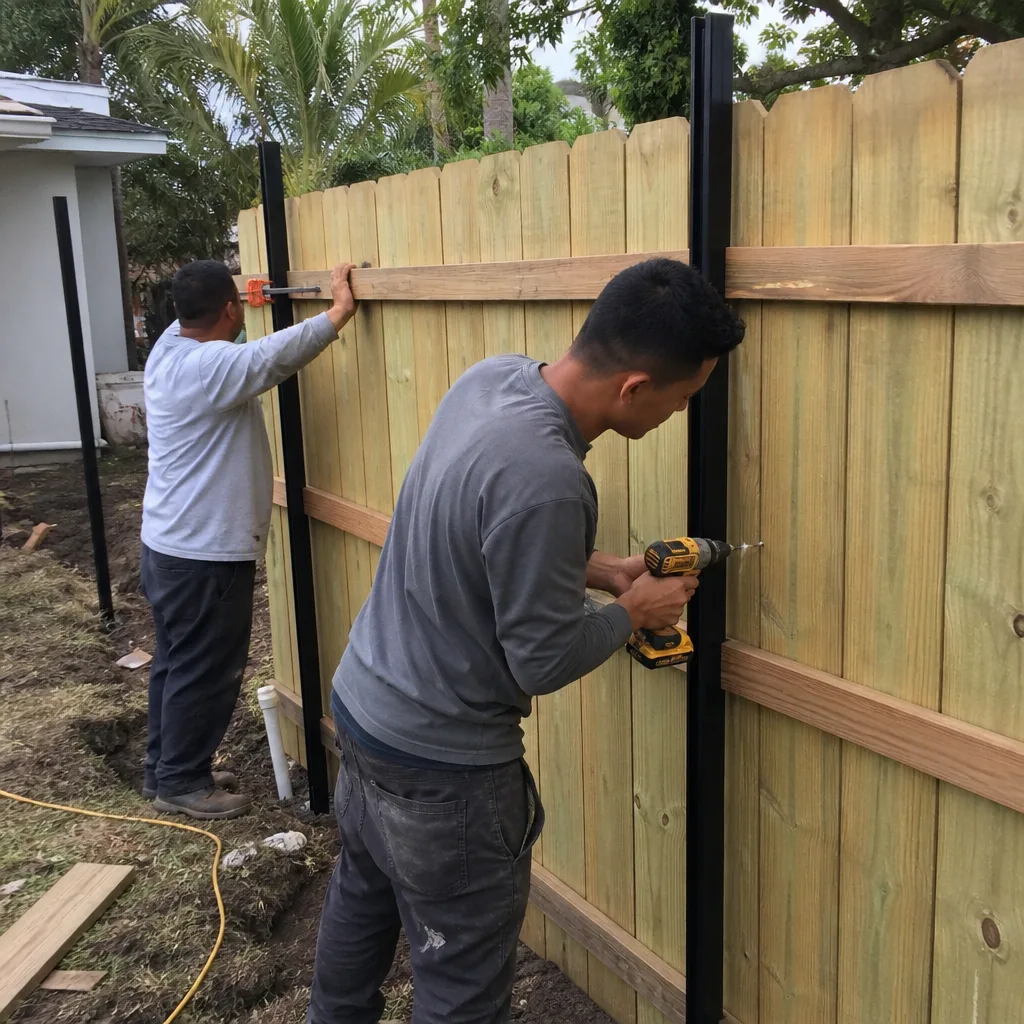
In Miami, a wood fence typically lasts 5 to 8 years without aggressive species selection, treatment upgrades, and a finish protocol built for the climate. That’s not the 15-20 years national guides quote, because those numbers assume dry temperate air. Miami’s year-round humidity, salt-laden coastal wind, and one of the most aggressive termite zones in the country rewrite the math. We install fences across Miami for homeowners who want a realistic lifespan, not an optimistic one. If you’ve got a failing fence on your lot, call (833) 968-1198 and we’ll tell you straight what you’re dealing with.
Key Takeaways
- Standard pressure-treated pine that survives 20 years in Atlanta can be structural termite damage in a Coral Gables backyard by year seven.
- Most big-box lumber is rated UC4A (ground contact), which is not the right spec for coastal Miami lots in VE/AE flood zones.
- Miami’s April-October UV index of 10-11 breaks down surface sealants roughly 40% faster than national warranty language assumes.
- Species choice (Ipe or Cumaru versus pine) changes the 15-year cost-per-year math more than most homeowners expect.
Why Miami Is a Different Lifespan Calculation
National fence lifespan figures are average across a temperate climate. Miami isn’t temperate. Humidity hovers near saturation most of the year, salt air carries into lots well inland of the coast, and the ground stays warm and wet – ideal for wood-destroying organisms. Miami-Dade sits in the highest-risk Formosan subterranean termite zone in the continental United States, and that single fact changes a wood fence’s lifecycle more than any other variable.
Here’s what we see on inspection calls. Untreated or under-treated pine in direct ground contact can show internal tunneling from termites within 18 to 24 months. Not years of slow decay – active structural hollowing inside two summers. A homeowner in Little Havana or Westchester who buys the cheapest ground-contact pine at a big-box store is often replacing that fence before the third hurricane season after installation. That’s a hard number to argue with, and it’s why we treat the “how long does a wood fence last” question as a Miami question, not a national one.
Treatment Levels: The Specification Competitors Skip
Pressure-treated lumber carries a use-category rating, and the rating matters more than the species label on the tag. Standard residential ground-contact PT is rated UC4A. It’s fine for a fence post in Orlando. For a Miami lot in a VE or AE flood zone, or within reach of tidal salt spray, the right spec is UC4B – critical structural application. Most big-box lumber does not carry that rating, and no salesperson will hand it to you unless you know to ask.
What that means in practice:
- UC4A – ground-contact rated, appropriate for inland Miami lots with good drainage and no flood exposure.
- UC4B – heavier-preservative treatment for critical applications, the right call near salt water, in flood zones, and on lots with high water tables.
- UC4C / marine-rated – beyond typical residential fence, but relevant on some canal-front and bayfront properties.
Retention level (the pounds of preservative per cubic foot) is the other number worth checking. Standard PT for fencing runs around 0.25 to 0.40 pcf. Heavier ground-contact and critical specs push above that. We spec the treatment for the lot, not the flat rate – a Coconut Grove lot with year-round shade and heavy soil moisture has different demands than a sunny Kendall backyard. If you’re comparing bids, ask each contractor what use category they’re quoting. The answer separates real bids from wishful ones.
UV, Sealants, and What “Re-Coating” Actually Means Here
Miami’s average UV index runs 10 to 11 from April through October – extreme category. That intensity breaks down exterior finishes and surface sealants faster than national product warranty language accounts for, often 40% faster or more. A sealer that a national brand markets as “3-year protection” is realistically a 20 to 24-month recoat interval on a Miami fence. Skip the recoat and the wood starts checking (surface cracking) and greying within a season or two.
Our install teams recommend a penetrating oil-based sealer at install, then recoats on a tighter rhythm: roughly every 18 to 24 months on sun-exposed runs, sooner on lots with direct south or west exposure. Fences in shade – under palms or along a hedge line – can stretch to 30 months. The cost of recoating is modest. The cost of skipping it is accelerated replacement of a fence you already paid for.
The end grain and cut edges matter too. Every post top, rail end, and picket cut is an entry point for moisture and termites. We cap posts and seal cut edges during install because it’s the cheapest insurance on the fence.
Species Choice: Pine, Ipe, and Cumaru in Salt Air
Not all wood fence lifespans are equal, and the cost-per-year math favors hardwood on coastal Miami properties more than the sticker price suggests. A rough comparison over a 15-year window:
| Material | Realistic Lifespan in Miami | Install cost trend |
|---|---|---|
| PT pine (UC4A, standard) | 5-8 years | Lower upfront, higher replacement frequency |
| PT pine (UC4B, upgraded) | 8-12 years | Moderate premium, better lifespan |
| Ipe (Brazilian walnut) | 20-30 years | Highest upfront, lowest cost-per-year |
| Cumaru (Brazilian teak) | 20-25 years | High upfront, low cost-per-year |
Ipe and Cumaru are dense tropical hardwoods that naturally resist moisture, insects, and salt air. They don’t require chemical treatment, and they hold up in an environment that eats pine alive. The catch is upfront cost – expect Ipe to run roughly 2-3x the price of a PT pine install on the same run. But when you divide by realistic lifespan in Miami, the annual cost of a hardwood fence often comes in lower than replacing pine three times over 20 years. We’ll walk through that math with you on a free estimate rather than pushing one material blindly.
When Wood Is the Wrong Answer for Your Lot
Our job is to tell you the honest lifespan, even when it costs us a sale. On some Miami properties, wood is not the right material no matter how it’s specced – canal-front lots with constant salt spray, properties with active termite pressure and no post-install treatment plan, and homes where the fence must survive the hurricane season without fail. In those cases we recommend aluminum or vinyl instead. Our Fence Installation team specs every option – wood, aluminum, vinyl, composite – against your actual site conditions. Aluminum and vinyl installs in Miami run $4,130-$11,800 depending on run length and gate count, and they sidestep the termite and recoat cycle entirely.
The Fence Installation in Miami service page covers material and layout comparisons in more depth. For homeowners weighing wood versus a Miami-Dade NOA-rated alternative – which matters for some HOA and hurricane-zone requirements – we’ll match the spec to your property.
Cost Ranges for Wood Fence Work in Miami
For planning, here are the local ranges we quote on wood fence work in Miami. Exact pricing depends on run length, gate count, treatment level, and site access.
- Wood fence installation (standard PT): $4,130-$10,620 for typical residential runs
- Hardwood (Ipe or Cumaru) upgrade: premium above PT, typically 2-3x the PT install price
- Annual sealant recoating: modest, quote-based on run length
- Partial fence repair (termite damage, post replacement): quote-based on damage extent
For comparison, aluminum fence installation runs $4,720-$11,800 and vinyl runs $4,130-$10,620 – both worth pricing side by side if termite pressure on your lot is high. We offer no-hassle upfront pricing, so the number we quote is the number you pay. Our 730-Day Done Right Promise applies to every install, and if it’s not done right we make it right – one of the longest workmanship guarantees in residential construction. We also carry $1,000 off projects over $10,000, free estimates with design consults, and 0% financing for 18 months for qualified homeowners.
Every Groundwork project uses background-checked, uniformed technicians. Our crews have up to 12 years of experience installing in Miami conditions, and calls are answered by a live person 24/7 – no voicemail black holes when a fence post fails during a storm.
FAQs About Wood Fence Lifespan in Miami
A wood fence in Miami typically lasts 5 to 8 years with standard pressure-treated pine, 8 to 12 years with upgraded UC4B-treated lumber, and 20 to 30 years with Ipe or Cumaru hardwood. The difference comes down to species, treatment level, and maintenance. Miami’s humidity and Formosan termite pressure are the primary variables – not the wood’s natural durability alone. Call (833) 968-1198 for a free on-site estimate and we’ll spec the right material for your lot.
Standard residential pressure-treated pine (UC4A) is a marginal choice for coastal Miami lots in VE or AE flood zones and near salt water, because it may not carry the UC4B critical-application rating needed there. For inland lots with good drainage and an active sealant schedule, UC4A pine can work. For coastal exposure, we recommend UC4B or a hardwood like Ipe instead. We’ll tell you which category your lot falls into on the estimate. Call (833) 968-1198 – estimates are free.
Wood fences in Miami typically need resealing every 18 to 24 months on sun-exposed runs, and up to 30 months in heavy shade. Miami’s UV index of 10-11 from April through October degrades exterior finishes roughly 40% faster than national product warranty labels assume, so the manufacturer’s “3-year” claim doesn’t apply here. Skipping recoats accelerates greying and checking. Call (833) 968-1198 to schedule a sealant quote.
Repair makes sense when damage is confined to a few posts or rails; a full replacement is the better long-term call once termites have tunneled into more than about 20% of the posts or the fence is already 6+ years old. Miami-Dade termite pressure means partial repairs on under-treated pine often buy only 2-3 more years. We’ll do a straight damage assessment and tell you which side of the line your fence is on. Call (833) 968-1198 for a free assessment.
Get a Straight Answer on Your Miami Fence
If you’d rather have it looked at in person, Groundwork Construction Co. of Miami offers a no-pressure fence assessment in Miami – we’ll tell you the realistic remaining lifespan on your existing fence and the honest options if you’re replacing it. Estimates are free, calls are answered by a live person 24/7, and every install is backed by our 730-Day Done Right Promise. Call (833) 968-1198 to schedule.
Written by the team at Groundwork Construction Co. of Miami, serving Miami, FL.